
Precious metals are apparently waking up. And here is where you can find the best deals.


Site:
Precious metals news
**Summary**:
Banks are increasingly engaging in "de-banking," where individuals' accounts are closed without clear reasons, often due to differing opinions or beliefs from the prevailing narrative. This trend is alarming as it weaponizes the banking system against those who challenge mainstream views. Prominent figures and ordinary citizens alike are being targeted. However, banks have shown double standards, allowing accounts of controversial figures and those promoting false narratives to remain open. The argument that banks are just private entities exercising their rights is flawed because banking today is more influenced by the government than free market principles. The ideal solution is a free market in money and banking, but that's not foreseeable. Cash is not a sustainable solution due to ongoing debasement and potential elimination efforts. Gold provides some protection but doesn't replace banking conveniences. A new alternative to the banking system, devoid of counterparty risks, is needed.
The annual increase in the Consumer Price Index (CPI) ticked up in July, after two months of big drops, revealing that price inflation might be down, but it certainly isn't out.On an annual basis, CPI rose 3.2% in July, a tick higher than the 3% yearly increase in June, according to the latest data from the Bureau of Labor Statistics.


Ever heard of the "creep" phenomenon? It's where seemingly good intentions can, over time, lead to unexpected and often negative outcomes. In Mike Maloney's latest video, he delves deep into this concept, shedding light on some alarming trends:

Mortgage applications to purchase a home: -40% from 2022 and 2019, 3rd worst week since 1995, behind only two weeks in February. Mortgage rates have surged over 7%, the highest since 2002, leading to a significant drop in home sales. This spike in rates was influenced by the Treasury's announcement to issue long-term notes and bonds to fund government deficits, coupled with Fitch's downgrade of the US credit rating from 'AAA' to 'AA+'. As a result, mortgage applications for home purchases have seen drastic declines compared to previous years. Additionally, there has been a significant drop in refinance applications, severely affecting mortgage lenders and brokers. Despite these conditions, some homeowners are still opting for cash-out refinances either in anticipation of a rate drop or out of immediate necessity.

Developed economies are seeing a decline in the middle class, despite massive financial interventions. This isn't capitalism's fault but results from policies that lean towards heavy government control. Many misunderstand inflation, viewing it as mere price rises rather than the devaluation of currency due to excessive printing. This often benefits governments at the citizen's expense. In essence, inflation is a covert tax, diminishing wealth from savers. Central banks, not private ones, primarily drive artificial money creation. The Honest Money Initiative seeks to spotlight these issues and advocate for stable monetary policies. Unrestrained currency manipulation endangers both economic freedom and civil liberties.

The U.S. credit rating was downgraded by Fitch from AAA to AA+. Though this isn't a short-term market concern, it signals the country's unsustainable fiscal trajectory. Meanwhile, Moody's has flagged immediate threats, downgrading several U.S. banks due to looming recession in 2024 and potential profitability pressures. The anticipated crisis might not emerge from subprime mortgages, but from commercial real estate defaults. With changing dynamics in the post-pandemic world, both the CRE space and the banking sector are showing cracks. Investors should proceed with caution.
The money supply has sharply contracted, marking the deepest decline in 28 years and reminding many of the Great Depression era. From a peak in April 2022, the money supply has plummeted by $2.8 trillion or 15%, the most severe drop since the Depression. This decline has been accompanied by rising interest rates, with the Federal Reserve increasing the federal funds rate to its highest in over two decades. Companies, facing the weight of these interest rates, are declaring bankruptcy, resulting in massive layoffs. Loan accessibility has tightened, mortgage rates are soaring, and alarming levels of credit card debt are emerging despite increasing interest rates. Indicators suggest an economic bubble on the verge of bursting, with the Fed caught in a dilemma. If they pump more money, it will escalate inflation, further burdening the average American already grappling with skyrocketing living costs. This downturn, fueled by years of easy money policies, now puts the economy and ordinary citizens at risk.
 After Three Months Declining Reserves Central Banks Became Net Gold Buyers Again in June
August 10, 2023
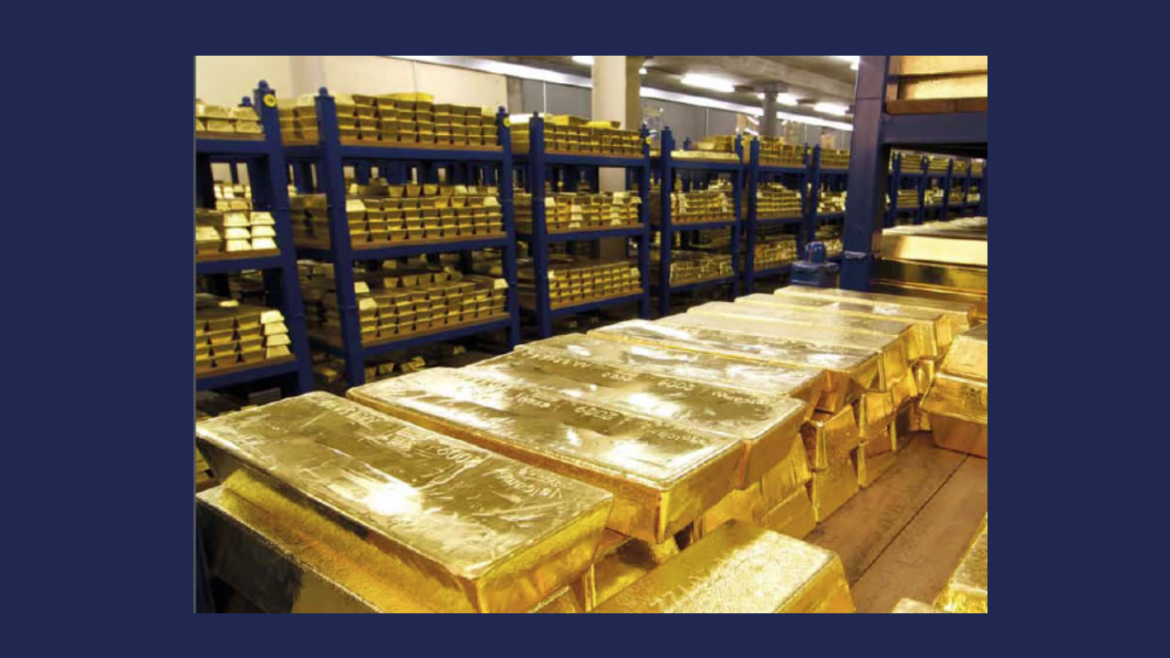
After three straight months of net sales, central banks globally became net buyers of gold again in June.On net, central banks bought 55 tons of gold in June as the Central Bank of Turkey switched from selling back to buying, according to the most recent data compiled by the World Gold Council.

The increase was majorly driven by shelter costs, which constituted a whopping 90% of the July increment. This might be a good thing for inflation measures, as rent increases in the real world are already easing, and the CPI index is merely catching up. This report gives the Federal Reserve more data to consider before their upcoming meeting, hinting at a generally favorable direction for inflation, despite the predominant role of a single weakening category.
 The Number of Americans Filing for Jobless Claims for the First Time Rose
Aug 10, 2023 - 06:05:58 PDT
First-time jobless claims spiked from 227k to 248k last week, notably in Ohio, California, and Texas. Potential fraudulent filings and eligibility changes in two states cloud the data, reminding us of January's concerning levels. While continuing claims seem to decrease, standing at 1.68 million, seasonal distortions might be misleading. The rise hints at vulnerabilities in the labor market amidst the Fed's tightening.
Anticipation was high for today's CPI report. The headline CPI for July increased by 0.2% MoM, pushing the YoY to 3.2%, breaking 12 months of consecutive declines. Core CPI saw a 0.16% MoM increase, while YoY growth slowed to 4.7%. Major factors include a significant contribution from the shelter index and varied changes in food and energy indexes. With 'real' wages slightly up by 0.2% YoY in July, the question becomes - is this an inflection point in inflation? Is the over-optimistic view of the world heading for a disinflationary soft-landing about to crash on the shores of commodity's reality island?
 Gold Soars Amid CPI's Persistent Inflation and Stable Interest Rate Predictions
Aug 10, 2023 - 05:57:01 PDT
Gold prices (XAU/USD) soar towards $1,930.00, bolstered by the anticipated persistence of the U.S. Consumer Price Index (CPI). July's monthly headline and core inflation both saw a growth of 0.2%. Though the annual headline CPI at 3.2% was slightly below the forecasted 3.3%, it exceeded the previous 3.0%. Core inflation, which excludes fluctuating food and oil costs, slightly eased to 4.7% compared to expectations and its previous 4.8%. The diminishing influence of decreased demand from central banks appears evident.


There are some Important Key Silver Charts you need to see. The Silver Price is now at an Important Key Level, and with most of the Primary Silver Miners breaking even, I believe the Downside Risk is minimal. One Key Factor is the U.S. Dollar which is also at a key level...
Gold to Climb Again Once Remaining Rate Hike Expectations Disappear: Commerzbank AGAug 9, 2023 - 13:43:50 PDT
Gold saw a minor setback with a less than 1% drop last week, yet the future looks bright. Ahead of the anticipated US inflation report, Commerzbank's economists have cast an optimistic lens on the metal’s prospects. With the forthcoming US inflation data, we anticipate a further easing of price pressures in July, reinforcing our view that we've seen the pinnacle of interest rates. As the market sheds its rate hike expectations, gold is poised for a rebound. While gold may momentarily stabilize around the $1,950 level, we confidently project a surge to $2,000 by the close of the year.
Aug 9, 2023 - 12:27:39 PDT
Businesses are hitting the panic button due to looming recession fears and dwindling profit margins. As banks, both big and small, tighten lending standards, the economy is starting to falter. The surge in yields has already led to the downfall of Silicon Valley Bank (SVB). This cautionary atmosphere among banks and the subsequent economic slowdown means corporations, anxious about falling profits, are halting their expansion plans. The cycle is self-perpetuating and we're currently witnessing its damaging effects. The Inflation Reduction Act's temporary relief, thanks to its hefty subsidies, is on the verge of dissipating. With a decreasing demand for loans, hopes of a smooth Landing may well end up being quite the opposite.
The Federal Reserve Bank of Philadelphia introduced GDPPlus in 2013 as an enhanced measure of GDP that incorporates both GDP (expenditure-side) and GDI (income-side) data. Unlike the National Bureau of Economic Research's (NBER) method which averages GDP and GDI, GDPPlus optimally extracts data from both, aiming to represent unobserved U.S. economic activity. Although GDP is widely used, some studies suggest that GDI might be a superior metric in certain contexts. However, blending both GDP and GDI could provide a more accurate estimate than using either metric alone. Recent data indicates potential discrepancies between GDP measurements and signs of recession, raising questions about the true health of the economy.

The lingering effects of pandemic stimulus combined with ongoing personal consumption are buoying the economy, even as it grapples with the rising challenges posed by high-interest rates.
Given the data at hand, a central question emerges: Will economic and consumption patterns return to their typical trajectories, or will the mounting pressures of high interest rates lead to a decline, or even reversal, in personal spending?
The future trajectory largely hinges on the state of the labor market. If it remains robust, it's plausible that consumption and economic trends will settle back to pre-pandemic levels.
However, historical patterns suggest that increasing interest rates and credit shrinkage can suppress the economy. In such scenarios, consumers often prioritize boosting their savings and decreasing their debt over spending.
Aug 9, 2023 - 07:44:35 PDT
Under the weight of soaring inflation, attributed to Bidenomics, US citizens are being forced into deeper credit card debt, which has alarmingly surpassed the $1 trillion benchmark. Mismanagement by The Federal Reserve coupled with reckless Federal spending has been a significant driver of this economic quagmire, with core inflation stubbornly remaining at a high 5.63%. Drawing a parallel between credit card debt and The Fed’s balance sheet reveals the depth of the crisis. Moreover, the combined weight of credit card and auto loan balances has skyrocketed to an unprecedented $1.6 trillion.
China, the world's second-largest economy, faces a deflationary spiral threat as prices dropped by 0.3% in July. This decrease could be an alarming precursor to a larger economic challenge globally, given China's extensive trade links. Deflation risks business profitability, undermines investment, and can surge unemployment. China's post-pandemic consumer activity plummet, combined with oversupply from past stimulus measures and a crisis-stricken property market, compounds the situation. Any prolonged deflation could strain global supply chains, undercutting foreign businesses and curbing China's demand for imports, adversely impacting economies worldwide.

With much stronger-than-expected second-quarter GDP growth and continued labor market strength, a growing number of people in the mainstream now think the US has escaped the clutches of a recession despite the Fed driving interest rates to the highest level in 16 years. But there are plenty of signs that a recession is looming. For instance, a big plunge in the sale of cardboard boxes indicates a slowdown in economic activity.There's another off-the-beaten-path indicator that flashes recession — a big drop in the demand for gold in the technology sector.