
Precious metals are apparently waking up. And here is where you can find the best deals.


Site:
Precious metals news

Americans purchased more gold bars & coins in the first half of 2023 than any other period since the 2008 Global Financial Crisis. More importantly, Americans' physical gold bullion buying is greater than during the Pandemic shutdown in 2020....
Russia and China are hinting at introducing a gold-backed trade settlement currency at the upcoming BRICS summit. This could pave the way for a return to gold standards using the currency board model. Both nations have sufficient gold reserves to implement such standards, allowing allied countries to align with the renminbi. Recent shifts of gold from the West to the East have left western nations with less bullion to back their currencies, emphasizing gold's stability. A rising sentiment against the dominance of the fiat dollar emerges, suggesting that gold-linked trade currencies might gain traction. This development could encourage nations to re-evaluate their relationship with gold and credit, with Russia and China leading the way.

During high-growth periods, interest rates rise as businesses vie for funds, while during low-growth, rates drop due to decreased borrowing and lending. Central banks often misinterpret these dynamics and resort to devaluing their currency as a strategy. However, in a globalized world, a cheaper currency can increase export costs and risk retaliation from trading partners. Such currency wars, a race to the bottom in devaluing currency, lead to more harm than benefit, as seen in prolonged economic downturns like the Great Depression. Japan's continuous economic struggles exemplify the pitfalls of this approach.

Claims of defeated U.S. inflation are misleading. Despite the CPI's presentation, real indicators show high, ongoing inflation caused by Federal Reserve stimuli and COVID-19 economic responses. Temporary tactics, like releasing strategic oil reserves, only offer short-term relief. Geopolitical disruptions in wheat and rice exports further fuel inflation. The U.S. economy is caught between inflationary and deflationary pressures.
The U.S. national debt has surged by over $276 billion in a month, reaching $32.608 trillion by July 31st. Recent data suggests that if this fiscal trajectory continues, the U.S. could accumulate a debt of $143.895 trillion within three decades. Immediate solutions are required, including changes in both spending and revenue, and addressing complex issues like entitlements. As of August 3rd, the federal debt stands at $32.604 trillion.
Bidenomics favors large-scale government intervention, resembling FDR's approach. Recent job data caused bond market fluctuations, with 10-year yields briefly dropping below 4.05% before rising to 4.12%. The upcoming CPI report could influence the market further. Despite a current trend towards a flatter yield curve, inflation concerns hint at a steeper curve. The challenges faced by central banks in managing large reserves amid inflation are becoming a topic of political attention.
Aug 7, 2023 - 09:01:53 PDT
Major US banks, including JPMorgan Chase and Bank of America, have seen a $262 billion drop in customer deposits. In contrast, Kansas's Heartland Tri-State Bank failed, with Dream First Bank, N.A. assuming its assets and deposits. While big banks are losing deposits, JPMorgan still reported a 67% rise in quarterly profits. Analysts believe smaller banks are attracting customers by offering better rates.
Goldman Sachs, JPMorgan Chase, and other lenders are facing challenges in selling commercial real estate debt due to rising concerns about the sector's stability. The shift to remote work and job cuts have particularly impacted office property values, causing a market slowdown. While many banks are looking to offload such loans, possibly at discounts, actual distressed sales remain limited. The uncertain valuation of these assets has also led some lenders to stop issuing new commercial real estate loans altogether.
Increasing numbers of Americans, unable to access their funds, are turning to local news outlets for assistance. A CBS News report highlighted several bank customers, including Charlotte Warren, Peter Spyropolous, and Gene Krichevsy, who struggled for months or years to access their accounts. In total, almost $90,000 was inaccessible to them. Once CBS intervened, the banks quickly resolved the issues.
A looming fiscal standoff in Washington could disrupt the Federal Reserve's upcoming policy decisions and further dent America's global economic reputation. Fitch Ratings recently downgraded the US debt's AAA status, intensifying political tensions over spending. With Congress not addressing these issues, the risk of a government shutdown after September 30 rises. This situation could affect the Fed's September interest-rate decision and impact consumer spending and GDP growth.
Aug 7, 2023 - 07:07:48 PDT
Lenders still tapping hundreds of billions of dollars of funding that shored industry up during recent crisis. US banks remain heavily dependent on government funding, even after Silicon Valley Bank's collapse and subsequent positive market indicators. Despite improved share prices and Q2 earnings, banks' loans from the Federal Home Loan Banks stood at $880bn by June, down from $1tn in Q1 but up 150% from 2021. Critics caution this reliance promotes excessive risk, citing failures like SVB and Signature Bank.
China increased its gold reserves for the ninth consecutive month in July, adding 23 tons. The total now stands at 2,137 tons. This consistent buying by China's central bank supports gold prices, countering the usual dip caused by global rising interest rates. The World Gold Council foresees central banks continuing to boost their gold reserves, further bolstering gold's outlook.

China faces a mounting municipal debt crisis, with local governments deep in debt following excessive infrastructure spending. Local government debt reached $12.8 trillion (76% of GDP) in 2022, up from 62.2% in 2019. To tackle the crisis, Beijing considers measures like bond issuance, loan rollovers, and possibly using central funds. But aiding local bodies might encourage more reckless investments. Comprehensive economic reforms are needed to address the core issue.


The Federal Reserve advertises itself as "independent" and above the political fray.We all know this isn't true.The Fed is inherently political and makes decisions based on political calculations as much as economic data.
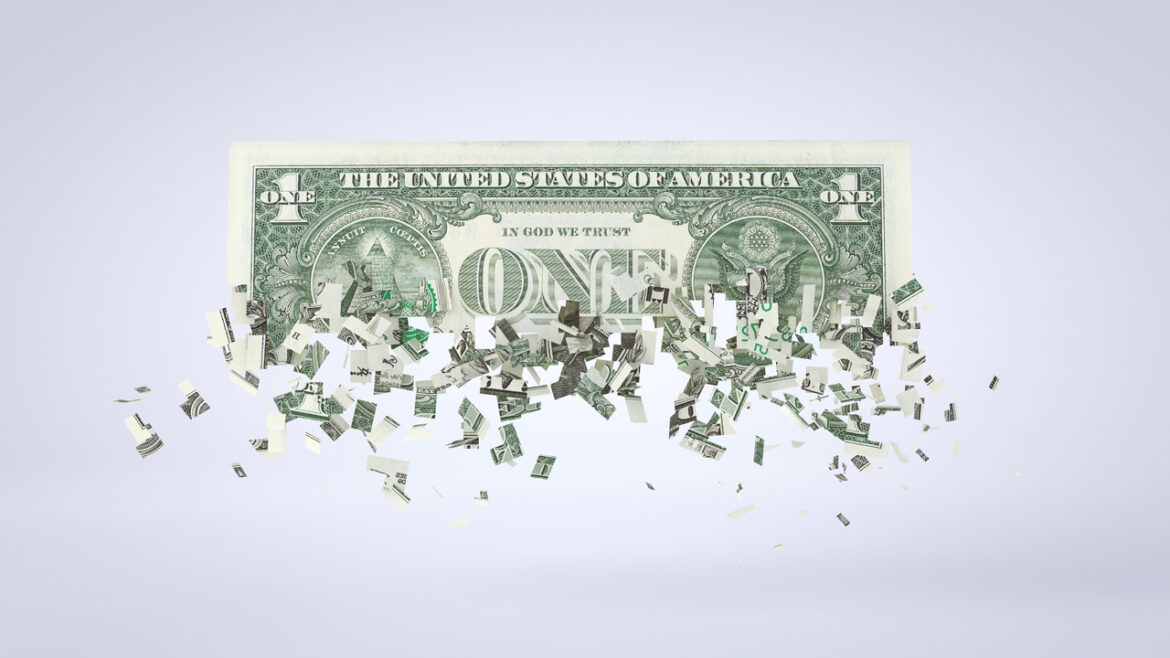
Last week, Fitch Ratings downgraded the US’s long-term credit rating from AAA to AA+. While the downgrade won't significantly impact the US government's ability to borrow, it should serve as a wake-up call because there is a much bigger problem looming on the horizon: a market-driven downgrade of the US dollar.
The global push for currency diversification has gained momentum since 2008, peaking in 2022. The upcoming BRICS Summit will address the heavy world reliance on the US dollar for trade and central bank reserves, seeking alternatives. While the US promotes the dollar's primacy, history indicates no currency remains dominant forever. BRICS nations aim for financial system diversification, not dollar elimination. As part of this move, some countries, particularly those sanctioned by the US, have reduced their dollar reserves, often opting for gold. The goal is a balanced global monetary system.
Aug 7, 2023 - 05:49:50 PDT
Gold prices are rising, and central banks worldwide are buying in record numbers. The World Gold Council reports 387 tons purchased in the first half of the year. This surge is driven by global "de-dollarization" strategies, especially in the face of U.S. Federal Reserve's interest rate hikes. China and emerging markets, in particular, are increasing their gold reserves to stabilize their economies and reduce reliance on the U.S. dollar. The trend also supports the internationalization of the Chinese yuan.

Global bank shares plummeted after Moody's downgraded 10 mid-sized U.S. banks due to concerns about the sector's stability, including rising funding costs and a potential decrease in deposits. This comes after the failure of three U.S. lenders earlier this year. Furthermore, Italy's unexpected decision to impose a 40% tax on banks' profits from higher interest rates caused significant drops in European bank stocks. Major banks in both the U.S. and Europe saw shares fall, reflecting broader investor apprehension.
 CRITICAL SILVER MARKET UPDATE AUG 6th: Powerful Forces Setting Up For Much Higher Silver Prices
August 6, 2023
Powerful forces are setting up for much higher silver prices, while the Major Market participants are totally unaware. Critical changes are taking place in the silver market, especially in the world's largest silver producer, which I discuss in my newest "Weekend Update"....

Don't be misled by current silver price trends; a significant upswing is on the horizon in a monthly chart. With the Federal Reserve's limits on monetary tightening and persistent double-digit deficits, it's inevitable that inflation will surpass usual levels.
This economic climate is likely to favor tangible assets and high-quality resource businesses. Given that the gold-to-silver ratio is at a historical high of 82, it underscores silver as an incredibly appealing segment of the commodities market.