
Precious metals are apparently waking up. And here is where you can find the best deals.


Site:
Precious metals news
President Joe Biden recently reiterated the complaint about the wealthy not paying their "fair share" of taxes. However, the concept of a fair share is arbitrary and lacks an objective measure. Taxes are imposed by force, unlike voluntary market transactions. The top income earners already contribute a significant portion of taxes. Additionally, income alone does not determine one's financial well-being. The notion of a fair share of taxes is used to disguise political power grabs.


Researchers at Duke University are experimenting with replacing lithium in batteries with argyrodite, a mineral that contains silver along with other elements.This could further increase the demand for silver and tax an already strained silver supply.
Japan's controversial plan to release over a million cubic meters of treated water from the Fukushima nuclear disaster site into the Pacific Ocean is nearing approval. This decision has strained relationships with neighboring countries, notably China, and sparked widespread opposition.
As central banks raise interest rates to combat inflation, companies are feeling the immediate impact. They are facing higher interest payments on their floating-rate debt, and their inflation-linked obligations are growing larger. There is over $1.8 trillion of this type of debt globally, mainly comprising leveraged loans, corporate floating-rate notes, and inflation-linked securities. The outlook for this debt is worsening, with Fitch Ratings attributing the uncertainty of inflation as one of the reasons for increasing its default rate forecast for US leveraged loans. BNP Paribas analysts have advised clients to sell B-rated leveraged loans in the US due to unsustainably high interest expenses.
 ‘The Global Economy Is Due for a Reality Check,’ Warns the Central Banks’ Bank
Jul 3, 2023 - 06:27:05 PDT
The global economy faces a bleak future. High inflation and financial risks loom large. Purchasing power has declined, and there's a risk of a vicious cycle of rising prices. Financial stability is threatened by excessive debt and asset prices, putting weak banks and non-bank institutions at risk. Shaky government finances worsen the situation. Policymakers must prioritize price stability and implement regulations to ensure financial institution safety. Fiscal consolidation and long-term structural reforms are essential. Without change, trust in policymaking and economic prosperity will be lost.
The world's economy is at risk of becoming "unglued" due to inadequate energy supply, which will lead to infighting, scarcity of goods, and political fragmentation. Fossil fuel reserves are running out, and history shows that economies tend to grow and collapse in cycles. Current trends in oil supply, interest rates, and debt levels suggest we are in a crisis period. The world's total energy supply must increase to support population growth and prevent collapse. Energy density and storability are crucial for feeding the population and maintaining cities. Added complexity increases wage disparities and makes the system more fragile. Models show that the economy is constrained by the need for reinvestment and resource availability. Transitioning to a renewable energy system alone is unlikely to solve these challenges.
Global factory activity slumps as demand weakens in China and Europe, clouding the outlook for exporters. Eurozone manufacturing contracts faster than expected, squeezed by ECB policy tightening, while Britain's decline steepens. Factory activity in Japan and South Korea contracts, hindering Asia's economic recovery. Data suggests a further contraction in the United States. Overall, the manufacturing sector remains bleak, with no signs of rebound this year, according to economists. The downturn is broad-based, affecting major economies. China's weak rebound and the anticipation of aggressive interest rate hikes in the US and Europe add to the pain.
Hedge funds abandon bullish dollar bets as rate hike prospects fade. Leveraged funds' positions on the greenback against eight currencies plummet, reaching the lowest level since March. The US dollar has been on a downtrend, and hedge funds are now anticipating rate cuts instead of further rate hikes by the Federal Reserve. Data suggests they are focusing on an eventual start to rate cuts in early 2024. The relative attractiveness of the dollar diminishes as peers like the European Central Bank may raise rates to tackle stubborn inflation. Market sentiment favors continued weakness for the dollar.
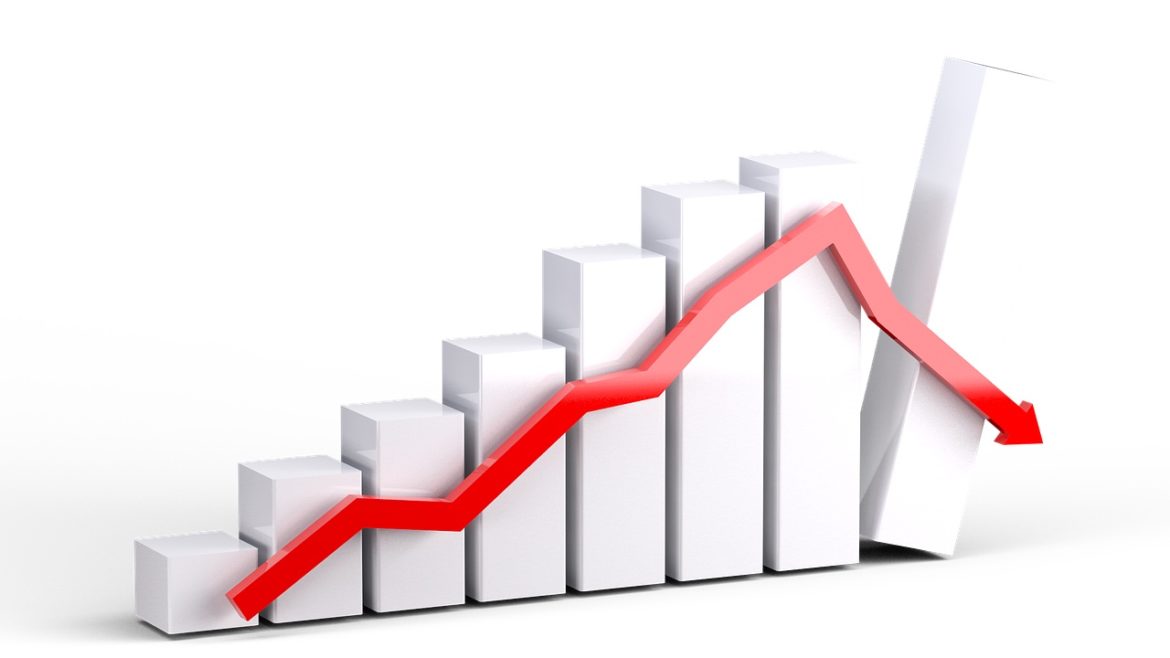
A note recently published by two Federal Reserve economists reveals a looming catastrophe.The Fed's interest rate hikes have already precipitated a financial crisis. The central bank managed to paper over that problem and get it out of the headlines with a bailout program. But it didn't solve the problems. Banks continue to tap into the bailout loans as they struggle in this high-interest-rate environment.And there are even bigger problems on the horizon.
Gloomy outlook for profit margins as inflation cools and growth slows, warns JPMorgan strategist. Earnings expectations lack optimism for the rest of the year, despite resilient second-quarter performance. Mounting signs indicate the recent equity surge may not be sustainable, with downgrades outnumbering upgrades and projections of a sharper decline in earnings. Caution urged as market sentiment shifts and risk increases, leaving investors with no safety net. FOMO (Fear of Missing Out) drives the current state of affairs.

Largest banks brace for looming challenges as stress test results fall short. Concerns arise as buybacks remain conservative, signaling anticipated difficulties ahead. The Federal Reserve plans to impose a significant 20% increase in capital requirements for these banks, indicating a lack of confidence in their resilience. Uncertain times lie ahead for the banking industry.
Pimco's CIO, Daniel Ivascyn, is preparing for a potentially harder economic downturn than other investors. He believes that the tightening of interest rates will lead to uncertainty and increase the risk of extreme economic scenarios. Ivascyn emphasizes that the impact of rate hikes typically takes around five to six quarters to materialize. He also questions the market's confidence in central banks' ability to engineer positive outcomes. Pimco is favoring high-quality government and corporate bonds, while avoiding vulnerable areas of the market. Ivascyn expects downgraded credit ratings to trigger forced selling in the coming months, creating buying opportunities. He warns that this cycle may differ from previous ones, as central banks may be less inclined to provide support, and the transfer of risk to private markets could slow down credit valuations' deterioration but not prevent it.
Forget Quantitative Tightening – The Fed Will Double Its Balance Sheet to Over $16 TrillionJul 3, 2023 - 05:48:00 PDT
According to Michael Howell, managing director at Crossborder Capital, ballooning debt in the coming years will force the Federal Reserve to abandon its quantitative tightening plan and return to quantitative easing. This shift is expected to provide a tailwind for stocks but be less favorable for bond investors. Howell predicts that central banks will need to provide liquidity not only during banking crises but also to bail out debt-burdened governments. The growing focus on public spending and expanding government deficits in developed economies further contributes to the necessity of large central bank balance sheets. Therefore, quantitative easing is likely to make a comeback, as the pool of global liquidity remains substantial.
Bank of America (NYSE:BAC) faces a significant paper loss of approximately $109 billion due to its capital allocation decisions during low-interest rate periods. The bank invested heavily in government bonds at high valuations and low yields, resulting in substantial losses as interest rates rose. In comparison, its competitors incurred much smaller unrealized losses. The bank's lower profitability and disadvantageous position in the market are expected to persist, leading to a negative outlook for Bank of America's stock (BAC) compared to its peers JPMorgan (JPM) and Citigroup (C).
In the face of a stubborn trilemma of challenges, central banks need help to restore policy credibility. June was a challenging month for central banking. Central banks made conflicting moves, with some raising rates while others held steady. Inflation persists, leading to concerns of stagflation. Central banks face criticism and the need for coordinated policies and independent reviews to address the challenges.
Global markets bounced back in June after experiencing significant losses in May, as indicated by proxy ETFs. However, US bonds remained a weak spot, continuing their downward trend from the previous month. In June, US stocks took the lead, with Vanguard Total Stock Market Index Fund ETF Shares (NYSE:VTI) rising by 6.7% for the fourth consecutive month. Although VTI still has a considerable gap to reach its record high from January 2022, it concluded last week at a 14-month peak.
 METALS & MARKET UPDATE JULY 2nd: Major Market Disruptions Coming & What The Hell Is Going On At GoldMoney??
July 2, 2023

France is providing the world with a preview of the Major Market Disruptions coming in the future. High Energy prices will also make this bad situation worse. And, what the Hell is going on at GoldMoney... I provide more details...

The Fed saw a reduction in its balance sheet of $45M. The majority of this was in Treasuries of 1-5 year maturities with a reduction of $55B. The next biggest reduction was in MBS totaling $20B, which fell short of the target $35B. The Fed has still never reached its MBS target since QT began.

The idea of the US dollar losing its reserve status, once considered controversial, is now openly discussed around the world. As China's influence grows in global trade, they are increasingly pushing for the use of the yuan in trade transactions. If China demands that Australia trade in yuan instead of dollars, Australia may need to find uses for the excess yuan they accumulate. One possible solution is for Australia's central bank to exchange the excess yuan for gold, a traditional asset held by central banks. With China's substantial trade surplus, if even a portion of it is exchanged for gold, it could potentially drive the price of gold to $5,000 per ounce. Considering the risks associated with the dollar losing its dominance as the world's reserve currency, gold can be seen as a valuable asset for hedging against such risks.
 UK Passes Bill To Recognize Crypto As “Regulated Financial Activity”, Boosts Adoption in Europe
Jun 30, 2023 - 12:35:23 PDT
UK Regulates Cryptocurrencies
The UK has officially implemented regulations for cryptocurrencies, surpassing the US in acceptance despite having a smaller user base. The Financial Services and Markets Bill (FSMB) received Royal Assent, recognizing crypto as a regulated financial activity. Economic Secretary Andrew Griffith believes this landmark legislation will support businesses, consumers, and drive growth. The bill also unlocks potential investment and fosters innovation, contributing to the country's economic growth.