
Precious metals are apparently waking up. And here is where you can find the best deals.


Site:
Precious metals news
Jul 5, 2023 - 06:05:09 PDT
Americans have squandered $1.76 trillion in savings since 2020, leaving a meager $533 billion. Personal savings are at a dismal 4.6% of income, well below the 8.9% average. A staggering $986 billion credit card debt adds to their vulnerability. Wells Fargo predicts a looming recession as the labor market weakens. The financial future looks bleak for American households.
Jul 5, 2023 - 06:01:02 PDT
Nearly $47 billion has flowed into the US banking system within a week as banks employ new strategies to attract customers back. Regional banks are resorting to borrowing substantial amounts of cash from the Federal Reserve and relying on brokered deposits from intermediaries to bolster their deposits. However, these tactics come at a high cost and pose a long-term risk to bank earnings. The surge in brokered deposits, exemplified by PacWest Bancorp's staggering increase, raises concerns due to their costly acquisition and short-term nature. Despite the recent influx, the total amount of deposits in US banks remains lower than the figure recorded a year ago.
Jul 5, 2023 - 05:55:19 PDT
The Federal Reserve has issued a fresh warning about the state of the US economy. According to a research note by two Federal Reserve economists, the number of non-financial firms facing financial distress has reached historic levels. The economists highlight that the recent tightening of US monetary policy, coupled with the high percentage of distressed firms, could have significant effects on investment, employment, and overall economic activity. The economists estimate that the impact may be particularly noticeable in 2023 and 2024. The Fed also cautions that its own policies may push distressed companies closer to default, potentially leading to a wave of unforeseen layoffs. The analysis suggests that the effects on employment could be even more significant than estimated, as bankruptcies and associated layoffs may not be fully captured by the data.
Jul 5, 2023 - 05:50:47 PDT
The four largest banks in the US, Bank of America, Wells Fargo, JPMorgan Chase, and Citigroup, are facing a total of $205 billion in unrealized losses on their balance sheets. These losses are a result of bad bets in the bond market. Bank of America is in the worst position, with $100 billion in unrealized losses. Wells Fargo and JPMorgan Chase each have $40 billion in losses, while Citigroup has $25 billion. The failure of Silicon Valley Bank in March serves as a cautionary example of the risks associated with unrealized losses. Despite these losses, the Federal Reserve claims that Bank of America and other major banks performed well in a recent stress test. However, the test also projected total losses of $541 billion in a hypothetical recession.
It's been 90 years since M2 money supply has contracted by at least 2%. The M2 money supply in the United States has experienced its largest increase since the Great Depression. During the COVID-19 pandemic, M2 surged by 26%, leading to historically high inflation rates. Recently, M2 has shown a 4.1% decline, which is concerning given its correlation with deflationary recessions in the past. Other money-based indicators, such as commercial bank credit and tightening lending standards, also suggest economic trouble ahead.
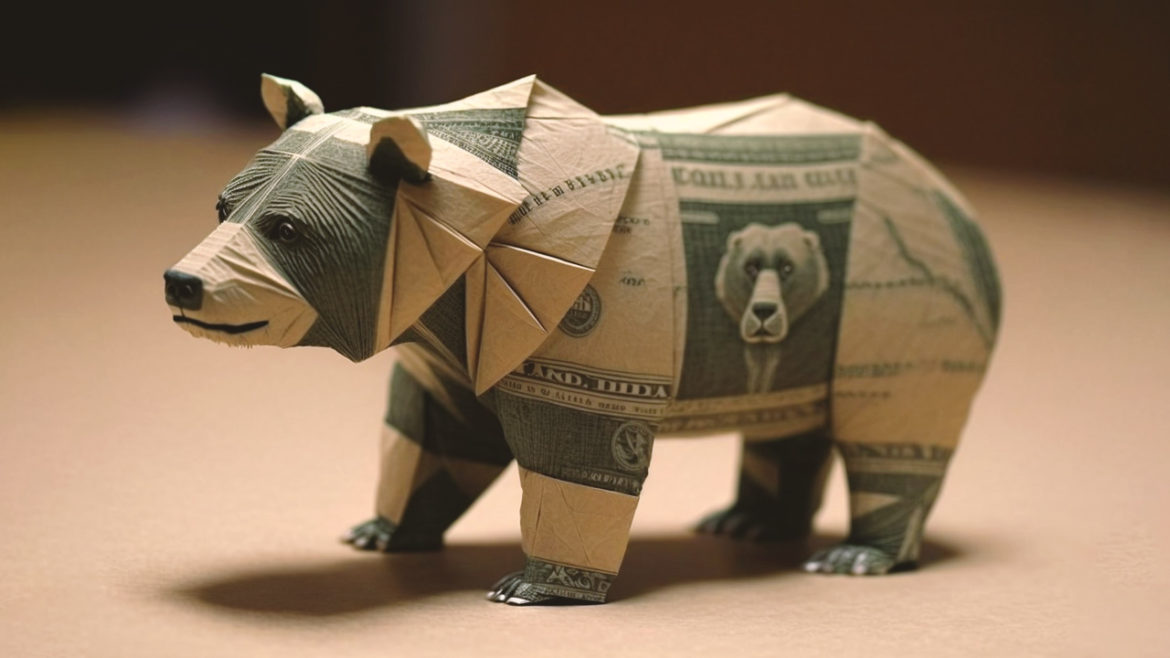
June continued a stock market rally that produced big gains through the first half of the year. But what exactly is driving this rally and is it really justified by the economic fundamentals? Peter breaks it down in a recent podcast and concludes that this is likely a bear market rally.
Jul 5, 2023 - 05:39:48 PDT
Now that the relationship with China has soured and the People’s Republic of China has become the greatest adversarial threat to the U.S. and Western security. The United States pays interest on $850 billion in debt held by China, while China is in default on its sovereign debt to American bondholders. This failure to address the issue undermines justice and national security. The U.S. should follow the example of the U.K. in 1987 and demand repayment. Options include utilizing the Chinese bonds to offset U.S. Treasurys owned by China or imposing restrictions on China's access to U.S. bond markets. It's time to take action and enforce international norms.
Jul 5, 2023 - 05:36:30 PDT
After a three-year break, 27 million Americans will resume student loan payments in October. The Supreme Court's ruling against President Biden's loan forgiveness plan adds to the financial burden. With a softening labor market and rising interest rates, economists worry about the impact on consumer spending and the broader economy. Borrowers face challenges in adjusting their budgets, potentially leading to delinquencies and financial hardships. The end of the payment pause marks a sobering moment for many borrowers.
 The ‘Superbubble’ in Stocks & Housing Will Burst – AI Boom Might Delay the Crash, Jeremy Grantham
Jul 5, 2023 - 05:28:02 PDT
A massive asset price bubble looms, but according to Jeremy Grantham, the artificial intelligence craze may postpone its inevitable crash for a few more months. Grantham, the market historian and GMO co-founder, identified a "superbubble" encompassing stocks, housing, and commodities in early 2022, suggesting a major crash was imminent. However, the recent rally, fueled by the AI hype, has provided temporary respite. Companies like Nvidia and Microsoft, with AI exposure, have experienced significant stock surges. Grantham acknowledges that the AI frenzy may sustain the broader stock market for a couple more quarters, but he remains cautious, predicting the eventual bursting of the superbubble. He previously warned of a potential 44% drop in the S&P 500 from its current level.

Global shares experienced a decline on Wednesday due to indications of an economic recovery slowdown in China and the euro zone. Traders were anxiously awaiting the release of the U.S. Federal Reserve minutes and an important U.S. jobs report later in the week to gain insights into the central bank's stance on interest rates.
The Federal Reserve has hiked interest rates to levels not seen since before the financial crisis in 2008. The money supply had contracted at a rapid rate. This should cause the economy to slow down. Yet month after month, we get strong job numbers, rosy economic headlines, and assurances that the economy remains robust.What exactly is going on here? Why hasn't the predicted recession materialized yet?
 An Amazing Freak Show: Treasury Increases National Debt By Over $850 Billion in Just One Month
July 5, 2023
A month ago, the fake debt ceiling fight ended and Congress suspended the federal government's borrowing limit for two years. Since the debt ceiling deal, the US Treasury has added a staggering $851 billion to the national debt.
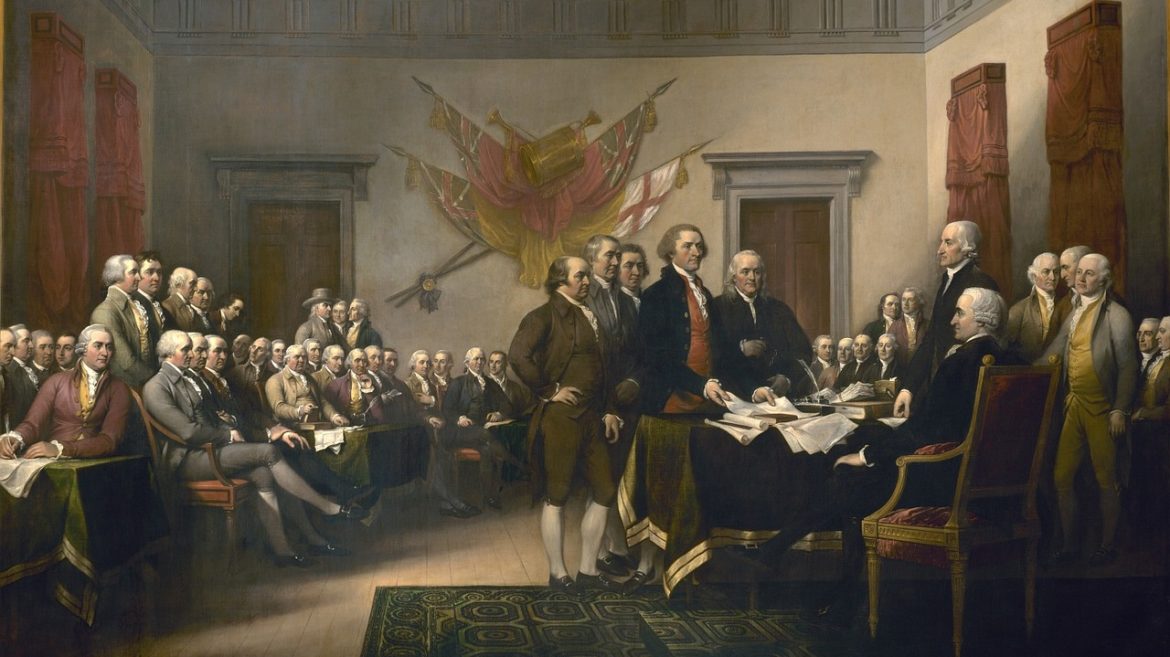
Today we celebrate insurrection.No. I don't mean the fake Jan. 6, 2021, "insurrection." I'm talking about the bonafide insurrection staged by American colonists against the British government.We call July 4 "Independence Day." But the British called it an act of rebellion.
 U.S. SHALE GAS SUPPLY ON VERGE OF DECLINE: Leading Shale Gas Growth Field Now Experiencing Collapse In Drilling Rigs
July 4, 2023

The U.S. Shale Field, which provided more than 50% of the total shale gas supply in the past three years, is seeing a total collapse of its drilling rigs. This is terrible news because Americans and foreigners are now addicted to New Energy Drug called... SHALE GAS...
Changes in solar panel technology are driving up demand for silver, creating a supply deficit for the metal. More efficient solar cells require larger amounts of silver, increasing consumption. The solar industry's shift towards advanced cell structures is contributing to the silver supply shortage. Primary silver mines are rare, and the majority of silver supply comes as a by-product of lead, zinc, copper, and gold projects. As miners hesitate to invest in new projects, increasing silver production is challenging. Chinese solar companies are exploring cheaper alternatives like electroplated copper. Silver prices would need to rise for these alternatives to be viable. While there won't be a silver shortage, the market is expected to reach a new equilibrium at a higher price due to growing demand.
Gold prices surged on Monday as weaker economic readings led to a retreat in the dollar and yields, creating doubts about the Federal Reserve's hawkish policy outlook. Spot gold rose by 0.3% to $1,925.16 per ounce, while U.S. gold futures gained 0.2% to $1,933.30. The wider spread between the 2-year and 10-year U.S. Treasury note yields raised concerns about a potential recession. Lower interest rates and a decline in the dollar further boosted gold's appeal. Market analysts projected a trading range of $1,900 to $1,930 before the release of the Fed's meeting minutes. Other precious metals also experienced positive gains.
 Geopolitical Evolution: Russia's 'Rebellion' & A Return To Gold-Backed Currency
Jul 3, 2023 - 07:03:34 PDT
The increasing number of nations seeking to join BRICS, a group of emerging economies, highlights the importance of geopolitics. Currently, 36 nations have applied or expressed interest in joining, representing over 60% of the world's population and one-third of global GDP. The BRICS summit in Johannesburg in August may include discussions about a new trade currency backed by gold. Russia's economic situation, including a declining trade surplus and weakening currency, suggests the need for President Putin to address Ukraine's conflict. There are indications that Russia may attack Kiev to end Ukraine's instability. Additionally, plans for a new trade currency tied to gold are being developed, with potential implications for global markets and the future of the US dollar. The BRICS membership is expanding, with diverse countries showing interest, including France. The integration of BRICS with the Shanghai Cooperation Organisation (SCO) could create a powerful trade bloc independent of the US and EU, with ...
Jul 3, 2023 - 06:58:05 PDT
The economic approach of the Biden administration involves significant federal spending and monetary stimulus from the Federal Reserve. However, as with any stimulus, its effects can diminish over time. This is evident in the stagnation of US bank credit growth at a mere 0.7% year-over-year, while M2 Money growth sees a slight increase at -4%. These are factual figures. Some critics argue that the Federal Reserve, which operates independently, manipulates interest rates, while President Biden and Congress pursue expansive spending measures, resembling reckless behavior to drive economic growth.
Yellen Will Go To Beijing As Biden Seeks To Move Supply Chains Away From ChinaJul 3, 2023 - 06:55:53 PDT
Treasury Secretary Janet Yellen is set to travel to Beijing for meetings with senior Chinese officials, aiming to manage the relationship between the world's two largest economies. However, no breakthrough is expected following Secretary of State Blinken's recent trip, as President Biden's remarks referring to Xi Jinping as a "dictator" have strained relations. Yellen's visit takes place amid concerns over the global economy and tensions over exports and manufacturing in China. Despite the optimism in the markets, the recent heated rhetoric from Beijing and comments from former Vice President Mike Pence further complicate the situation.
US growth estimates remain well below Federal Reserve projections despite extensive stimulus. Government deficit spending has led to negative real wage growth and weaker GDP. The latest data shows headline strength hiding weaknesses in core capital-goods orders. The Biden administration's expenditure programs have contributed to higher inflation and recession risks. These programs, such as the Inflation Reduction Act and Bipartisan Infrastructure Law, have strained supply chains and tightened the labor market. The excessive spending has worsened inflation and weakened public finances. The Federal Reserve's attempts to counter inflation may further hinder families and businesses.