
Precious metals are apparently waking up. And here is where you can find the best deals.


Site:
Precious metals news
 Fed’s Liabilities: QT Pushed Down Reserves & RRPs by $865 Billion. Currency Circulation Hits Record
Jul 14, 2023 - 08:57:58 PDT
Quantitative Tightening (QT) has had a negative impact on the Federal Reserve's balance sheet, with reserves and reverse repurchase agreements (RRPs) declining by a combined $865 billion from their peak levels. This reduction in liquidity is a concerning trend.
Reserves, representing cash held by banks at the Fed, have dropped, and the decline amounted to $664 billion in Treasury securities and $202 billion in mortgage-backed securities (MBS), totaling $868 billion for QT. On the other hand, currency in circulation has reached a new record high of $2.34 trillion.
Reverse repurchase agreements (RRPs) with foreign official accounts decreased by $56 billion from their peak in January 2023, while overnight RRPs decreased by $547 billion from their peak in September 2022. RRPs serve as liabilities for the Fed as cash owed to counterparties.
The government's checking account, known as the Treasury General Account (TGA), has experienced fluctuations due to factors such as tax receipts and deficit spending. The T...
Jul 14, 2023 - 08:13:35 PDT
Social Security and Medicare are facing a bleak future, and our politicians lack the courage to address the impending crisis. The reality is that there are not enough working individuals to support the growing number of elderly people who are living longer. Both Social Security and Medicare are on the verge of bankruptcy, yet our leaders avoid discussing the issue.
France's president had to raise the retirement age to save their pension system, which caused widespread protests. In America, any politician who suggests necessary solutions is met with opposition from misinformed seniors who believe their retirement funds should be untouchable. The truth is that Social Security is not individuals' own money; it relies on contributions from younger generations.
When Social Security was established, it made sense because the average life expectancy was much lower. However, now that Americans live longer, the system is strained, and there aren't enough workers to sustain it. Politicians refuse to share this deva...

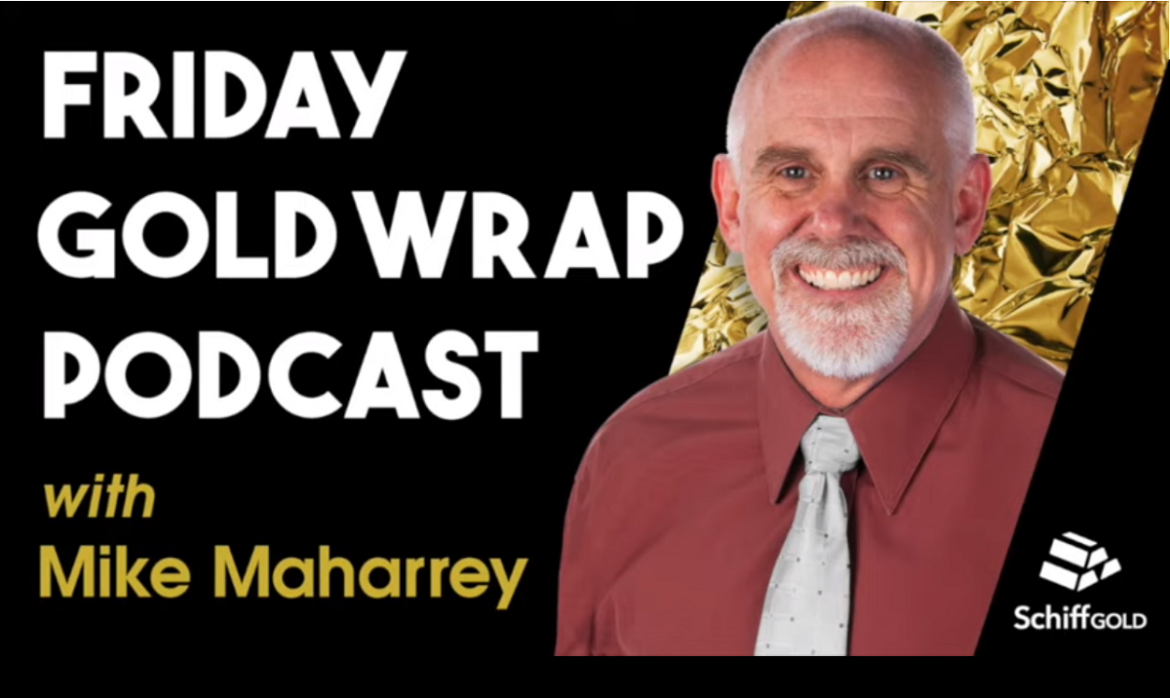
As the saying goes, there's no place like home. And more and more countries think that's the case when it comes to their gold. In this episode of the Friday Gold Wrap, host Mike Maharrey talks about why many central banks and sovereign wealth funds are bringing their gold home. He also talks about gold's performance through the first half of 2023 and the June CPI data.
 Countdown to the US Minsky Moment: US Federal Debt Interest Payments About To Hit $1 Trillion
Jul 14, 2023 - 06:34:43 PDT
The latest US Budget Deficit report reveals alarming trends in government finances. In June, government outlays skyrocketed by 15% to $646 billion, while tax receipts dropped by 9.2% to $418 billion compared to the previous year. This resulted in a nearly tripled budget deficit of $228 billion, exceeding the consensus estimate of $175 billion. Furthermore, the cumulative deficit for the fiscal year is already the third-highest on record, reaching $1.393 trillion, an increase of 170% from the same period last year.
Amidst these financial struggles, the Federal Reserve's expansionary monetary policy has only worsened the situation. With the central bank injecting trillions of dollars into the economy and keeping interest rates near zero for an extended period, inflationary pressures have intensified.
However, the most shocking revelation lies in the interest payments on the growing debt. Within just nine months of the fiscal year, the US has accumulated a record $652 billion in gross debt interest, represen...
Inflation may be on the decline, but it doesn't mean that prices are going down. The Consumer Price Index shows a 3% increase from June 2022 to June 2023, but it's important to note that the formula used to calculate inflation has changed over time. If we still used the methodology from 1980, inflation would be in the double digits.
While it's good news that prices are rising at a slower rate, the reality is that the cost of living continues to burden average Americans. Many families are cutting back on everyday items like toothpaste and toilet paper. The demand for cheaper brands and budget stores is rising, impacting manufacturing giants and benefiting discount retailers.
The financial stress is evident, with surveys showing that over 60% of the population is living paycheck to paycheck. Back-to-school spending is projected to decline for the first time in nine years, reflecting the struggles caused by inflation.
Housing affordability is also a major concern. Even a middle-class income is no longer suff...
 THE LARGEST U.S. SHALE GAS FIELD HITTING PEAK? Troubling Signs At The Mighty Marcellus
July 14, 2023

If the United States' largest shale gas field shows signs of peaking, this is terrible news for the country's strategic goal of being "Energy Independent." There are troubling signs taking place at the Mighty Marcellus Gas Field, which accounts for nearly 40% of total U.S. Shale Gas Production...
The battle between the Fed and the bond market continues, with each side delivering blows to the other. The Fed's rate-hiking regime, though not a serious challenger, can influence the behavior of the bond market to some extent. However, the bond market has shown resistance and disagreement with the Fed's inflation concerns. The fight intensified last year, with inversions spreading and deepening. While the Fed attempted to raise rates, bond yields remained stubbornly low. The market struck back with a banking crisis, causing rates to plummet. The conflict revolves around the definition and impact of interest rates. The Fed's belief in raising rates to fight inflation is met with skepticism from bond market participants who view falling rates as a sign of deflation and economic weakness. The events in September and October, which included a collateral run, marked the initial stages of the banking crisis. The bond market's counterpunch against rate hikes highlighted the deflationary consequences that would...
Jul 13, 2023 - 12:47:31 PDT
Confidence in banks and the overall U.S. economic system is declining rapidly, with only 26 percent of Americans expressing confidence in banks. This figure dropped by just one percentage point despite recent major bank failures. The repeal of the Glass-Steagall Act in 1999, which allowed banks to engage in high-stakes trading and complex derivatives, contributed to the erosion of trust in the banking system. Family homelessness has also surged across major cities, highlighting the failure of the Bidenomics agenda to deliver prosperity. The inflation storm has left Americans, especially the middle class, struggling with negative real wage growth and a reliance on credit cards in a high-interest-rate environment. Despite the White House's claims of progress, the nation's confidence in banks remains dismally low. Restoring the Glass-Steagall Act is crucial to addressing the recurring banking crises and rebuilding trust in the system. The decline in confidence extends beyond banks, with newspapers, televisio...
In a grim turn of events, the Biden administration's touted economic agenda, known as "Bidenomics," is facing harsh realities. Despite the White House's claims of prosperity, Americans, particularly the middle class, are being crushed by the inflation storm. Two years of negative real wage growth have forced many to deplete their savings and rely on high-interest credit cards to make ends meet. While the administration takes credit for a slight decline in the inflation rate, it remains above the Federal Reserve's target.
Adding to the troubling picture, new data from Bloomberg reveals a staggering increase in family homelessness across 20 major cities. The rising cost of goods, limited housing supply, and the reduction of pandemic-era benefits are exerting immense pressure on Americans. The surge in family homelessness contradicts the narrative of a prosperous era unleashed by Bidenomics.
Even The Wall Street Journal Editorial Board exposed the administration's propaganda, pointing out that real average h...
 Ray Dalio Warned Debt Crisis May Be Happening as US Borrowings Surge by $1 Trillion in Just Weeks
Jul 13, 2023 - 12:19:08 PDT
Billionaire investor Ray Dalio's warning of a looming debt crisis in the United States appears to be materializing. The government's borrowings skyrocketed by a staggering $1 trillion in just one month following the resolution of the sovereign debt limit standoff. The total outstanding public debt now stands at a staggering $32.5 trillion. Despite Congress passing a bill to lift the debt ceiling, critics, including Dalio and Berkshire Hathaway CEO Warren Buffett, voiced their concerns over the mounting debt burden. Dalio graded the deal with a D, asserting that it fails to address the deep-rooted issue of the heavily indebted US government and only adds to the ever-growing pile of borrowings. In a more alarming statement, Dalio warned of a debt crisis in which the government would struggle to find buyers for its extensive debt offerings. He emphasized that the US is at the beginning stages of a classic late-cycle debt crisis, characterized by an imbalance between excessive debt production and a shortage o...
The Economy Is in a ‘Rolling Financial Crisis’ As Private Sector Debt BalloonsJul 13, 2023 - 09:32:04 PDT
The economy is facing a slow-moving financial crisis fueled by escalating levels of private sector debt, warns GMO. Partner James Montier highlights the risk posed by the massive buildup of private debt, which can act as an amplifier during market declines. The US, in particular, faces a high risk due to its consistently high ratio of private sector debt to GDP. While current private credit growth remains relatively low, the mounting debt threatens financial stability and asset prices. Experts anticipate a potential recession, as interest rates overtighten the economy. Montier advises investors to choose assets that hedge against risk and retain value. Market observers, including GMO co-founder Jeremy Grantham, have also raised concerns about a potential crisis, with Grantham predicting a significant stock market crash and estimating a potential 50% drop in the S&P 500 over the next few years.
Third Wave of Hotel CRE Defaults Has Started, Triggered by CMBS Maturities & Variable-Rate MortgagesJul 13, 2023 - 09:26:48 PDT
CMBS holders are facing losses as hotel REIT investors suffer significant setbacks. The intricate financial setup of hotels, involving publicly traded hotel REITs, variable-rate interest-only mortgages, and commercial mortgage-backed securities (CMBS), has created a convoluted situation. The hike in interest rates has caused mortgage payments to double, while hotel property values have plummeted. As a result, hotel REITs are abandoning properties, taking total equity losses, and leaving CMBS holders to bear the remaining losses. This third wave of defaults in 15 years is driven by soaring interest rates, leading property owners to walk away instead of seeking resolutions. The default rate for lodging CMBS has surged to 5.3% in June, surpassing even the default rate for office mortgages. Ashford Hospitality Trust and Park Hotels and Resorts are among the companies that have walked away from properties, leaving CMBS holders with substantial losses. This trend reveals the consequences of overleveraging and v...
PMI surveys by S&P Global Market Intelligence paint a grim picture of global trade at the end of the second quarter, with exports experiencing their sixteenth consecutive monthly decline. The slump in export orders for goods and services intensified, reaching its fastest rate of decline in five months. While service sector exports managed to show some growth for a fourth consecutive month, the rate of expansion cooled from the previous month's record high. On the other hand, the downturn in goods trade expanded across sectors, affecting intermediate goods, investment goods, and consumer goods. The decline in machinery exports signals reduced investment spending, while reduced exports of consumer goods point to weakened household demand. Although travel and tourism exports saw a spring surge, boosting service sector exports, there are signs of this momentum fading, likely due to interest rate hikes and increased global living costs. While professional and commercial services and financial services continue...
 A Huge Red Flag for the Global Economy: China Is Teetering on the Brink of Deflation
Jul 13, 2023 - 07:49:04 PDT
China's economy is facing a string of challenges, including the looming threat of deflation. The country's central bank has resorted to cutting interest rates in an attempt to prop up its struggling growth. This stands in contrast to the situation in the United States and raises concerns for the global economy. China's economic troubles, such as sluggish growth, a plunging yuan, and a sharp decline in industrial production, are now compounded by the risk of deflation. Deflation is seen as a nightmare scenario by economists because it leads to a drop in consumer spending, which hampers economic growth. China's battle with falling prices serves as a cautionary tale, and its impact could be felt worldwide due to China's position as the second-largest economy and a major exporter. The situation highlights the complex dynamics of the global economy and emphasizes the potential consequences of deflation.


This August, there's a pivotal shift taking place in the global economic landscape.

The whitepaper by the Federal Reserve mentioned in the article warns of a future slowdown in corporate profit growth and stock returns. The author, Michael Smolyansky, explains that the past three decades saw lower interest and tax rates, which provided a strong boost to corporate profits and stock performance. However, the article raises the question of whether profits can maintain their recent growth trajectory without the benefit of these favorable conditions.
The article attributes the significant growth in corporate profits compared to GDP growth to the decline in interest rates and corporate tax rates. According to Smolyansky's calculations, these factors accounted for over 40% of the growth in real corporate profits from 1989 to 2019. Without this boost, corporate profits would have grown at a slower rate, closer to GDP growth.
The decline in interest rates allowed companies to increase leverage and reduce interest costs, which positively impacted their profitability. Similarly, the reduction in co...
Pipeline for PPI Signals Further Deflation: US Producer Price Inflation Falls to Slowest in 3 YearsJul 13, 2023 - 06:01:12 PDT
Consumer price inflation has slowed, and producer price inflation, which was expected to slow, fell further. The producer price inflation is at its lowest level since August 2020. Core producer price inflation, excluding Food, Trade, & Energy, is also at its slowest since February 2021.
In terms of final demand services, prices increased overall, but the prices for transportation and warehousing services decreased. Prices for deposit services, food and alcohol retailing, traveler accommodation services, insurance, hospital inpatient care, and airline passenger services saw an increase, while prices for truck transportation of freight, food and alcohol wholesaling, and residential real estate loans declined.
For final demand goods, prices remained unchanged after a decrease in the previous month. Rising energy prices offset the falling prices for goods excluding foods and energy. Gasoline prices increased, but prices for iron and steel scrap, diesel fuel, oilseeds, industrial chemicals, and residual fuels ...
Jul 12, 2023 - 13:21:28 PDT
A Kentucky man made a stunning discovery earlier this year while working in his field—a collection of over 700 coins dating back to the American Civil War.
Dubbed the "Great Kentucky Hoard," the trove includes numerous U.S. gold pieces minted between 1840 and 1863, alongside a handful of silver coins. The man, whose identity and exact location remain undisclosed, exclaims, "This is the most insane thing ever: Those are all $1 gold coins, $20 gold coins, $10 gold coins."
Certified by the Numismatic Guaranty Co. (NGC) and sold through GovMint, the hoard is primarily composed of gold dollars, accounting for 95% of the collection. Additionally, there are 20 $10 Liberty coins and eight $20 Liberty coins. Notably, the collection boasts 18 of the rarest coin, the 1863-P $20 1-ounce gold Liberty coin, which can fetch six figures at auction. The $20 Liberty coins in the hoard are even more exceptional as they lack the inscription "In God We Trust," added after the Civil War's conclusion in 1866.
Beyond their monet...
Jul 12, 2023 - 12:59:07 PDT
Gold prices climbed on Wednesday, reaching their highest settlement since mid-June, driven by the latest U.S. consumer-price index data that showed a slowdown in inflation. This development has increased the likelihood that the Federal Reserve may soon halt its interest-rate hikes.
The U.S. June consumer price index rose by a modest 0.2%, indicating a slowdown in inflation to the lowest level since 2021. This was lower than economists' forecast of 0.3% and the previous month's rate of 4%.
Jeff Klearman, portfolio manager at GraniteShares, highlighted that gold prices reacted positively, reflecting the market's sentiment that the Fed is nearing the end of its tightening cycle. Despite some aspects of inflation remaining relatively high, the overall trend has been lower.
Concerns about the effects of previous rate increases on sectors like banking, real estate, and debt-laden companies are expected to influence the Fed's future actions. This is likely to result in a less aggressive approach, leading to lowe...

The Dollar's Dominance Wanes as Countries Seek Alternatives
S&P Global's chief economist, Paul Gruenwald, stated that the grip of the US dollar as the dominant global currency is weakening.
Aggressive US sanctions, like the freezing of Russia's reserves, have prompted countries to explore non-dollar trade and repatriate gold reserves.
Gruenwald highlighted the growing trend of circumventing the dollar, citing increased trade in China's yuan and the availability of cheap financing from China-based development banks.
While the US dollar will remain a significant global currency, it is no longer expected to maintain its dominant position.