
Precious metals are apparently waking up. And here is where you can find the best deals.


Site:
Precious metals news


A Kentucky man hit the jackpot when he uncovered money in a cornfield.The unidentified man unearthed 741 $1 coins along with a number of $10 and $20 pieces. There were more than 800 coins in the hoard with a face value of well over $1,000.Oh, and the coins were gold and silver, so they are worth many times more than that today.
Millions of Americans are bracing for a significant blow to their household budgets as federal student loan payments resume in September, according to a new study by TransUnion. The report reveals that around 27 million student debt holders, who have been granted a freeze during the pandemic that lasted over three years, will now have to resume payments. For a significant portion of these borrowers, approximately half, the monthly payment will exceed $200, while one in five will face payments exceeding $500. This abrupt increase in financial obligations is expected to create a payment shock, requiring borrowers to readjust their monthly budgets. The restart of student loan payments adds to the financial challenges faced by US consumers, who have already endured rising interest rates and accumulated additional debts during the pandemic. Older borrowers, burdened with higher student loan debts, will face even larger monthly payments. Despite the Biden administration's attempts to alleviate the debt burden t...

We are all keenly aware of price inflation. We notice those rising prices every time we go into a store. But the inflation boogeyman is hitting you even harder than you realize. Not only are you paying more for pretty much everything you buy, you're getting less.Literally.It's called shrinkflation.
US Housing Starts and Building Permits experienced a disappointing decline in June, with a significant decrease of 8.0% MoM for Starts and 3.7% MoM for Permits. Moreover, Starts saw substantial downward revisions from the previous month, with a revision from a positive 21.7% MoM to a lesser 15.7% MoM.
The decline in construction activity was primarily driven by a drop in multi-family permits and a decrease in both single- and multi-family Starts. The only positive aspect was the continued increase in single-family building permits for the sixth consecutive month.
As a result of these monthly declines, the Starts and Permits SAAR (seasonally adjusted annual rate) experienced a notable decrease, reaching 1.434 million and 1.440 million respectively.
Interestingly, although Housing Starts and Completions are far below their peak levels in 2022, Construction Jobs remain relatively high. However, there are concerns about a potential downturn in residential construction employment.
In addition, data from the Mo...
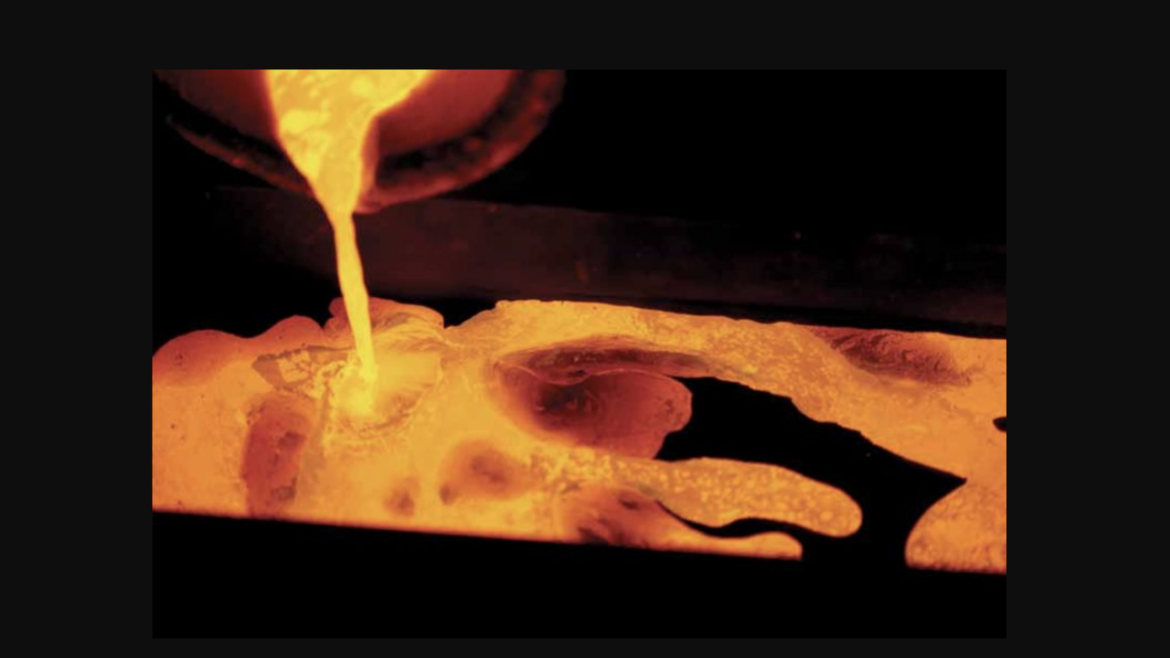
If you buy a gold bar or gold coin, you get beautiful, shiny metal. Of course, gold doesn't come out of the ground that way. Gold ore basically looks like — well- a rock.In order to extract pure gold, refiners put the ore through a multi-step process.

Four months after the failure of Silicon Valley Bank and Signature Bank, the financial crisis sparked by Federal Reserve rate hikes continues to simmer under the surface.As of the end of the first quarter, Bank of America had over $100 billion in unrealized losses on its bond portfolio. This is the exact problem that torpedoed Silicon Valley Bank (SVB).


Tom Cloud discusses why it is important to protect wealth as the U.S. Government moves into a "Debt-Super Cycle." Also, Tom mentioned that the precious metals prices have gone up as the U.S. Dollar has declined. Thus, the direction of gold and silver prices is based on the U.S. Dollar...

On July 7, 2023, news emerged that the BRICS countries (Brazil, Russia, India, China, and South Africa) are set to implement their plan of introducing a new international currency backed by gold. The announcement followed a meeting of foreign ministers from the BRICS nations and representatives from other countries on June 2, 2023, in Cape Town, South Africa. The objective of this initiative is to reduce reliance on the US dollar and establish an alternative currency for global trade.
With the combined economic output of the BRICS countries nearly matching that of the United States and representing around 40% of the world's population, the implications of this move could be substantial. Furthermore, additional countries such as Saudi Arabia, United Arab Emirates, Egypt, Iran, Algeria, Argentina, and Kazakhstan may express interest in joining the BRICS alliance.
While specific details about the structure of the new currency are yet to be disclosed, it is speculated that the BRICS could establish a "BRICS B...
Economist Jeremy Horpedahl strongly refuted the notion that capitalism intentionally creates food scarcity for profit, providing evidence of a significant decrease in household food expenditure as a percentage of income over the years. However, recent developments have raised concerns. When prompted by Jordan Peterson about the last two years, further investigation revealed a notable surge in food spending during the COVID-19 pandemic and the subsequent government interventions.
Although the spending proportions have seemingly returned to their pre-pandemic levels, there is a disconnect between the quantitative data and the qualitative experiences of consumers. This discrepancy is attributed to the phenomenon known as "shrinkflation" and "skimpflation." To maintain prices, businesses resort to reducing the quantity of food in packages, diluting products without changing the advertised amount, or implementing cost-cutting measures that may go unnoticed by consumers initially.
Mouseprint.org has highlighted...
 Soc Gen Strategist Warns: U.S. Dollar Could Soon Wipe Out All of Its Post-Pandemic Gains
Jul 18, 2023 - 11:49:49 PDT
The outlook for the U.S. dollar continues to darken, raising concerns among experts about its future. Kit Juckes, a respected currency analyst, predicts a significant decline for the dollar, potentially erasing all the gains it achieved during the pandemic. With the market pricing in an end to interest rate increases by the Federal Reserve, the dollar is expected to return to its lowest levels from December 2020. This negative sentiment has sparked a wave of pessimism, with many analysts projecting further depreciation for the greenback. The implications of a weaker dollar are worrisome, as it could lead to higher import prices and increased costs for international travelers. While some exporters might benefit, the overall impact on the economy and the looming possibility of a global recession are raising significant concerns about the dollar's future prospects.
Social Security, often referred to as the "third rail of American politics," is a fiercely protected program, especially by seniors who rely on it for their retirement benefits. According to a national poll conducted by Quinnipiac University, an overwhelming 78% of respondents oppose proposals to raise the full retirement age for Social Security benefits from 67 to 70. This opposition remains strong even when considering the possibility of longer-lasting benefits, with only 30% in favor and 62% against the idea.
While Social Security is not currently facing imminent bankruptcy, the trustees overseeing the program have projected that the surplus in the trust fund, which helps fund benefit payments, will be depleted by 2034. After the surplus is exhausted, payroll taxes will still generate revenue, but it would fall approximately 20% short of the total amount needed for benefit payments. At that point, Congress would need to find alternative sources of revenue or make adjustments to benefit rules and payrol...
 Blockchain Developer Finds Brazilian CBDC Allows Government to Freeze Funds and Adjust Balances
Jul 18, 2023 - 09:35:12 PDT
The Brazilian Central Bank Digital Currency (CBDC) has come under scrutiny as a blockchain developer, Pedro Magalhaes, uncovered a disconcerting feature while reverse-engineering its code. Magalhaes discovered that the government has embedded the capability to freeze funds and manipulate balances within the CBDC. Despite attempting to seek explanations, Magalhaes noted a lack of transparency and communication from the government, particularly regarding non-bankers. Vini Barbosa, a reporter from Portal Do Bitcoin, confirmed Magalhaes' findings after engaging with Brazilian authorities. The Central Bank defended the ability to freeze or arrest amounts, citing existing legislation. When Magalhaes initially raised the concern on his LinkedIn profile for educational purposes, he thought it might be limited to decentralized finance (DeFi) or centralized finance (CeFi) contexts. However, the official response clarified that the central bank holds the power to freeze funds at any time. This revelation has instill...

The status quo faces the need to unlearn and confront a Great Depression as the only pathway to a new understanding. The two approaches to analyzing a situation highlight the tendency to cherry-pick data and draw false analogies to support desired outcomes. Analysis often omits discussion of limits, constraints, costs, and worst-case outcomes. Drawing from the Great Depression of the 1920s, the credit bubble and subsequent crash resulted from overvaluation and unsustainable expansion. The refusal to accept wealth destruction hindered recovery, as seen in Japan's prolonged stagnation. The US now faces a debt super-cycle bubble and seeks to avoid losses, but unsustainable trends in total credit, the Federal Reserve balance sheet, and federal debt persist. The popping of bubbles is inevitable, yet policy tweaks fail to address the underlying issues. The crucial difference between the past and present is the depletion of easily accessible global resources, affecting energy efficiency and consumption. Hopes fo...

Treasury Secretary Janet Yellen issued a negative warning about the Chinese economy's slowdown, cautioning that it could have contagious effects. Meanwhile, the U.S. economy grapples with its own challenges, including higher interest rates, stubborn inflation, and looming recession fears. China's GDP growth of only 6.3% in the last quarter, coupled with weak consumer spending and a struggling property market, paints a bleak picture of an anemic recovery from the pandemic. Alarming data also revealed a record-high youth unemployment rate of 21.3% in China. Yellen acknowledged the potential negative spillovers to the United States, particularly for Asian economies, but expressed confidence that a recession would be avoided. However, concerns persist as inflation remains above the Federal Reserve's target, signaling a slower retreat of steep consumer prices. While the labor market has shown resilience, job creation weakened in June. The Federal Reserve's aggressive interest rate hikes aimed at curbing inflat...

You had better get ready for the world of central bank digital currencies (CBDCs) because they are coming. And they are coming fast.According to a recent survey by the Bank for International Settlements (BIS), as many as 24 CBDCs could be in circulation by 2030.

Despite recent reports indicating a slowdown in inflation, the battle against soaring prices is far from over, painting a bleak picture for the economy. The consumer price index rose just 0.2% in June, with the annual rate at 3.1%, significantly lower than the peak of 9.1% a year ago. However, there are troubling signs that indicate the underlying challenges. Rising fuel prices and a clogged housing market continue to pose problems. Moreover, core inflation remains high, with a 0.2% increase in June and an annual rate of 4.8%, far beyond the Federal Reserve's comfort level. Housing costs, a key component, have risen by 7.8% in the past year and show no signs of significant relief.
Long-term analysis reveals that the consumer price index is still up approximately 18% from three years ago, highlighting the enduring impact of inflation on households. Small businesses have been hit hard, grappling with rising costs and higher interest rates imposed by the Fed. This challenging environment dampens growth prosp...
Retail sales in June showed a lackluster growth of only 0.2%, falling short of the forecasted 0.5% increase. This indicates a shift in consumer spending patterns and highlights weaknesses in certain sectors of the U.S. economy. With Americans now allocating more of their spending towards services rather than goods, the reliability of retail sales as an economic indicator has diminished. While overall consumer spending remains relatively strong, there were notable declines in sales at home centers, department stores, and gasoline stations. However, furniture and electronics stores, as well as internet retailers, experienced significant sales growth. The rise in sales of new vehicles and auto parts contributed to the overall increase, but excluding car dealers and gas stations, retail sales only saw a mild 0.3% uptick, providing a clearer picture of consumer demand. Restaurant sales, which are closely monitored by economists, saw minimal growth in June, despite a year-on-year increase. Overall, retail sales...

With the June CPI report coming in even cooler than expected, the mainstream perspective seems to be that the Federal Reserve is winning the inflation fight. But in his podcast, Peter Schiff explains why the dollar is telling a different story.
 Generation X Are Unprepared Financially for Retirement, According to a New Study
Jul 18, 2023 - 05:36:08 PDT
A new study reveals a bleak financial outlook for Generation X, the "forgotten generation" comprising about 64 million Americans born between 1965 and 1980. The National Institute on Retirement Security warns that Generation X is unprepared for retirement, primarily due to the shift from pension plans to 401(k)-style accounts. The study shows that the bottom half of earners in this generation have only saved a few thousand dollars for retirement, while the typical household has a mere $40,000 in retirement savings. Shockingly, approximately 40% of Generation X has not saved anything for retirement at all. Even those participating in employer-sponsored retirement plans are falling short of savings targets, regardless of their race, gender, marital status, or income. The absence of pension plans, multiple economic crises, stagnant wages, and rising costs have created a challenging situation for Generation X, turning the American Dream of retirement into a potential nightmare for many. A separate study previ...

Bank credit becomes increasingly difficult to obtain as rejection rates reach record highs, according to a report by the New York Fed. The overall rejection rate for credit applicants has risen to its highest level since June 2018, reaching 21.8%. This trend is seen across different age groups, particularly impacting those with credit scores below 680. Auto loan rejection rates have also hit a record high, standing at 14.2%, while rejection rates for credit cards and credit limit increases have also increased. The housing sector is severely affected, with mortgage rejection rates at 13.2% and mortgage refinancing rejection rates at 20.8%. The data indicates a pullback in loan applications, with only 40.3% of respondents seeking loans in June, the lowest level since October 2020. However, respondents planning to apply for credit over the next year have seen a slight increase. These trends coincide with the Federal Reserve's aggressive interest rate hikes to combat inflation, making credit harder to obtain....