
Precious metals are apparently waking up. And here is where you can find the best deals.


Site:
Precious metals news
The federal budget deficit has surged to $2.2 trillion over the past 12 months, a 64 percent increase from the previous fiscal year and more than twice the pre-pandemic deficit.
In June alone, the deficit reached $225 billion, compared to $89 billion in the same month last year, contributing to a 12-month rolling deficit that is $136 billion higher than the previous month.
Total nominal spending has risen by 14 percent to $6.7 trillion, while revenue has dropped by 7 percent to $4.5 trillion compared to the prior 12 months.
Deficits as a share of GDP have reached 8.6 percent, surpassing the historical average of 3.5 percent over the past 50 years.
Spending on Social Security, Medicare, and interest has outweighed declining pandemic relief spending, pushing total spending to 25.6 percent of GDP.
Revenue, on the other hand, has fallen to 17.0 percent of GDP, below the historic average of 17.4 percent and projections from the Congressional Budget Office.
Substantial policy changes are necessary to align spen...

Global public debt soared to a record $92 trillion in 2022, surpassing economic growth rates and burdening developing countries the most, according to a United Nations report.
Developing nations account for nearly 30% of the global public debt, with China, India, and Brazil representing 70% of that share. Fifty-nine developing countries face high debt levels, with a debt-to-GDP ratio above 60%.
Limited access to financing, rising borrowing costs, currency devaluations, and sluggish growth have compounded the debt burden for developing countries, leading to an impossible choice between debt servicing and serving their people.
Inadequate and expensive financing options, coupled with exorbitant interest payments, particularly in Africa, have resulted in countries prioritizing debt over critical sectors like education and healthcare.
The global debt crisis puts immense strain on the world's most vulnerable, perpetuating a cycle of poverty and inequality.
WEF's Great Reset Agenda Threatens Global Economy and Food Security
The World Economic Forum (WEF) and its Great Reset agenda have raised concerns over privacy and individual rights. The push for a digital euro and the elimination of property rights have sparked fears of surveillance and a top-down dictatorship.
Additionally, the WEF's agenda includes depopulation as a solution to environmental damage, undermining global food supplies and resources. The reduction of human population through wars and conflicts has historically led to famine and mass casualties.
The control of the money supply, particularly the extensive printing of money by the US Federal Reserve, is contributing to hyperinflation and a potential global economic collapse. The consequences will exacerbate the already imminent global famine.
It is crucial to resist the neofascist agenda of the global oligarchs and protect individual rights and food security before it's too late.
Jul 12, 2023 - 09:04:25 PDT
Digital Euro Plan Marred by Privacy Concerns
The European Commission's introduction of draft legislation for a digital euro has been met with apprehension due to privacy fears. Critics argue that the digital currency could provide governments with unprecedented access to individuals' buying habits, raising concerns about surveillance. Even though the Commission has attempted to address these concerns by imposing limits on digital euro holdings and promising fee caps for shopkeepers, industry criticism and opposition within the European Parliament threaten the proposal's success. The launch of the digital euro plan is overshadowed by doubts and skepticism regarding its potential consequences for privacy and personal freedoms.
Jul 12, 2023 - 08:57:19 PDT
Argentina Faces Mounting Challenges in Dedollarization Efforts Amid Currency Crisis
- Over the past decade, the US dollar has surged nearly 5,000% against Argentina's peso, exacerbating the country's debt and inflation crisis.
- Calls for Argentina to adopt the US dollar as its currency are growing, but this contradicts the nation's efforts to reduce its reliance on the greenback for trade and debt payments.
- Argentina's currency, the peso, has experienced a deepening plunge, with the US dollar skyrocketing 4,800% against it over the past decade.
- The country's escalating external debt and hyperinflation have fueled the campaign for dollarization as a way out of its debt trap.
- However, Argentina's recent efforts to diversify away from the US dollar, such as using the Chinese yuan for debt payments and discussing a joint currency with Brazil, are in conflict with the call for dollarization.
- Weakening currency worsens inflation due to higher import prices, a factor contributing to the suggestion of do...
 Without Inflation, the Status Quo Collapses; With Hot Inflation, It Also Collapses
Jul 12, 2023 - 08:41:25 PDT
The Dark Side of Inflation: An Unsettling Outlook
Inflation's essential role in the current economic system has several concerning implications:
- Reliance on credit and debt expansion fuels a cycle of perpetual debt, benefiting the wealthy while burdening everyday consumers.
- Excessive borrowing and stagnant incomes lead to recessions, as discretionary income is consumed by debt service.
- Limited policy options, such as government borrowing and central bank interventions, only postpone the inevitable collapse.
- Inflation's impact on debt is temporary, as wages fail to keep up, widening wealth disparities.
- Savers suffer as inflation erodes their savings, pushing them into risky investments to combat its effects.
- Speculation driven by inflation exacerbates economic inequalities, favoring the wealthy and leaving ordinary individuals at a disadvantage.
- Capital is diverted from productive investments, hindering long-term growth and neglecting critical infrastructure.
- Rising global risks and interes...
The global surge in business bankruptcies is reminiscent of the aftermath of the 2008 financial crisis, with some countries experiencing volumes not seen in years. This wave of corporate defaults is anticipated to escalate further due to a combination of factors. A decade of easily accessible cheap money led to a false sense of invincibility among business executives and private equity managers, causing them to overlook the cyclical nature of the economy. Now, weaker borrowers are facing a daunting combination of weakening demand, surging inflation, over-indebted balance sheets, and significantly higher borrowing costs.
In the United States, bankruptcies among companies covered by S&P Global Market Intelligence during the first half of 2023 reached their highest levels since 2010. Corporate insolvencies in England and Wales are nearing a 14-year high, while Swedish bankruptcies have hit the highest levels in a decade. Germany saw a nearly 50% year-on-year increase in bankruptcies in June, marking the high...


In a recent podcast, Peter Schiff warned that we could be on the verge of a further breakdown in the bond market and that a bear market in bonds could also maul US stocks and the dollar.Financial commentator and investment guru Jim Grant has similar concerns. In a recent interview on Odd Lots Podcast, Grant said he thinks we're at the beginning of a long-term trend of a weak bond market with higher interest rates that could last decades.
 US Consumer Price Inflation Drops To 27-Month Lows; Longest Streak Of Declines Ever
Jul 12, 2023 - 05:47:20 PDT
- The headline Consumer Price Index (CPI) rose by 0.2% month-on-month (MoM), lower than the expected 0.3% MoM increase, resulting in a year-on-year (YoY) rate of 3.0%, the lowest since March 2021.
- The decline in the YoY headline CPI marks the 12th consecutive month of declines, which is the longest streak of declines in history since 1921.
- Core CPI, which excludes shelter, fell to a YoY rate of 4.8%, the lowest since October 2021.
- Services inflation remains persistent, even as goods inflation fades.
- The significant drivers of the YoY drop in headline and core CPI are yet to be specified.
- Real wage growth saw a year-on-year increase of 0.6% in June, the first rise in 27 months.
- There are indications from M2 (a measure of money supply) that deflationary pressures may be building up.
Overall, the CPI figures show a cooling trend in inflation, with lower than expected increases in both the headline and core CPI. Services inflation remains steady, while goods inflation is slowing down. Real wage gr...
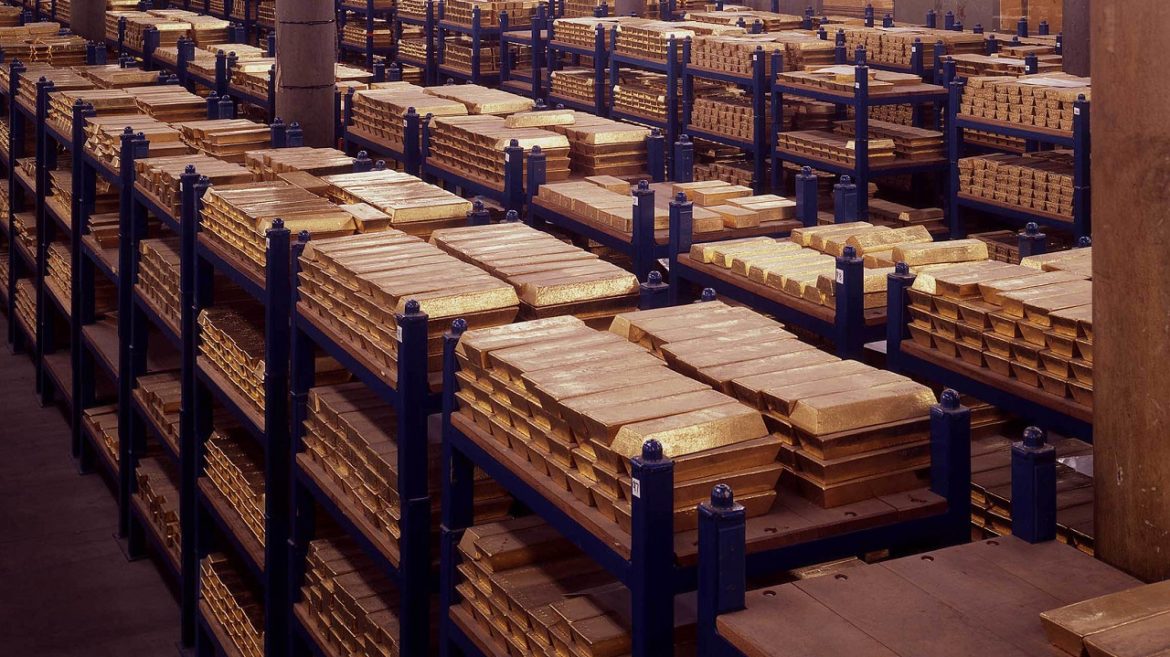
In the wake of Western sanctions on Russia after the invasion of Ukraine, many central banks are bringing their gold home for safekeeping, according to an Invesco survey of central banks and sovereign wealth funds.
The US dollar is on shaky ground. There is a growing trend toward de-dollarization. Meanwhile, the Federal Reserve is tinkering with the idea of a digital dollar that could give the government unprecedented control over your spending.Given the trajectory of the dollar, it might be a good idea to find some alternatives. In other words, we need currency competition.
The Federal Reserve got just what it needed - an even cooler-than-expected Consumer Price Index (CPI) report card for June. This could give the central bank a plausible excuse to back off its inflation fight.But make no mistake, inflation isn't dead or buried.
Jul 11, 2023 - 13:16:46 PDT
Investors are encouraged to include gold, along with bonds, as a valuable addition to their portfolios as the US faces the possibility of a recession. UBS Wealth Management suggests that as the Federal Reserve considers easing financial policies and the US dollar potentially weakens, the demand for haven assets like gold is expected to rise. Hu Yifan, Chief Investment Officer for Asia-Pacific at UBS Group, shared this positive outlook during a webinar, emphasizing the potential benefits of incorporating gold in investment strategies.

Commerzbank predicts that gold prices will increase if the core inflation rate in the United States falls below 5%. The bank suggests that gold serves as a hedge against inflation, and a lower-than-expected inflation rate would bolster the appeal of the precious metal. This analysis highlights the potential impact of inflation data on gold prices and investor sentiment.
Countries are repatriating their physical gold reserves to safeguard against sanctions on foreign assets, while increasing purchases as a hedge against inflation. Central banks globally recorded record gold purchases in 2022, driven by concerns over high inflation and volatile bond prices. The decision to buy physical gold instead of derivatives or ETFs was influenced by fears of frozen assets following the freezing of Russia's reserves. Central banks are increasingly holding gold domestically, with 68% doing so in 2023, compared to 50% in 2020. The trend is a response to the confiscation of Russian assets and the desire for safe-haven assets. The repatriation and increased gold purchases contributed to a rally in bullion prices.

The latest FOMC meeting minutes reveal the delusional nature of monetary policy, with the Fed's pursuit of an ideal economic state resembling a fairy tale. Their obsession with unemployment rates and hourly earnings reflects a misguided attempt to control outcomes. The notion of finding the perfect interest rate to achieve prosperity is a fallacy perpetuated by mainstream economists and media outlets. Despite market shifts and data interpretations, the Fed remains committed to returning inflation to their desired level. In reality, their attempts to control the economy are nothing more than an illusion of control, with the rest of their data serving little purpose in the grand scheme of things.
According to the CBO, federal spending as a percentage of GDP is projected to skyrocket to 29.1% over the next three decades. The main driver of this alarming growth is the ever-increasing interest payments on the national debt. Net interest payments are set to nearly triple by 2033 and become the largest expenditure in the federal budget by 2051, surpassing critical programs like Social Security and Medicare. This mounting debt burden will leave fewer resources for essential priorities and severely limit the government's ability to respond to emergencies or crises. The need to address these dire fiscal challenges is becoming increasingly urgent.
The 23rd SCO summit welcomed Iran as a permanent member, strengthening Eurasia integration. Discussions emphasized mutual security, local currency trade, and de-dollarization. The convergence of focus highlights a drive for a fair multipolar world order, with connectivity, infrastructure, and cooperation in various sectors. Integration of BRICS and SCO seems inevitable, challenging US-EU dominance. A potential gold-backed ruble and a new trade currency tied to commodities are being explored. The goal is a physical economy focused on infrastructure, industry, and technology sharing.
Jul 11, 2023 - 11:55:17 PDT
The US Treasury yield curve narrows as M2 Money growth stalls. Bankrate's 30-year mortgage rate surges to 7.37%, a 156% increase under Bidenomics. Since November 3, 2022, the US Dollar Index declines by 9.68%, while Gold rises.
Mortgage rates jumped to over 7% range for conventional 30-year fixed loans last week due to strong economic data. Rates will likely remain high until inflation and economic growth change. The Consumer Price Index (CPI) release on Wednesday will provide more insight, but it will take time for rates to definitively shift. As of July 11, the average 30-year fixed mortgage interest rate is 7.37%, while the 30-year fixed refinance rate is 7.44%. The housing market and job data show mixed trends, while consumer credit remains weaker than expected. The next Fed meeting is on July 26, with a 92.4% chance of a quarter point hike. The following meeting is not until September 20, with a 22.2% chance of a hike and a 5.8% chance of a cut.