
Precious metals are apparently waking up. And here is where you can find the best deals.


Site:
Precious metals news
Despite a seemingly favorable environment with a 67% public approval rate, the resurgence of organized labor and strikes under President Joe Biden's administration starkly highlights the intensifying income disparity and discontent among American workers. As 75,000 healthcare workers gear up to strike and even auto workers gain presidential picket line support, the underlying narrative reveals a system perceived as fundamentally unfair to hardworking Americans amidst escalating wealth inequality.

Recurrent government shutdowns and a glaring lack of fiscal responsibility plague Washington once more. Despite a history of shutdowns, current “stopgap” measures, like the 45-day operation extension, merely postpone inevitable financial consequences, fostering an environment of continual crisis. The continual use of "Continuing Resolutions" since 2008 has exponentially compounded spending, exploding national debt while revenues stagger behind. While officials might claim transient victories in short-term solutions, the chronic avoidance to make firm, often unpopular, governing decisions merely defers and amplifies future economic fallout.
The latest Federal Reserve study reveals a grim financial picture for 80% of American households, whose bank deposits and liquid assets, adjusted for inflation, have dipped below the levels seen at the pandemic's onset in March 2020. While the wealthiest 20% of households have managed to retain an 8% increase in cash savings since the pandemic began, the bottom two-fifths have experienced an 8% drop, and the middle class has seen their savings dwindle below pre-pandemic levels. This economic disparity underscores a widening financial gap amidst ongoing challenges.

The Bureau of Labor Statistics (BLS) reported a suspiciously high 9.61 million job openings in August, amid an economic environment that suggests otherwise. With a record low 31% response rate to the Job Openings and Labor Turnover Survey (JOLTS), approximately 70% of the job openings figure is an estimate. The stark discrepancy between skyrocketing job openings and minor changes in quits and hires casts a shadow over the data's credibility, fueling skepticism towards the Biden administration’s economic reporting amidst other ongoing economic challenges.

Bank of America warns of a surge in private credit defaults, predicting a rate of 5% by early 2024, exceeding those in the syndicated loan market if high-interest rates persist. The looming issue stems from an anticipated one-third of deals maturing within the next two-and-a-half years and contrasts with a 3% estimated default rate for broadly-syndicated loans. Unaddressed issues within private debt, especially unitranches and older, highly levered deals, risk materializing in the near term, posing substantial financial threats.
UBS predicts significant sell-offs from computer-driven hedge funds, expecting $20-$30 billion in sales over the next two weeks amid declining stock markets, according to a note seen by Reuters. These anticipated outflows, responding to recent underperformance, could further amplify the downtrend in share values. Notably, this marks the first instance of these hedge funds being net short in equity markets since November 2022.
Goldman Sachs warns of a detrimental shift as rising rates start to erode US corporate profits and potentially thwart historical financial trends. S&P 500 companies face the largest borrowing cost hike in nearly two decades, which, if sustained, could inhibit leveraging and impact long-term profitability. Amidst this, the S&P 500 has already seen a 6.5% drop since August, and despite slight hopeful projections for technology stocks, overall S&P 500 profitability continues its descent, with only modest stabilization foreseen by 2024 amid subdued economic growth.
 The Trillion-Dollar Question for Bond Investors: When Will the Fed Stop Raising Rates?
Oct 3, 2023 - 06:05:26 PDT
High bond yields, deemed a "generational opportunity" by BlackRock, haven’t attracted anticipated investments amid ongoing market losses. Investors, wary of persistent rate hikes and the resulting market volatility, withdrew $78.6 billion from U.S. taxable bond funds through August. While yields are at a 15-year peak, investors are opting for safer, cash-like assets, presenting a conundrum for asset managers anticipating a shift towards bonds. The hesitancy remains prevalent as the market awaits clear signals of rate stabilization.
Stocks and Treasuries plummeted amidst surging borrowing costs, with the US 30-year yield escalating to a level unseen since 2007, rattling global markets and propelling the dollar index to a 10-month high. This turbulence in the market, accentuated by predictions of enduring elevated interest rates from prominent Wall Street strategists, has cast a gloom on equity prospects, signaling potential further declines. Although the U.S. narrowly avoided a government shutdown, the specter of potential Federal Reserve rate hikes and upcoming labor market data have intensified the prevailing economic apprehension.


Price inflation has been even worse than advertised.Of course, you know that because you've lived it. But it is nice when the data crunchers swerve a little closer to reality.The Bureau of Economic Analysis did just that, revising its Personal Consumption Expenditure (PCE) data higher for the entirety of this inflation cycle.

The 10-year Treasury yield has spiked to its highest since 2007 at 4.727%, stirring concerns among investors and igniting discussions among "bond vigilantes" over the potential negative impacts of the U.S.'s soaring public debt, which has now exceeded $32.3 trillion. Despite avoiding a government shutdown, uncertainties regarding Federal Reserve interest rate hikes and upcoming labor market data are fueling apprehensions about the U.S. economic outlook and fiscal stability.
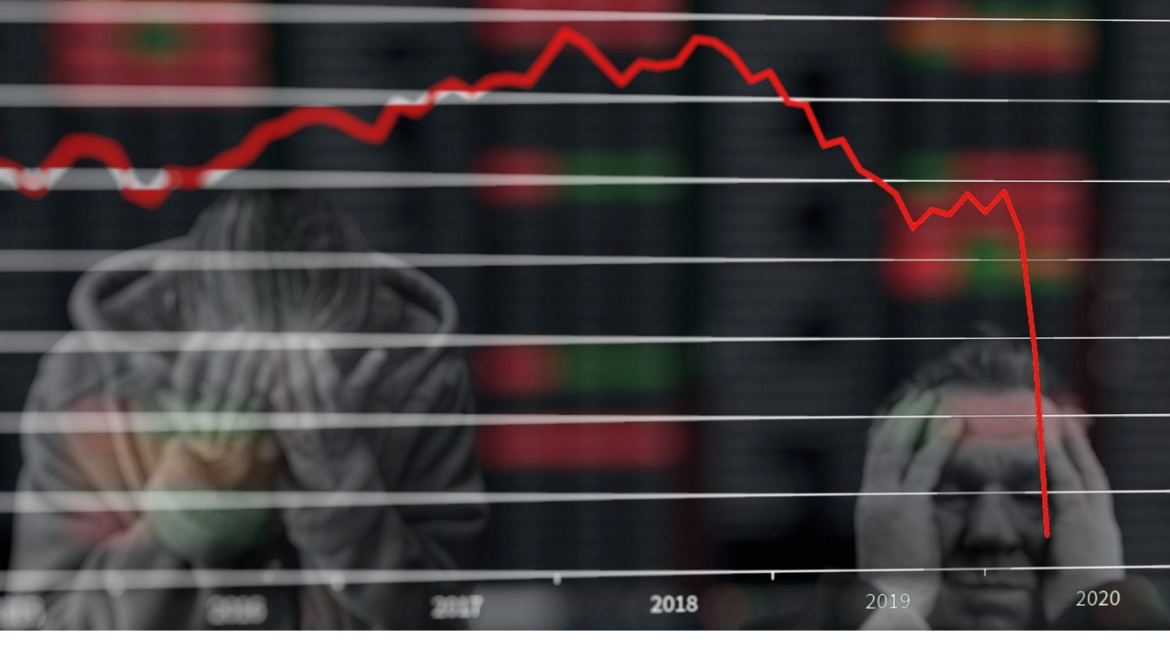
We keep hearing about a "soft landing." According to government officials, central bankers, and mainstream financial media pundits, the US economy has dodged a recession.So why are recession warning signs still flashing?


Just when I thought it would be hard to shock me again, after everything I have seen, wait until you see the details behind the Financial Disaster called "CEASARS Entertainment." I decided to look into Ceasars Palace after the humor in trying to get a Free Cup of Coffee in my hotel room, LOL...
Oct 2, 2023 - 12:44:34 PDT
Gold reached a record price of $2058 oz. in 2020, marking a hundred-fold increase from its initial $20.67 oz. value. This surge reflects the decline in the U.S. dollar's purchasing power over the past century due to inflation. Essentially, a century ago, what you could buy with one dollar now costs a hundred dollars. Today's gold price acts as a barometer of the dollar's diminished value. Despite its dip to $1850 oz. post-2020, gold remains a solid defense against inflation. When adjusted for inflation, gold would need to be $2336 oz. to equal its 2020 peak, indicating it's undervalued by nearly $500. Gold's future price will mirror inflation's continued impact.
Bidenomics, the economic policies under President Biden, has come under fire for its alleged shortcomings. Critics point to rising inflation, unprecedented debt levels, and escalating mortgage rates that are pricing many out of the housing market. Additionally, many view the administration's push for price controls as a superficial attempt to address deeper economic challenges, rather than a sustainable solution. Such controls, they argue, might hinder economic growth and negatively impact everyday Americans. It's suggested that both political parties reassess and reject these measures to ensure a healthy economic future.
Oct 2, 2023 - 12:11:13 PDT
Small businesses are increasingly feeling the economic squeeze, with nearly 1,500 Subchapter V bankruptcy filings this year alone. This number is quickly approaching the total for all of 2022, as per data from the American Bankruptcy Institute. Further signs of distress include rising small-business loan delinquencies and a decline in confidence among small-business owners. Over half of the respondents in a survey by Vistage Worldwide believe we are either approaching or are already in a recession.

Investors are growing increasingly alarmed as long-term borrowing costs skyrocket at an alarming pace, unseen since 2007. JPMorgan's David Lebovitz forewarns of a looming financial crash if this surge continues. Equities appear blindly optimistic, ignoring warning signs from the bond market. Political instability brews with Republican Matt Gaetz taking on House Speaker Kevin McCarthy. The yen and euro's declining stance against the dollar further adds to the growing list of economic concerns.
 How Great Is Our Economy If the Bottom 50%'s Share of the Nation's Wealth Has Plummeted Since 2009?
Oct 2, 2023 - 12:02:51 PDT
The US economy has been deteriorating for years, with issues amplifying since 2009. While economist Noah Smith optimistically suggests the wealth of the working class is improving, data from the Federal Reserve's FRED database contradicts his claims. The bottom 50% of Americans have seen their share of total assets decline by 25% since 2009. In contrast, the top 1% and 0.1% have seen their wealth share grow immensely. Smith's assertions overlook the stark reality of growing wealth inequality and the struggles faced by the majority.
Oct 2, 2023 - 08:44:18 PDT
Federal spending surged 30% since January 2020, yet Republicans can't reduce it to pre-Covid levels. M2 Money skyrocketed by 36%. The US Federal debt exceeds $33 trillion with massive unfunded liabilities. Despite a rise in manufacturing data, the sector remains in contraction for months. Overall, the economic outlook appears bleak.
The world's largest hedge fund founder warns of a looming "debt crisis" caused by skyrocketing government debt and fiscal deficits. With major players withdrawing from the market, interest rates on the debt are surging. This combination mirrors the dangerous patterns seen in some emerging markets. The Fed might intervene, but this could further fuel inflation.