
Precious metals are apparently waking up. And here is where you can find the best deals.


Site:
Precious metals news

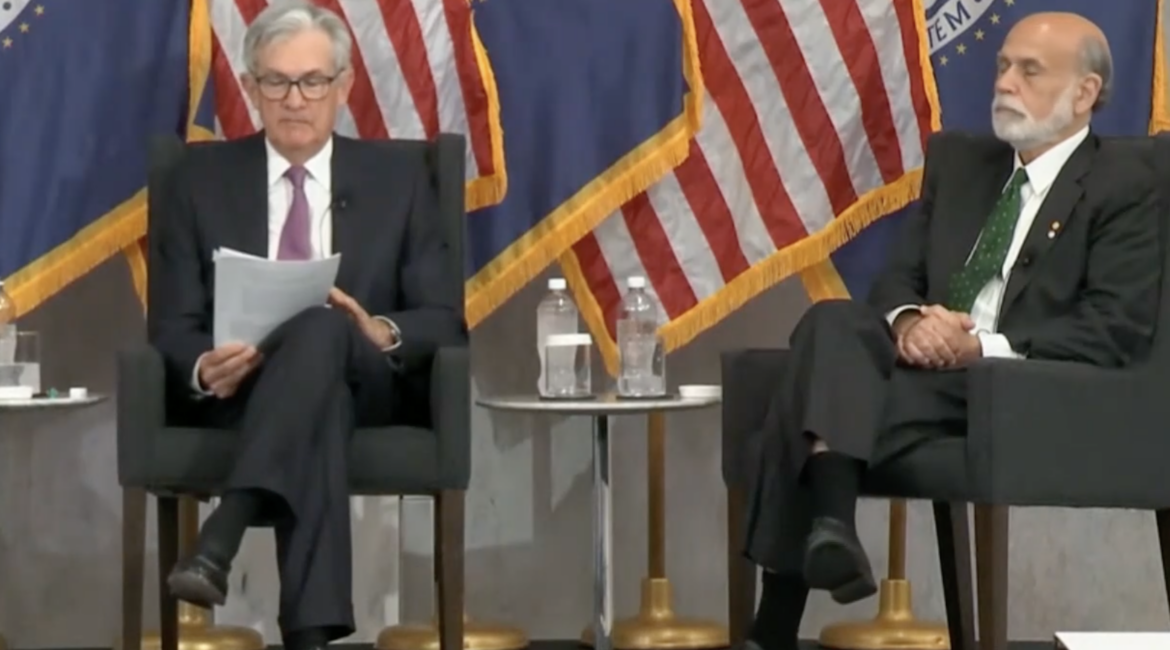
Federal Reserve Chairman Jerome Powell and former chair Ben Bernanke recently fielded questions together at the annual Thomas Laubach Research Conference put on by the central bank. They engaged in a lot of finger-pointing but didn't offer a hint of self-reflection as they discussed inflation and the state of the economy.


The world will likely experience a tremendous Silver Industrial & Investment Demand Squeeze in the next several years. And, when you add on top of that the massive "Energy Cost-Push Inflation" coming, this will be very Bullish for the silver price. While I don't believe silver industrial demand will continue...
May 23, 2023 - 13:06:40 PDT
The Goznak Joint Stock Company, which operates the Moscow Mint, recently announced that gold ingots weighing up to 20 grams can now be purchased through their website. This development is part of a broader initiative aimed at encouraging Russians to move away from US dollar savings and explore alternative investment options.

The bottom line is that we are facing a severe recession, a financial crisis worse than 2008, de-dollarization, lost confidence in the Fed and the U.S. dollar, political repression through the rise of central bank digital currencies (CBDCs) and potentially, extreme social unrest. The winners in this scenario are gold, silver, land, energy, agriculture and U.S. Treasury notes. The losers are stocks, corporate bonds, and commercial real estate.
 Inflation Has Eroded Us Households’ Financial Security, Fed Survey Shows
May 23, 2023 - 13:01:23 PDT
The inflation wave that crested at a 40-year high last year and remains elevated has eroded U.S. households' sense of financial security, the Federal Reserve reported Monday, with many saying they had reduced their savings to make ends meet, felt less secure about retirement, and had delayed purchases or swapped into cheaper products as they shopped.

In a real recession, the Fed's tricks no longer work. Fiscal stimulus is limited by the overborrowing of the previous decades of inorganic (i.e. credit-dependent) "growth."

Many businesses take payment only by card or phone, but a pro-cash movement is urging people to ‘Resist! Defy! Don’t comply!’

We’re all on the lookout for signs of a deeper “credit crunch” as a result of the Fed’s historic rate-hiking campaign.
They were offered the benefits of owning apartment-building rentals without any of the work, in real-estate investments that have already left some people empty-handed.
We’re all on the lookout for signs of a deeper “credit crunch” as a result of the Fed’s historic rate-hiking campaign.
May 23, 2023 - 12:20:15 PDT
Bankruptcy filings are still relatively low but are edging up after a two-year lull as interest rates rise and government stimulus ends

Americans continued to pile on credit card debt this year, with total balances approaching $1 trillion sooner than some experts had expected.

The greater the misalignment between financial quantities and economic quantities, the more distorted and grotesque the whole picture becomes, particularly if nobody carefully connects the dots. Unfortunately, investors and policy makers repeatedly insist on learning that the hard way.
The debt ceiling is really a political football rather than a serious macroeconomic policy tool. In the end, Congress always approves the ceiling increases. In a way, the debt ceiling debate is all for show.

A century ago, Argentina was one of the world's wealthiest nations and the Argentine peso rivaled the dollar. Today, Argentina is famous for periodic hyperinflation. Original Article: "Argentina Sleepwalks into Hyperinflation (Yet Again)"
May 23, 2023 - 08:30:24 PDT
"The Biden administration threatens to invoke Section 4 of the Fourteenth Amendment to sidestep the longstanding federal debt ceiling in a way that would increase the power of the executive branch. " ~ Robert E. Wright
May 23, 2023 - 08:20:30 PDT
The Fed has been under non-stop scandals for the past two years. It pumped out trillions of dollars in repo loans to Wall Street’s casino banks beginning on September 17, 2019 and then made up a hokey excuse to cover up its massive bailout of banks it is incompetent to supervise.
May 23, 2023 - 08:09:55 PDT
Remember when former Fed Chair and current Treasury Secretary Janet Yellen said that inflation was transitory? As usual, Yellen was wrong. Look at April’s new home sales. Up 4.1% since March even through M2 Money growth has collapsed.
But it gets worse, in this month’s special questions, firms were asked to forecast the changes in prices of their own products and for U.S. consumers over the next four quarters. Regarding their own prices, the firms’ median forecast was for an increase of 4.0 percent, up from 3.5 percent when the question was last asked in February.
 US Services PMI Soars To 13-Mo Highs, Manufacturing Tumbles Back Into Contraction
May 23, 2023 - 08:03:44 PDT
After an ugly wave of manufacturing PMIs across the euro-zone (and UK), preliminary US PMIs for May were expected to decline (tracking the recent serial disappointment in macro data). The flash prints were dramatically different (like in Europe) with Manufacturing plunging to 48.5 (contraction) down from 50.2 (that was the first time back above 50 since Oct). Services, however...