
Precious metals are apparently waking up. And here is where you can find the best deals.


Site:
Precious metals news

Australia's biggest lenders are bracing for another year of pain as the fal...

Japan's annual core consumer inflation ticked up in November and a key pric...
 Final Q3 GDP Revision Unchanged At 2.1%: Growth From US Consumer Spending
Dec 20, 2019 - 05:51:42 PST
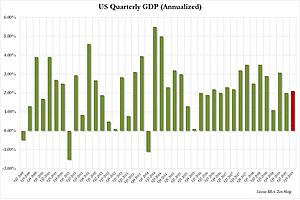
The final revision of Q3 GDP came in as expected, at 2.1%, and unchanged from the second revision, rising fractionally from the 2.0% in Q2.

“We could at most hope for stagnation,” said DIW economist Claus Michelsen.

China, the world’s top bullion producer and consumer, launched its first gold options contract on the Shanghai Futures Exchange on Friday, adding to an array of investment options for the yellow metal that saw prices hit six-year highs this year.

When it comes to Wall Street’s mindset, the thinking is that it’s legal if you can get away with it.

Many of the largest U.S. banks pointed to regulatory restrictions on their balance sheets and reduced risk appetite to explain why they stood on the sidelines during the mid-September spike in overnight funding ...

Corporations have brought back more than $1 trillion of overseas profits to the U.S. since Congress overhauled the international tax system and prodded companies to repatriate offshore funds.

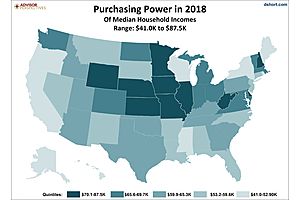
Recently, we posted an update on the median household income for the 50 states and DC based on the Current Population Survey, a joint undertaking of the Census Bureau and Bureau of Labor Statistics...

The latest major energy company forced to shrink estimates for sector values due to a weaker economic outlook.

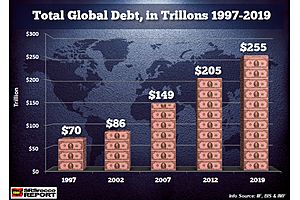
As Global Debt reached a new record high of $250 trillion this year, gold and silver came briefly back on the radar for investors.


Gold prices settled at a more than two-week high on Thursday, putting prices on track to tally a small gain for the week. The market had seen only modest...
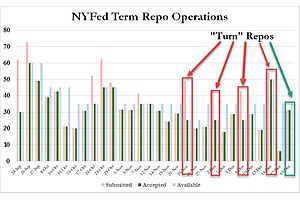
"It is hard to see this environment improving as long as central banks continue to attempt to manipulate markets and with HFTs playing a dominant role in liquidity provision." - BofA
 Elliott Wave Technician: Here's What It Will Take For Gold To Start A Positive Move For The Bulls
December 19, 2019

Gold needs a sharp break higher. Here are the price levels to watch...

Has the Fed been forced into the type of asset price inflation that actually will be the cause of the next recession? And may that recession be unavoidable despite everybody now ringing the all cle…
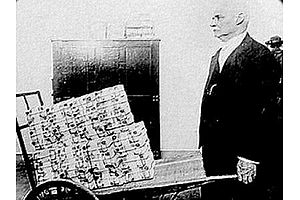
“As long as the government can print money, we’ll never be broke.” That’s the idea behind modern ...

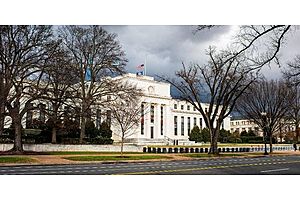
As inflation would be a headwind for financial markets, there are other signals that are currently flashing. For example, credit markets clearly signaled signs of stress earlier in the year when the yield curve was inverted (i.e. short-term rates were higher than long-term rates).
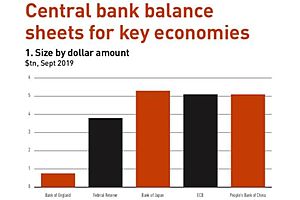
The next bailout is likely to be to society at large – a quantitative easing for the masses.
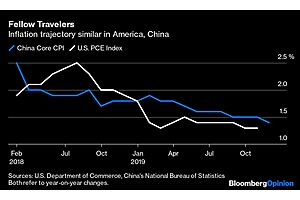
So much for the great divergence between economic systems led by the U.S. and China. In the monetary arena, they look more alike than at any point in recent years.
Marin Katusa, founder of Katusa Research, explains why he calls negative interest rates a "financially transmitted disease." He reveals how negative interest rate policy (NIRP) affects savings rates and the rest of the global economy.