
Precious metals are apparently waking up. And here is where you can find the best deals.


Site:
Precious metals news

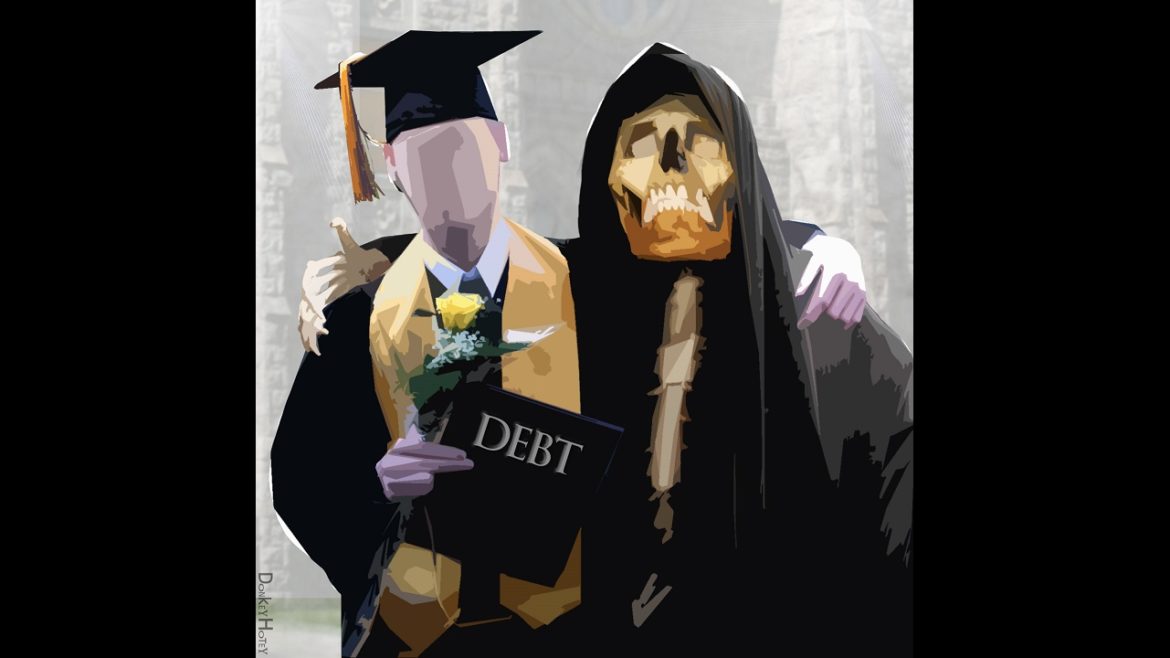
The more than three-year break from student loan payments is about to end. That's more bad news for an economy that depends on consumer spending.Interest accrual on student loans will restart on September first with payments resuming Oct. 1.
A recent Allianz survey reveals that 61% of middle-class Americans fear running out of savings in retirement more than death. The study, which gathered responses from 1,000 individuals aged 25 and up, defined the middle class based on investable assets or annual income. This significant apprehension emphasizes the role of Social Security in ensuring financial stability during one's golden years. Alarmingly, 56% see recurring "financial crises" as a norm in retirement planning, with 46% saying their retirement strategies have been affected by the crisis starting in March 2020.
 Housing Market Affordability Now Worse Than at the Height of the Housing Bubble in 2006
Aug 22, 2023 - 06:37:42 PDT
August 2023 has been marked as the most challenging month for housing affordability this century, with average 30-year fixed mortgage rates skyrocketing to 7.48%, a peak not seen since 2000. The Atlanta Fed's data shows housing affordability plunging even before this recent hike, surpassing the lows of the 2006 housing bubble. This crisis has roots in the last year when mortgage rates leaped from 3% to over 7%. When combined with a 40% spike in U.S. home prices during the Pandemic Housing Boom in just two years, the nation faces unprecedented housing unaffordability.
Credit card interest rates are near 40-year highs, leading to Americans accumulating record amounts of debt, J.D. Power's survey suggests. Data reveals Americans have amassed over $1 trillion in credit card debt for the first time, as reported by both the Federal Reserve Bank of St. Louis and the Federal Reserve Bank of New York. Furthermore, FICO discloses the average credit card balance in June increased by 6.5% from the previous year, standing at $2,573. Alarmingly, there's a 42.6% surge in accounts overdue by one cycle over the past two years, reaching its peak since September 2017.
More Than Half of U.S. Small Business Owners Believe the Economy Is Already in a RecessionAug 22, 2023 - 06:19:37 PDT
Over half of U.S. small business owners perceive the economy to be in a recession, according to a recent survey by the National Federation of Independent Business. This pessimistic view persists, even though some businesses report stable financial conditions. While there are signs of economic vigor like strong retail sales, the sentiment is overshadowed by lingering concerns. The aftermath of significant bank collapses earlier in the year still weighs on confidence. Moreover, the Federal Reserve's aggressive rate hikes since March 2022, raising borrowing costs, exacerbate concerns for many enterprises.


It’s no secret that China’s meteoric rise has completely shifted the global economic landscape... But how did we get here?

After the 2007-2009 recession, the Federal Reserve, in 2016, lowered their expectations for U.S. economic growth to 1.8%, citing concerns like aging population and poor productivity. Despite periods of growth exceeding this forecast, the U.S. economy faces challenges. The recent pandemic and the consequent multi-trillion-dollar government intervention have further complicated the economic landscape. As policymakers convene in Jackson Hole this week, they'll discuss an economy undergoing significant shifts, including changing supply chains, persistent inflation, and potential worker shortages. Notably, BlackRock economists predict even more subdued U.S. growth prospects, potentially as low as 1%, due to factors like retiring baby boomers and volatile inflation.

Peter Schiff recently appeared on Real America with Dan Hall to talk about Bidenomics and the impact of inflation. Peter said Bidenomics is a disaster and price inflation isn't beat. In fact, it will continue to increase as long as the government keeps borrowing and spending.Dan opened the interview pointing out that despite cooling CPI, prices still seem to be rising in the real world. Peter pointed out that CPI was deliberately redesigned in the 1990s to understate price inflation.

S&P Global and Moody's slashed credit ratings for several U.S. banks due to funding risks and reduced profitability. Banks like Associated Banc-Corp and Valley National Bancorp face challenges from rising interest rates and significant deposit outflows. The sector's confidence was shaken by the collapse of Silicon Valley Bank and Signature Bank, leading to a run on deposits at a host of regional banks despite emergency interventions.
 MASSIVE U.S. TREASURY FINANCE DWARFS PHYSICAL ECONOMY: Has U.S. Treasury Market Hit The Red Queen Syndrome?
August 22, 2023

It was no coincidence that Fitch downgraded U.S. Credit as the massive U.S. Treasury Finance dwarfs the underlying physical economy. And to make matters even worse, the U.S. Government will run out of funding by the end of September if a temporary spending bill isn't passed... LOL...
Silver (XAG/USD) is showing resilience with a rebound, despite broader challenges in the gold market and economic pressures. This resilience is evident as it manages to stay buoyant amidst significant shifts in the U.S. Treasury yields and a strengthening dollar. Investors are keenly focused on the central bankers’ summit in Jackson Hole and await Jerome Powell's speech, which could signal the U.S. Federal Reserve's future stance on rate hikes. While some economists predict a pause or a rate cut in the near future, silver's trajectory is largely influenced by central bank decisions and global financial cues.
Singapore boasts an impressive gold vault as part of its foreign reserves, managed by the Monetary Authority of Singapore (MAS). The vault's location remains top secret, with media given rare access under strict confidentiality. Within, gold bars are methodically stacked, each worth nearly US$800,000. Singapore has amassed approximately 222 tonnes of gold since 1968. Luke Chua, a gold dealer, emphasized gold's consistent value, especially during crises. Its worth has significantly appreciated: from US$40 per ounce initially to US$2,000 per ounce. By July 2023, Singapore's gold reserves exceeded S$442 billion.

Governments worldwide, including Washington, are nearing collapse due to unsustainable debts and policies reminiscent of historical empires like Rome. The prevailing financial system is likened to a Ponzi scheme, with real assets being replaced by deceit. Concerns mount over high corporate debt and inverted yield curves hinting at a recession. Despite the faith placed in central banks, a crash seems imminent. As governments move towards Central Bank Digital Currencies (CBDCs), states like Florida and Indiana resist by banning them.
Global Food Security: The World Is at an Inflection Point on Surging Food PricesAug 21, 2023 - 12:07:10 PDT
Drought and increased fertilizer prices have led to a surge in Kenya's rice costs. India's recent halt on rice exports exacerbates the shortage, affecting global supplies. Additional strains on global food security come from Russia's wheat restrictions and potential El Nino effects. There's growing concern as more nations may follow India's example, putting vulnerable populations at greater risk.
Aug 21, 2023 - 09:56:18 PDT
Mortgage rates exceeding 7% are straining the U.S. housing market with potential to hit 8%. Lawrence Yun of the National Association of Realtors highlights the 30-year rate's precarious position. If the Federal Reserve hikes interest rates again and the 10-year Treasury note continues rising, an 8% mortgage rate could become imminent. Such a surge threatens to stagnate the housing market, potentially driving down sales and home prices, especially if employment falters.
The U.S. bond market faces alarming instability as Treasury yields soar to their highest since 2007 and 2011. Barclays warns of an ongoing selloff, implying that the era of beneficial low rates is ending. Factors such as an assertive U.S. economy, upcoming Federal Reserve rate hikes, and inflation-adjusted yields have intensified concerns. Over a brief six-day period, 10- and 30-year Treasury yields have shockingly surged, culminating in negative returns for this year. This bleak scenario is severely dampening demand across the fixed income sector, and apprehensions about substantial future selloffs loom large.
China is urging the Brics group, comprising Brazil, Russia, India, China, and South Africa, to rival the G7. At an upcoming summit in Johannesburg, multiple countries might be inducted into the bloc, marking its largest expansion since inception. However, India and China are at odds, with debates centering on the bloc's role as an economic entity versus a political challenger to the West. 23 nations have expressed interest in joining, including controversial candidates like Iran, Belarus, and Venezuela, which might be viewed by the West as alignment with Russia and China. Argentina, Saudi Arabia, and Indonesia are top contenders for membership. Expansion criteria are under discussion, with emphasis on trade in local currencies rather than adopting a common currency.

One of the reasons Americans were able to continue spending even as price inflation raged was they saved a lot of money during the pandemic lockdowns. But those savings are nearly depleted, according to a study released by the Federal Reserve Bank of San Francisco.Aggregate savings peaked at $2.1 trillion in August 2021. As of June, the San Francisco Fed estimated that aggregate savings had dropped to $190 billion.
September marks the beginning of potential economic turmoil in the Western world, driven by:
1. The unveiling of BRICS nations' gold or commodity-backed currency in late August, challenging the U.S. dollar's dominance as the World Reserve Currency.
2. Congress's decision in September regarding the raised debt ceiling and unrestrained spending, diminishing trust in the U.S. dollar's stability.
3. The Petrodollar's decline, bolstering the Yuan and Ruble, but further weakening the U.S. dollar.
4. Continuous congressional spending and a lack of resistance to globalist economic agendas.
5. Most 401ks and pension funds are invested in unstable Chinese markets, where transparency and reporting accuracy are concerns.
6. The looming threat of Central Bank Digital Currencies (CBDCs) that could control individual spending, emphasizing the need for alternative forms of payment, like gold and silver.
A combination of global financial shifts, U.S. policy decisions, and the rise of CBDCs may lead to a significant econom...

Central banks are unlikely to collaborate on a global rescue as market instability grows. Reasons include:
1. Divergent national interests prevent coordinated action.
2. The low inflation era and zero-interest rate policies have ended, complicating traditional intervention methods.
3. Persisting inflation continues to strain wage earners despite manipulated statistics.
4. Wages haven't kept pace with inflation, further enriching the top 10% at the expense of the majority.
5. Wealth and income inequality exacerbated by central banks now limit their policy options.
In essence, central banks can't indefinitely prevent asset bubble bursts, and their interventions have often worsened economic disparities.