
Precious metals are apparently waking up. And here is where you can find the best deals.


Site:
Precious metals news


As evidence mounts that the major western economies are heading into a banking and monetary crisis due to contracting credit, we face the consequences of unsound money. The era of fiat is drawing to a close and its death will be painful for the highly indebted advanced economies in North America, Europe, and Japan. History and legal precedent tell us that fiat will die and gold will return to provide an anchor to credit system values.As always, there are lessons to be learned from monetary history, particularly in the context of credit-dependent post-feudal economies, when a gold standard was expected to support mountains of credit in the forms of bank notes and commercial bank deposits.In this article, I look at lessons from nineteenth century gold standards and the mistakes made. Mostly, they could have been easily avoided.The debate over the return of gold backing for credit is becoming urgent, not just because the fiat currency system has run its course, but becau...

Gold is nature’s money.Aristotle listed four characteristics of sound money: it must be durable, portable, divisible, and have intrinsic value. Gold possesses all of these characteristics, which is why gold has served as money for thousands of years.
Aug 31, 2023 - 06:26:59 PDT
In July, US inflation measured by Core PCE Deflator rose to 4.2% YoY, and headline PCE reached 3.3% YoY, the highest since June 2022. Services inflation remained elevated, while Goods saw substantial deflation. Spending rose for the second month, but Personal Income growth slowed. Wage growth declined for both private and government workers. Adjusted for inflation, 'real' personal spending increased by 3.0% YoY. Real disposable income dropped by 0.2% MoM, the largest decline since June 2022. It appears the American consumer is completely tapped out – consumer credit has flatlined (maxx’d out) and now savings are plunging again.
 The Biden Administration to Implement Overtime Pay for Millions of Workers by Default
Aug 31, 2023 - 06:17:58 PDT
The Biden administration proposes overtime pay for salaried workers earning around $55,000 or less annually, exceeding the current $35,568 threshold. The plan aims to add 3.6 million more workers to eligibility. The rule suggests automatic adjustments every three years based on earnings data, with an initial implementation cost of $1.2 billion for employers. While supporters highlight improved workers' rights, critics argue it will raise the cost of doing business. The proposal faces a regulatory process, potential legal challenges, and varying opinions on its impact on businesses and the modern work landscape.


Will we see a true challenger to the US dollar's dominance with a new BRICS currency?
 Expanded Brics Set Control Global Energy Supply Through a De-dollarized World
Aug 31, 2023 - 05:59:46 PDT
Mr. Gumede emphasized, "BRICS is poised to exert significant influence over global energy supply. The robustness of the U.S. dollar is intrinsically tied to its role in oil trade, known as the petrodollar, and OPEC members settle transactions in dollars. Expanding BRICS to incorporate oil-producing nations and encouraging them to adopt a new BRICS currency for settlements could be transformative. This move has the potential to expedite the process of de-dollarization worldwide."
A coalition of 1,609 international scientists, including 321 from the US, known as the Global Climate Intelligence Group (CLINTEL), has challenged the climate crisis narrative. They emphasize that there is no climate emergency and stress the beneficial role of carbon dioxide for Earth. CLINTEL dismisses claims of a link between global warming and natural disasters, advocating for adaptation rather than mitigation policies. The scientists critique climate models and call for a more scientific approach to climate science and policies. Meanwhile, the Biden administration's energy efficiency rules, including appliance restrictions and bans, have faced criticism for their impact on consumers.
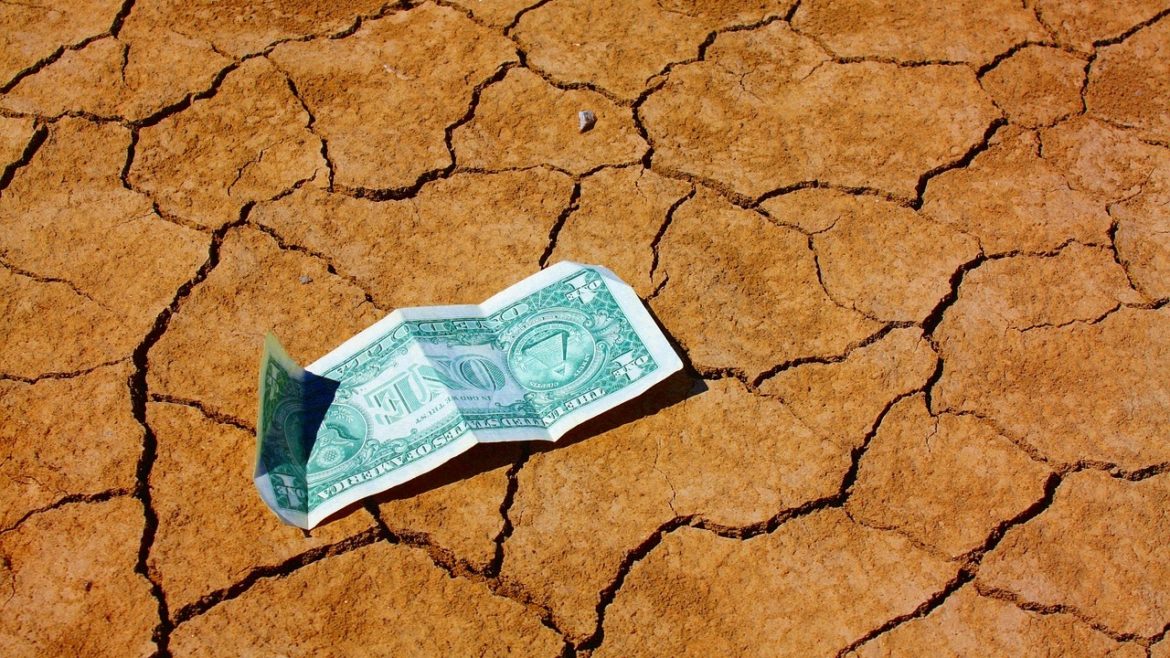
Labor Day is coming up. That means we will hear a lot about the plight of American workers. And we will undoubtedly hear calls for new policies to help make their lives better. But we don't really need more government policies to help workers.We need better money.


Every once in a while, I see something that really HITS the NAIL on the HEAD. And, to do it in three minutes and be hilarious, is truly amazing. If you want to know what is happening in the Shale Oil Industry, you must watch this short video on the BAKKEN... "We are Kaput."
Silver, historically undervalued and trading cheap compared to gold, presents an opportunity for a catch-up rally and potential overshooting. Despite its higher volatility, periods of undervaluation can lead to significant gains. The Gold to Silver Ratio (GSR) indicates silver's potential to outperform gold, supported by its deficit and strong demand in sectors like electronics and photovoltaics. With current market conditions pointing toward uncertainty and inflation, silver's value could surge, especially as it faces supply shortages. Investors selling ETF holdings have masked silver's true potential, making it poised for a potential challenge of $50. Amid global economic concerns and monetary tightening, physical silver stands out as an attractive investment option.

Gold climbed to a nearly one-month high due to weak U.S. economic data, suggesting the Fed may pause rate hikes. Spot gold reached $1,943.92 per ounce, supported by lower 10-year yields and a weaker dollar. Bets on unchanged rates in September and a pause in November rose, indicating growing uncertainty. The upcoming PCE price index and nonfarm payrolls report are awaited. Silver stayed near a one-month high at $24.63. Experts see potential for gold to rally further amid economic challenges.

With inflation still at high levels, it is becoming overwhelmingly evident to Americans that Federal Reserve notes steadily depreciate in value as a form of currency. In 1913, an item costing a silver dollar would now require around $31 unbacked dollars. Specie money, backed by gold, silver, and copper, provided stability and value. Despite the U.S. Constitution granting Congress the power to coin money, fiat currency replaced specie money. Federal Reserve notes lost 98% of their purchasing power since 1913, highlighting the need for stable monetary systems like specie money.
Rising threats to free speech and dissent have surged, particularly with the rise of social media and political polarization. Instances like bank accounts being frozen for supporting protests highlight how banks can be used to suppress dissent. The debanking scandal involving Nigel Farage exposed the power of establishment forces, showing the need to protect against such actions. Holding savings in physical precious metals outside the banking system is crucial to safeguard against government and bank influence.
 Best Buy Now Adds to Retailers Warns That Consumers Are Struggling to Pay Credit Card Bills
Aug 30, 2023 - 12:14:48 PDT
Best Buy warns of credit card payment struggles as net credit losses rise, mirroring a trend seen in Macy's and Nordstrom. Macy's Q2 credit card sales plunged 36% due to rising interest rates and bloat in Citibank-powered card balances. Consumers facing almost 32% annual interest rates struggle to pay off bills, leading to write-offs. Macy's points to households earning $75,000 and below as most affected. Higher bad debt assumptions and write-offs offset revenue gains from increased interest rates. Best Buy also sees sales drops in credit-dependent departments due to higher interest rates.
Investor Home Purchases Crash 45% In Biggest Drop Since 2008 - The AirBnB Bubble Has BurstsAug 30, 2023 - 12:01:21 PDT
Investor home purchases plummet 45% YoY in Q2, exceeding the 31% overall home sales drop, the largest decline since 2008, says Redfin. Cooling housing and rental markets have dimmed the appeal of home investment. Low-income households face affordability issues amid stagnant wages and high costs. Despite above-pre-pandemic levels, investor purchases fell to the lowest in seven years. Stubbornly high home prices and mortgage rates, limited inventory, and economic uncertainty have dampened housing demand. Housing sentiment has eroded among the lowest-income households, hinting at financial distress and a looming economic slowdown.

Deficits rise, yields fall, defying common expectations. Since 1980, as debt to GDP increases, yields drop, contrary to concerns. Hoisington Investment Management highlights that history shows a paradox: initial deficit-fueled stimulus leads to negative effects on private GDP after a few years. Rising government debt outpaces revenue, requiring lower interest rates to manage costs. This expanding debt is predicted to hinder growth and inflate inflation. While the market fears higher yields from more debt, history suggests otherwise. The Treasury aims to avoid locking in higher rates for longer, acknowledging this trend.

When Mike's latest book first launched, it was flying off the virtual shelves. Then, something unexpected happened.
Growing financial distress: More low-income Americans struggle to pay rent and afford food. 42% on boosted SNAP benefits skipped meals, 55% ate less due to money issues - double from last year. Worsening conditions in a month, utility shut-offs and rent affordability challenges rise. Consumer finances erode, sentiment drops amid cooling labor market, expiring pandemic supports.
 The Most Splendid Housing Bubbles in America, August Update: 4th YoY Price Drop Overall
Aug 30, 2023 - 07:38:05 PDT
Year-over-year price drops hit cities like San Francisco, Seattle, Las Vegas, and more. The June S&P CoreLogic Case-Shiller Home Price Index reflects fading spring season effects with a slower month-to-month rise (+0.9%) compared to prior months. Yearly, the index fell 1.2%, marking the fourth month of declines. In contrast, the National Association of Realtors' July median-price index saw the first month-to-month dip after spring season, amid declining sales. This suggests concerns about a potential housing bubble.
Unexpected Jump: Us Pending Home Sales Rise for July but the Year-Over-Year Sales Remain Down 13.8%Aug 30, 2023 - 07:29:38 PDT
Despite predictions of a 1.0% decline, US Pending Home Sales unexpectedly rose by 0.9% in July, though year-over-year sales remain down 13.8%. Rising mortgage rates, hitting a two-decade high, have hit affordability hard, keeping homeowners from selling and limiting available properties. This has led to elevated prices. Chief economist Lawrence Yun sees potential for further gains, but rising rates and limited inventory are obstacles. The disconnect between existing/pending sales and surging new home sales adds to concerns.