
Precious metals are apparently waking up. And here is where you can find the best deals.


Site:
Precious metals news

For the first time in several months, the Consumer Price Index (CPI) came in cooler than expected in October, supercharging expectations that the Federal Reserve can relent on its inflation fight.But is the optimism premature?
 TradeGate Hub Interviews SRSrocco Report: Discusses Why Energy Will Impact Financial & Physical Assets
November 14, 2023

Dale Pinkert from TradeGate Hub interviewed me about Energy, Precious Metals, Miners, and other overall economy. Dale was interested in sharing with his followers why I thought oil was more of a factor for the economy than the Fed and U.S. Treasury printing money...
Some strange things are happening in the precious metals industry. I was quite surprised to see GoldMoney announce its second commercial property purchase when the world is supposedly heading toward economic uncertainty and financial turmoil...
Nov 13, 2023 - 11:35:35 PST
Global silver demand is set to soar in the next decade, with industrial use, jewelry, and silverware driving significant growth. According to Oxford Economics, industrial demand for silver is projected to surge by 46% by 2033, boosted by its expanding role in electrical, electronics, solar energy, and electric vehicles. Jewelry and silverware sectors are also expected to see substantial growth, increasing by 34% and 30%, respectively. Asia, especially China, is anticipated to lead this boom, with India also playing a key role in jewelry and silverware demand. However, shifts in market dynamics and global economic factors could impact these trends.
Amid geopolitical tensions and high prices, Asia's demand for gold remains robust, especially in the festival and wedding season. Despite reaching over US$2,000 an ounce, demand is fueled by cultural significance in countries like India and China. Consumers buy smaller amounts due to the high cost, but the appetite for gold persists, with expectations of further price increases due to global economic uncertainties. In Hong Kong, demand is also strong, influenced by the upcoming Lunar New Year and interest from mainland China and Taiwan.

The US fiscal situation is dire, with rampant deficit spending and excessive money printing leading to economic instability. The shift away from the gold standard and the massive stimulus during the 2008 crisis and COVID-19 pandemic have exacerbated inflation. Central banks are struggling, caught between controlling inflation and supporting government deficits. The US, with its high debt-to-GDP ratio, faces growing skepticism about its financial sustainability. This creates a perfect storm of inflation, debt crisis, and recession. Despite the strong dollar, it's a result of other currencies weakening, not US economic strength. The current trajectory suggests a grim future with potential sovereign defaults and continued high inflation, though history indicates that post-crisis periods can lead to significant reforms and recovery.
Nov 13, 2023 - 11:19:58 PST
The Federal Reserve's focus on fighting inflation overlooks Morgan Stanley's forecast of a significant cut in the Fed Funds rate from 5.50% to 2.375% by 2024. This 215 basis point reduction hints at a potential drop in the 30-year mortgage rate to about 5.50%. While beneficial for homebuyers, this projection aligns with a troubling economic slowdown, including a rise in unemployment to 4.3%, indicating overlooked risks in the Fed's current approach.
Nov 13, 2023 - 11:14:32 PST
Amid economic challenges, Biden's campaign communications director, Michael Tyler, controversially stated the need for "another four years to finish the job," raising concerns about what that implies. The US faces troubling signs like consecutive weeks of negative bank credit growth and declining net savings as a percentage of gross national income. Additionally, September saw the most significant consumer credit drop since May 2020, hinting at a looming recession.
Despite positive media reports on the economy, most US voters are unhappy with President Biden's economic policies. Inflation and high living costs persist, leading to 61% disapproval of Biden's economic management. Reports of economic strength contrast with public struggles over housing, fuel, and daily expenses, especially for those with limited assets. This discrepancy highlights a significant gap between policy impacts and real-world experiences for many Americans.

A majority of US voters, 61%, disapprove of President Biden's economic policies, with 70% believing they've harmed or not affected the economy, a Global Strategy Group and North Star Opinion Research poll reveals. Inflation, at 3.7% year-on-year in September, remains a major concern, with 82% worried about rising prices. The poll also found that 52% have reduced spending on necessities due to higher prices. The survey involved 1,004 registered voters nationwide.
Heightened geopolitical tensions, akin to levels not seen since the 1973 oil embargo, are significantly impacting global energy supplies. Conflicts like Israel-Hamas and Russia's Ukraine invasion have intensified the demand for liquefied natural gas (LNG), especially as Europe seeks alternatives to Russian gas. This shift is driving a boom in LNG projects, particularly in the US. Oil prices, although fluctuating, reflect these geopolitical risks.
The New York Fed's Q3 report shows rising delinquency rates for mortgages, auto loans, and credit cards. Although these rates are increasing, they remain below pre-pandemic levels. As of September, 3.0% of outstanding debt was in some stage of delinquency, up from the previous quarter but still lower than late 2019. This increase in delinquencies aligns with banks tightening lending standards and the Federal Reserve's efforts to control inflation through tighter monetary policy. Despite cooling labor market metrics, it's too early to declare an impending recession.
Nov 13, 2023 - 07:08:08 PST
The US fiscal situation is on a dangerous path, warns ex-Fed official Bill Dudley. Soaring debt costs and increasing healthcare and social security expenses are exacerbating the issue. Political dysfunction hampers resolution efforts. Recent bond market troubles and a potential Moody’s downgrade reflect growing concerns. Despite market expectations, Dudley suggests the Fed may not rapidly cut rates, focusing instead on labor market adjustments to control inflation.

Mainstream media pundits and politicians generally act unconcerned about the skyrocketing national debt and ever-growing budget deficits, but somebody has taken notice.On Friday, Moody's Investor Service lowered its outlook on US government credit from "stable" to "negative." This could be a prelude to a downgrade in the country's AAA credit rating. The agency typically resolves an outlook by either revising it back to stable or executing an actual downgrade within 18 to 24 months.
 Investors Sold a Net Record of U.S. Corporate Debt - Repatriation of Capital Could Lead To More
Nov 13, 2023 - 05:48:20 PST
Credit managers are anxiously waiting for upcoming data to reveal if Japan's recent reduction in buying US corporate bonds is temporary or a developing trend. Rising bond yields in Japan, fueled by expectations of a shift away from its ultra-loose monetary policy, might lead Japanese investors to repatriate funds for better domestic returns. This potential shift could impact global market liquidity and increase volatility, especially as US corporate debt has seen diminishing demand from Asian investors, including those in Japan.
Nov 13, 2023 - 05:30:49 PST
The European Union is set to implement "European Digital Identity Wallets," a centralized digital ID system for storing personal and financial data. Despite privacy concerns, the EU is pushing forward with the system and the digital Euro, a central bank digital currency (CBDC). Critics warn of potential government overreach and a shift towards a system similar to China's "social credit score." The initiative awaits formal approval from the European Parliament and Council. Concurrently, the Biden White House released a framework for digital asset development last year, indicating a global trend towards digital identities and currencies.

The concept of a polycrisis highlights how various interconnected crises can amplify each other, creating massive impacts beyond their individual effects. This interplay can lead to catastrophic outcomes, particularly when systemic issues like moral decay, corruption, or unresolvable supply scarcities are involved. Traditional solutions like monetary interventions become ineffective in such scenarios. The inherent fragility of systems designed for isolated challenges becomes exposed, and overconfidence and denial further worsen the situation. By the time these systemic problems are acknowledged, it may be too late for effective resolution.
The Federal Reserve's decision to keep the federal funds rate at 5.5% highlights its uncertain and reactive approach. Struggling to determine the right rate amidst political pressures, the Fed focuses on short-term issues like managing debt costs, inflation, and unemployment. This approach, lacking long-term economic strategy, results in constant policy adjustments based on immediate concerns rather than overall economic stability.
Nov 13, 2023 - 05:10:14 PST
Jeffrey Gundlach expresses concern about the U.S. fiscal situation due to rapidly increasing interest expenses on national debt. This surge is attributed to the maturation of bonds, initially issued at very low yields of 25 to 50 basis points, which are now being reissued at significantly higher yields near 5%. This shift indicates a swift and steep rise in debt servicing costs, underscoring deeper fiscal challenges.
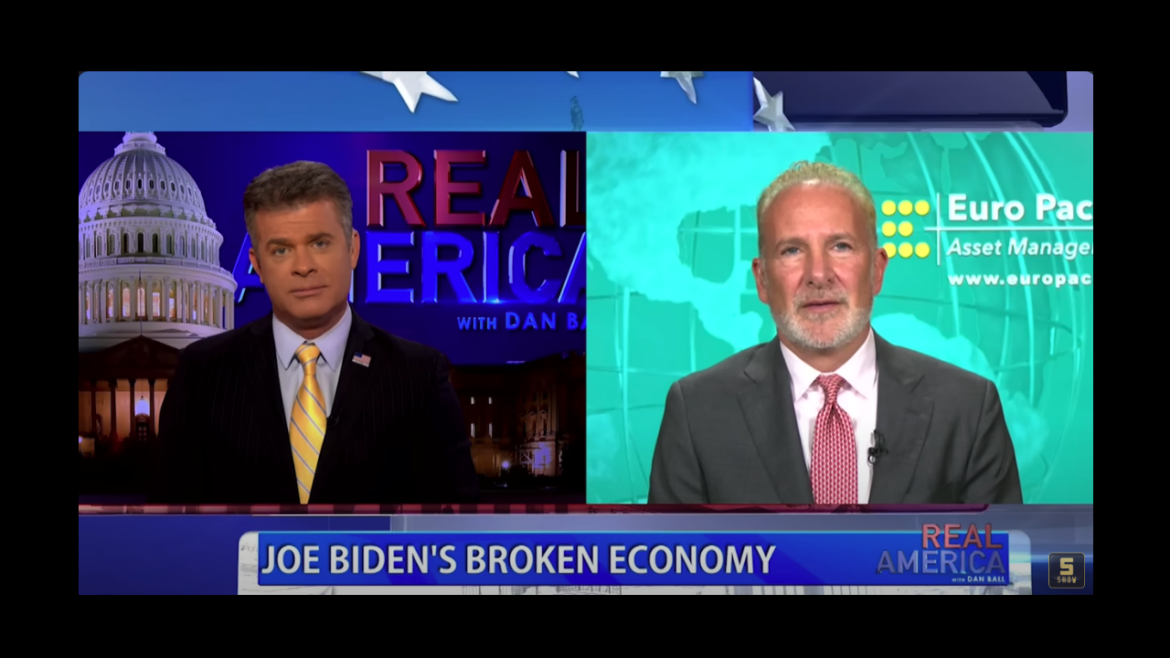
Peter Schiff recently appeared on Real America with Dan Ball to talk about the latest employment data and the state of the real estate market. We know there is a lot of doom and gloom in the headlines, but Peter said the situation is actually doomier and gloomier than the headlines suggest.