
Precious metals are apparently waking up. And here is where you can find the best deals.


Site:
Precious metals news
 Industrial Production Plunges in October - Worst Since the COVID Lockdowns
Nov 16, 2023 - 07:03:08 PST
US Industrial Production experienced a significant downturn in October, dropping 0.6% month-over-month from a downwardly revised September figure. This decline, the most substantial since December 2022, marks a sharp contrast to last month's surprising bounce. Furthermore, the year-over-year decrease of 0.8% is the most severe since the COVID lockdowns, indicating a notable slump in industrial activity.

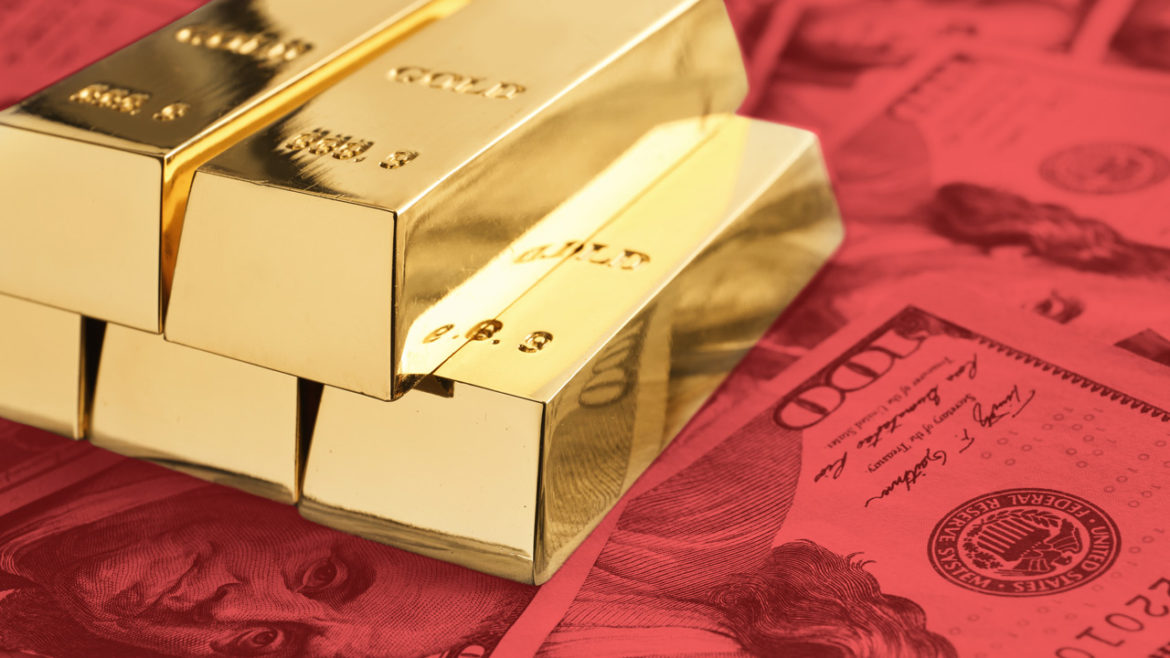
Greenlight Capital reported a major increase in its exposure to gold as the hedge fund's founder worries about the direction of the markets. In a Q3 letter to investors, David Einhorn expressed concern about geopolitical uncertainty, the rising price of oil, and inflation.
The number of first-time jobless claims in the US rose to 231,000 last week, marking the highest level since August and signaling a concerning trend in unemployment. Continuing claims also escalated to 1.864 million, the most significant since November 2021. This data, coupled with warnings from Goldman Sachs about seasonal distortions potentially inflating continuing claims by an additional 375,000 by March, paints a grim picture of the labor market's health, indicating worsening conditions.
Nov 16, 2023 - 05:42:39 PST
The US economy is showing signs of strain, particularly in the real estate market. Foreclosure sale notices on commercial properties are surging, with multifamily delinquencies rising sharply in cities like Houston, New York, and Phoenix. In Los Angeles, commercial real estate sales have plummeted due to declining values, higher interest rates, and new taxes on property sales above $5 million. LA apartment sales have also dropped by 50%, exacerbated by a rise in vacant units and construction costs.
Nov 16, 2023 - 05:19:00 PST
Mary Daly of the Federal Reserve Bank of San Francisco acknowledges a slowdown in inflation but remains wary about future interest rate decisions. Despite the current high benchmark rate of 5.25-5.5%, Daly does not rule out further rate increases. She warns against a hasty "stop-start" approach, stressing the need for more data to confirm a return to the 2% inflation target. With the focus on normalizing rates, Daly suggests rate cuts are not on the immediate horizon, indicating continued economic uncertainty.
 Walmart Stock Slides as Retailer Gives Negative Outlook that Consumer Sales are Slowing
Nov 16, 2023 - 05:04:21 PST
Walmart's latest earnings report, despite surpassing Wall Street estimates, revealed troubling signs with a noticeable dip in consumer spending towards the end of the third quarter. This decline has cast a shadow over the company's performance, particularly as it braces for the crucial holiday season. The retailer's cautious outlook and lower-than-expected annual forecast have sparked concerns, reflected in a downturn in its share prices after recently hitting a peak. The report signals potential challenges ahead, not just for Walmart but possibly for the broader retail sector as well.

The October CPI came in lower than expected, sparking a rally in stocks, bonds, and gold. Cooling prices reinforced the belief that the Federal Reserve won the inflation fight and the rate hiking cycle is over. In his podcast, Peter Schiff explained why the demise of inflation is greatly exaggerated.

David Stockman, a critic of Keynesian economics and monetarism, argues for the free market's ability to self-regulate without government intervention. He views government efforts to manage the economy through fiscal and monetary policies as ineffective due to global economic interconnections. Stockman also revisits the Great Depression, suggesting it was a necessary market correction and not a failure of capitalism. He criticizes the abandonment of sound money and the negative impacts of inflationary policies, especially on asset inflation in major companies, presenting a strong case against conventional economic theories.
 TOP GOLD MINERS COST Q3 2023 UPDATE: Why AISC - All In Sustaining Costs Are Not Total Costs
November 16, 2023

Interestingly, the top four gold miners' costs declined slightly in Q3 2023 but are still much higher than the reported AISC - All-In Sustaining Costs. Unfortunately, investors continue to be misled by the gold mining industry because the AISC artificially lowers the actual cost of production...

Japanese investors, responding to the yen's historic decline against the U.S. dollar, have driven the price of gold to a record high of ¥300,000. This surge, deviating significantly from the 30-year average of around ¥100,000, reflects a growing trend in Japan to use gold as a hedge against inflation. In response to escalating consumer prices, Prime Minister Fumio Kishida has rolled out a ¥17 trillion ($113 billion) stimulus package, featuring tax cuts, subsidies, and support for low-income households.
In a notable surge, the United States Mint reported significant increases in bullion coin sales for October. The Mint's flagship American Gold Eagles experienced a remarkable triple-digit percentage growth, while the core American Silver Eagles also saw substantial double-digit gains. Impressively, the year-to-date sales totals for both these coins have already surpassed their respective total sales for the entire year of 2022. This spike in demand indicates a growing interest in precious metals as investment assets.
Gold has successfully rebounded from $1935/ounce, with the significant psychological barrier of $2000 now in its sights. The Relative Strength Indicator suggests there's room for further growth without overbuying concerns, indicating the rally could potentially surpass $2000, aiming for October's peak of $2009. Current market sentiment is strongly bullish, evidenced by 65% of traders being net long, anticipating further price increases and reinforcing a bullish outlook for gold.
The US, once a dominant global power post-World War II, is facing significant decline. Its shift from the world's largest creditor to its largest debtor, and reliance on foreign manufacturing, have weakened its economic position. The 2021 decision to confiscate Russian assets has led many countries to align with China and Russia, reducing US global influence. Additionally, overinvestment in outdated military technology and changes in military policies signal further decline. The US is at a critical point, with its superpower status increasingly challenged.

David Einhorn's hedge fund, established in 1996, significantly boosted its investment in gold by 89.22% during the third quarter. The fund invested $34.9 million. This move reflects a substantial increase in the fund's commitment to gold as a strategic asset.

The ongoing banking crisis, worsened by fluctuating asset valuations and high-interest rates, has left many banks potentially insolvent. This is particularly true when assets are evaluated on a mark-to-market basis, as current higher rates significantly devalue the bonds many banks hold. The Federal Reserve, using historic cost accounting, masks its own technical insolvency, notably not reflecting the true value of gold.Investors should be wary of this precarious situation, as it could escalate into a more severe crisis. In this context, gold stands out as a more stable investment option amidst the potential for further banking system turmoil.
Nov 15, 2023 - 07:38:56 PST
US cattle numbers are expected to keep declining through 2025-2026, maintaining high beef prices due to reduced breeding amid drought and high feed costs. This trend is impacting meatpackers like Tyson Foods Inc. and JBS SA, leading to soaring supermarket prices and a significant drop in beef exports. As beef becomes increasingly unaffordable, Tyson Foods plans to open an insect processing plant in 2025.
Nov 15, 2023 - 07:15:59 PST
In October, the US Producer Price Index (PPI) for Final Demand saw its sharpest decline since COVID-19 lockdowns, dropping by 0.5% month-over-month. This drop, mainly due to plummeting gasoline prices, led to a year-over-year decrease in PPI Final Demand to 1.3%. The downturn aligns with the negative growth in M2 Money supply. As the economy weakens, there's growing anticipation that the Federal Reserve might start reducing interest rates in 2024, after halting rate hikes.
US retail sales in October slightly outperformed expectations with a modest 0.1% month-over-month decline, marking the first drop in seven months. However, this minor dip indicates a worrying trend in consumer spending, hinting at potential broader economic weaknesses. With key sectors like furniture and motor vehicles seeing significant declines, the overall retail landscape shows signs of strain, raising concerns about the health of the US economy.
Nov 15, 2023 - 05:43:30 PST
Under President Biden's tenure since January 2021, the US dollar's purchasing power has plummeted by roughly 15%, reflecting a troubling economic trajectory. Critics contend that the administration, seemingly under the sway of the elite 1% and large corporations, has prioritized extensive spending while sidelining the middle class. This perception is fueled by discontent over issues like border security and a growing sense of economic disparity, casting the current state of the economy in a starkly negative light.
Nov 15, 2023 - 05:33:58 PST
Surging US borrowing costs have unexpectedly surpassed those of lower-rated nations like Vietnam, Morocco, and Bulgaria, upending traditional bond market norms. This shift, driven by the Federal Reserve's aggressive anti-inflation rate hikes, has elevated US Treasury yields to unexpected levels, raising concerns about America's ballooning public debt, now exceeding $33.7 trillion. Recent downgrades by Moody's and Fitch Ratings reflect the growing unease about the US's financial health in the face of a global debt market totaling $235 trillion.