
Precious metals are apparently waking up. And here is where you can find the best deals.


Site:
Precious metals news
Gold reached a new record high of $2,111, buoyed by its status as a traditional safe-haven asset and expectations of U.S. rate cuts. A weaker dollar has also made gold more attractive to non-dollar buyers. Notably, non-aligned and BRICS nations have been increasing their gold reserves while selling off U.S. treasuries. Gold's long-term performance, its 3000% rise over the last 50 years compared to stocks, and its resilience during financial instability make it a compelling component of a diversified portfolio. With ongoing geopolitical tensions, rising national debts, and political uncertainties, gold's role as a stable, decorrelated safe-haven investment is more relevant than ever in today's uncertain financial landscape.
U.S. service sector activity showed a slight uptick in November, yet hiring significantly slowed, marking the weakest employment growth since October 2022. Businesses are cutting costs by reducing hiring, hinting at a potential downturn in November's job numbers. Upcoming labor reports are anticipated to reflect this slowdown, with modest payroll increases and a steady unemployment rate.
The surv
 A Factory Planning to Pump Out 10,000 Two-Legged Robots a Year Is Taking Shape
Dec 5, 2023 - 11:42:58 PST
Agility Robotics' upcoming RoboFab facility in Salem, Oregon, set to mass-produce humanoid robots, signals a worrying trend in automation. With plans to produce 10,000 robots annually, this development underscores concerns about the increasing replacement of human labor in warehouses and other industries. China's similar ambitions to mass-produce humanoid robots by 2025 further highlight a global shift towards automation that could have significant negative implications for employment and job security.
Dec 5, 2023 - 11:36:21 PST
The U.S. economy's reliance on Federal Reserve money printing is evident in the job market. According to the U.S. Bureau of Labor Statistics, job openings decreased to 8.7 million as of the end of October, with hires and separations remaining relatively stable. A notable correlation exists between the Fed's balance sheet and job openings: as the Fed expanded its asset purchases in 2021 and 2022, job openings increased. However, with the Fed beginning to reduce its balance sheet, job openings started to decline, suggesting a dependency of the job market on the Fed's monetary policy.

Henry Kissinger's recent passing highlights his role in creating the 1974 "Petrodollar Accord," stabilizing the U.S. dollar by tying oil sales to it. However, this system faces challenges as BRICS nations and others move away from dollar-based trade, potentially weakening the dollar's global position. With these shifts, investing in gold could be a strategic response to anticipated changes in the global monetary system.
The risk of a global recession is escalating, marked by increasing economic warnings and financial instability. Analysts like Lance Roberts highlight key recession indicators, including yield curve inversions and Federal Reserve actions. Manufacturing surveys and the Fed's Beige Book report further indicate a downturn, with declining activity in key sectors. These factors collectively point toward a looming deep recession in the global economy.


In this eye-opening video, we delve into the ominous signs pointing towards the biggest economic disaster in history.

Silver is currently underpriced, with the silver-gold ratio over 81-1. Historically, the ratio has averaged between 40:1 and 60:1. Silver demand is expected to nearly double over the next decade, particularly in solar energy and electric vehicles. The 2022 silver demand set records in every category, while supply remained flat. The price of silver does not reflect the growing supply deficit and future demand.
Dec 5, 2023 - 05:46:58 PST
The U.S. bond market recently faced stress due to a spike in demand in the repurchase agreement (repo) market, causing overnight repo yields to exceed 5.50%. This situation, reminiscent of the September 2019 market disruptions, occurred when a shortage of bank reserves and increased government borrowing led to spiked financing rates, prompting Federal Reserve intervention.
Mohamed El-Erian from Allianz suggests the U.S. Federal Reserve is facing challenges in effectively communicating its interest rate strategy. He believes the markets are wrongly anticipating imminent rate cuts and that the Fed might tolerate higher inflation rather than risking a recession. El-Erian emphasizes the Fed's credibility issue and proposes that it may need to accept slightly higher inflation rates due to post-pandemic economic changes.

Euro zone business activity experienced a lesser downturn last month, but still suggests an economic contraction this quarter. The dominant services sector is facing challenges in generating demand, as indicated by recent survey findings.

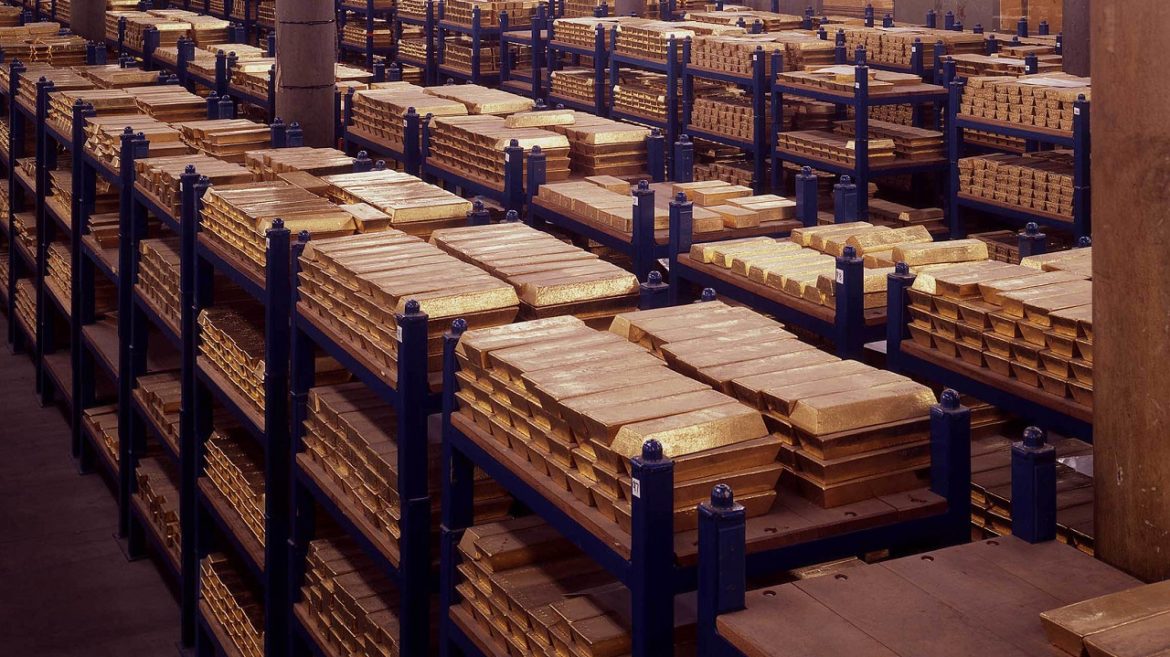
Central banks gobbled up gold over the summer and the buying spree has continued into the fall.Globally, central banks added another net 42 tons of gold to their reserves in October.
The Bank of England's plan for a digital pound could heighten the risk of bank runs and failures, as it allows for faster withdrawals during financial instability. The move may also lead to increased borrowing costs, as banks face higher funding costs. MPs have raised concerns about potential data misuse and the adverse impact on those reliant on physical cash. The need for clear evidence of the digital pound's benefits without escalating risks is emphasized.
Dec 5, 2023 - 05:20:02 PST
Moody's Investors Service has lowered China's sovereign credit rating outlook to negative due to concerns over prolonged economic slowdown and challenges in the property sector. This change reflects the increasing financial support from the government to weaker regions, posing risks to China's overall fiscal and economic stability amidst broader economic challenges.
 Moody's Downgrades China's Credit Outlook to Negative Amid Economic Concerns
Dec 5, 2023 - 05:20:02 PST
China faces a significant financial time bomb risk due to its banking system's exposure to a substantial amount of hidden debt, accumulated by cities and provinces through years of unchecked borrowing. Estimates by the International Monetary Fund and Wall Street banks place this off-balance-sheet government debt between $7 trillion and $11 trillion. This debt largely comprises corporate bonds issued by local-government financing vehicles for infrastructure projects and other expenditures.
China's central bank injected 210 billion yuan (approximately $29.52 billion) into the market through seven-day reverse repos at a 1.8% interest rate. This intervention, aimed at stabilizing liquidity in the banking system, reflects ongoing concerns about financial stability towards the month's end.
 Fed's Barr Suggests Implementing New Liquidity Rules to Prevent Bank Runs
Dec 5, 2023 - 05:00:41 PST
The Federal Reserve's Vice Chair for Supervision announced that the central bank is considering changes to its regulatory and supervisory guidelines for liquidity management. This reassessment is due to concerns that existing measures may not effectively handle the rapid pace of modern bank runs.
Gold surged to a new record high of $2135 early Sunday morning before pulling back sharply Monday. In this video, Peter Schiff explains why this is a buying opportunity.After setting the record, gold quickly sold off and consolidated, dropping over $100 back to around $2,020. Some people see the quick selloff as a bearish sign. Peter said he doesn't think so.
 THE MASSIVE AMOUNT OF U.S. SHALE OIL EXPORTS: Roughly Half Of The U.S. Tight Oil Supply Is Sent Overseas
December 5, 2023

We can thank the shale companies for their hard work producing tight oil, which we export nearly half. Amazingly, the U.S. exports more oil now than what Iran, Kuwait, or the UAE produces. The U.S. shale industry is exporting the highest-cost oil at bargain-basement prices...
 Bloomberg Intelligence Senior Macro Strategist Mike McGlone Says Gold in Early Days of a Bull Market
Dec 4, 2023 - 11:23:50 PST
Gold prices, after reaching a record high of $2,100, retreated, with investors anticipating Federal Reserve rate cuts next year. Bloomberg Intelligence's Mike McGlone notes gold is trying to maintain support around $2,000, previously a resistance level. McGlone sees gold in the early stages of a bull market, driven by significant purchasing from central banks.