
Precious metals are apparently waking up. And here is where you can find the best deals.


Site:
Precious metals news

In this insightful video, we explore the complex relationship between silver and gold markets, highlighted by historical spikes in silver prices.

JD and Joel discuss gold's underrated new all-time high, silver nearing $30 per oz, higher-than-expected inflation, the Fed's response, and why buyers today can expect to pay lower premiums.

Economist Harry Dent warns of an impending U.S. recession due to high levels of national debt and financial mismanagement. In a recent interview, Dent called for a necessary "debt detox" to navigate out of the current financial bubble and onto a path toward economic growth, referencing the massive $27 trillion in accumulated debt and deficits since the 2008 financial crisis. He criticized the excessive economic stimuli, particularly during the COVID pandemic, as misguided efforts that have exacerbated the debt situation. Dent forecasts that millennials will drive significant spending from 2024 to 2037, but stresses that current debt levels must be addressed to prevent further economic downturns.
 ECB Hints at Future Rate Cuts, Distances Policy from U.S. Federal Reserve
Apr 11, 2024 - 16:40:26 EDT
Despite maintaining steady interest rates for the fifth consecutive meeting, the European Central Bank (ECB) signaled potential forthcoming rate cuts if inflation trends toward their 2% target. ECB President Christine Lagarde emphasized the independence of the euro area's economic policy from the U.S., following intense speculation about how recent U.S. inflation figures might influence the Federal Reserve. This declaration marks the ECB’s clearest hint yet at a possible shift in monetary policy amid differing economic trajectories between the euro area and the U.S.
Recent data reveals a concerning trend in the "supercore" inflation measure, a specific gauge focusing on services inflation minus food, energy, and housing costs. This metric surged 4.8% year-over-year in March, and its three-month annualized pace exceeded 8%. The increase is particularly alarming as it includes essential services such as car and housing insurance and property taxes, which are notoriously resistant to downward price adjustments. This suggests that the Federal Reserve faces significant challenges in controlling inflation within these critical sectors.
East Hampton police successfully thwarted a gold scam operation, arresting two men posing as a Homeland Security agent to deceive a local resident. The fraudulent scheme involved convincing the resident they owed a substantial debt payable in gold. Police Chief Dennis Woessner reported that after launching a fraud investigation on April 4, officers conducted an undercover sting at the resident’s home, capturing the suspects during their attempt to collect the gold. More than $100,000 in gold was recovered and returned to the victim.

Since 1980, the gold/silver ratio has been out of whack. Does it even make sense for modern investors to pay attention to it anymore?
The US labor market outperformed expectations last week, with fewer Americans applying for unemployment benefits than anticipated. Despite a backdrop of aggressive Federal Reserve rate hikes aiming to cool inflation, initial jobless claims surprisingly fell to 211,000 from an expected 215,000. This decline hints at a persistently tight labor market, albeit with a slight increase in the time it takes for some to find new employment post-layoff.
 Silver Will Be GONE In The Blink Of An Eye...There's A LOT LESS Than People Think!
Apr 11, 2024 - 09:51:44 EDT

In this video, Alan Hibbard explores the current trends and future outlooks in the gold and silver markets, emphasizing the dramatic price increases.

Zimbabwe has debuted the new ZiG, its new gold-backed currency. Launching with a robust start, the ZiG appreciated to $13.45 from its initial $13.56 against the U.S. dollar in just a week, marking a promising 0.8% gain. This early success is a beacon of hope for an economy previously marred by inflation and currency instability. Backed by significant gold and foreign currency reserves, the ZiG is more than just currency; it's a cornerstone of Zimbabwe's strategy for economic stabilization and growth.
 Inflation Fears Spark Rally in Gold and Oil, Casting Doubt on Fed's Strategy
Apr 10, 2024 - 17:01:06 EDT
Recent data indicating persistent inflation has impacted financial markets, with a notable rise in consumer price index (CPI) causing stocks and bonds to fall. In response, investors have turned to gold, oil, and cryptocurrencies as safeguards against inflation, leading to a rally in these assets. This movement has raised the yields on 10-year Treasuries to their highest since November and decreased the S&P 500 by about 1%. Energy companies, benefiting from the situation, remind us of strategies used in previous inflationary periods. The increasing prices in commodities, combined with geopolitical tensions, have fueled doubts about Federal Reserve Chair Jerome Powell's ability to achieve a "soft landing" for the economy. Critics argue that the recent surge in asset values is counterproductive to the Fed's efforts to control inflation, encouraging excessive spending among consumers and investors.
Gold's recent trading saw a downturn after hitting nine consecutive intraday record highs, influenced by March’s CPI indicating persistently high prices. Francisco Blanch of Bank of America Securities highlighted the significant role of central bank and Chinese retail buying in gold's surge, attributing it partly to cyclical factors but mainly to a structural trend driven by geopolitical tensions between the West and countries like Russia and China.
Copper prices reached a 2024 peak, with May delivery hitting $4.323 per pound in New York, marking its highest level since June 2022. The London Metal Exchange saw three-month copper prices increase by 0.6% to $9,477 per metric ton. This surge in copper prices is significant as copper demand is often viewed as an indicator of global economic health, suggesting a positive outlook on the economy's strength.
Apr 10, 2024 - 16:11:32 EDT
Bank of America forecasts a significant rise in gold prices, reaching $3,000 per ounce by 2025, driven by robust demand from central banks and investor anticipation of interest rate cuts by the Federal Reserve. The bank's commodity strategist, Michael Widmer, points out gold's strong performance despite global central banks' monetary tightening.

HSBC Chief Commodities Analyst James Steel discusses the gold market’s latest surge, particularly in China and India, as geopolitical risks swirl around other areas of the broader market. James speaks to Tom Keene and Paul Sweeney on Bloomberg Radio.
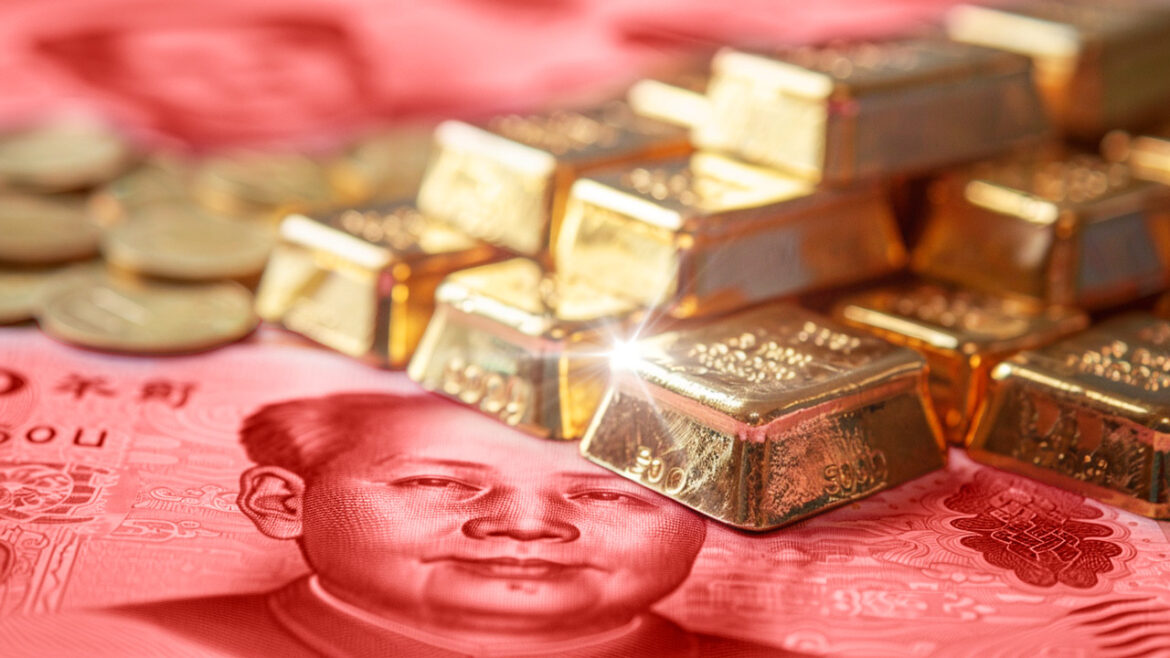
In investing, “Buy low, sell high” is among the most well-known sayings, and generally, it’s good advice. But with gold still holding near its historic all-time highs, central banks led by China are bucking the classic adage and smash-buying more, buying the top to fortify themselves against a global monetary and financial blow-up.
Gold Retreats Off Record Highs After Higher than Expected Inflation DataApr 10, 2024 - 12:16:01 EDT
Gold prices fell from their peak following the release of U.S. inflation data that was hotter than anticipated, boosting the U.S. dollar and Treasury yields. This development dampened the market's hopes for an imminent rate cut by the Federal Reserve. With the consumer price index for March rising more than expected, gold, which does not yield interest, became less appealing to investors.
Gold's recent ascent to record highs has captivated our attention again. Amidst a backdrop of mounting public debt, inflation fears, and central banks' dovish tendencies, gold's allure strengthens. However, these factors have been in play for years, prompting us to ask: Why is gold surging now? A recent analysis by Louis-Vincent Gave at Gavekal offers a compelling perspective, pointing not towards the usual suspect, the Federal Reserve, but towards the Bank of Japan.
When John Bogle died in 2019, people around the world mourned. Bogle created the Vanguard Group and made the index fund mainstream. Index funds are investment vehicles that invest in a class of investments as a whole, rather than trying to predict what specific stocks or securities will do best. So an investor could invest in an index fund that represented American companies as a whole rather than trying to predict whether Disney, Apple, or Meta would have a better quarter.
In March, inflation rates exceeded forecasts, as the US Consumer Price Index (CPI) surged by 0.4% from the previous month and climbed 3.5% year-over-year, marking an uptick from February's 3.2% annual price increase. This acceleration suggests that inflationary pressures in the economy remain robust, challenging policymakers and consumers alike. The data underscores the ongoing battle against inflation and may influence future economic policies aimed at stabilizing prices.