
Precious metals are apparently waking up. And here is where you can find the best deals.


Site:
Precious metals news

"Recent U.S. inflation indicators have been disappointing, making it important to sustain momentum."


It also saw economic data suggesting a distinct hint of inflationary pressure.

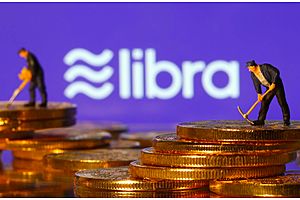
A proposal to prevent big technology companies from functioning as financial institutions or issuing digital currencies has been circulated for discussion by the Democratic majority that leads the House Financial Services Committee, according to a copy of the draft legislation seen by Reuters.
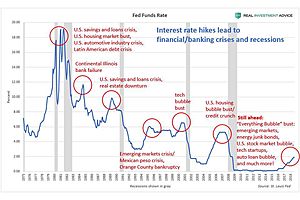
Increased volatility and rising interest rates are leading investors and economists to warn of an impending stock market crash.
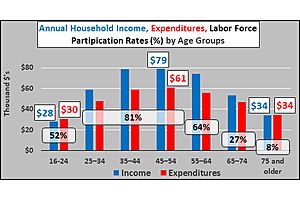
On average, income and expenditures are a bell curve, rising from early adulthood, peaking in the 45 to 54 year old portion of ones life, and falling indefinitely thereafter.


Such corrections are normal and healthy within ongoing bull markets...
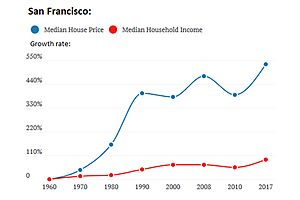
I remember when a Chief Economist at a large Washington DC area housing finance entity said that the definition of a house price bubble is when house price growth exceeds household income growth. …
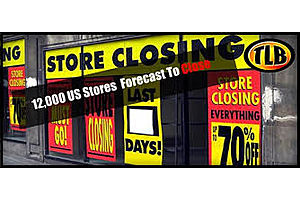
The retail inferno is escalating in 2019. According to Coresight Research, in the US, year-to-date announced closures have already exceeded the total we recorded for the full year 2018. Coresight …

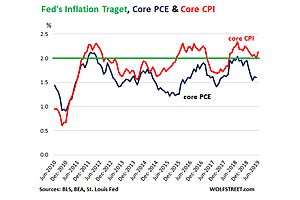
Use a Different Index for Crying Out Loud and Tell the BLS to be Less Aggressive with “Hedonic Quality Adjust. The Fed could instantly claim victory and pocket the kudos.


Canada and New Zealand are the most vulnerable economies to a correction in house prices, with Australia and the U.K. also drawing concern, according to new research from Bloomberg Economics.
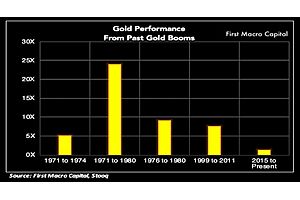
Gold has exploded higher over the past few months, but how high can gold really go? Not a day goes by, without hearing about “buy gold”...
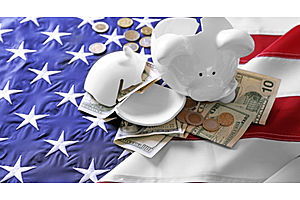
Treasury, as of the end of 2018, the federal government had a combined total of $95,410,000,000,000 in unfunded obligations, liabilities, and debts. Just in case you lost your place counting all of those zeros, that is $95.4 trillion.

President Trump is putting his hopes for reshaping the Federal Reserve on a controversial conservative economist who is a fierce advocate for his economic agenda — and who has adjusted her views on monetary policy to fit the commander-in-chief’s.


Jerome Powell took center stage last week and the Federal Reserve chair didn’t do anything to dampen expectations of a rate cut. His comments sent both stocks and gold higher.Peter Schiff recently appeared on RT Boom Bust with University of Amherst economics professor Richard Wolff to talk about the Fed and its impact on the markets. Pete said no matter what the Fed does, a recession is coming.

New highs in markets despite a slowing global economy. Well done. But the construct is weak, it repeats the same patterns we’ve seen before amid divergences, gaps, select participation and a myriad of technical warning signs.

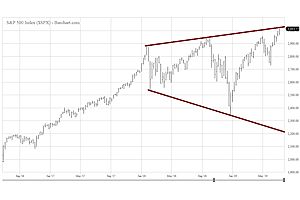
While investors appear exuberant about the prospect for Fed easing, they seem largely unaware that initial Fed easings have almost invariably been associated with U.S. recessions. They’re running toward the fire.
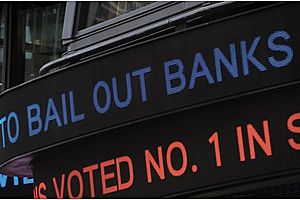
Loan-loss reserves are as low as they were in 2008.


Abandon the Ph.D. standard, which brought the era of government bailouts and too big to fail.

Michael Hudson on how the US was able to turn its change from creditor to debtor to its advantage.
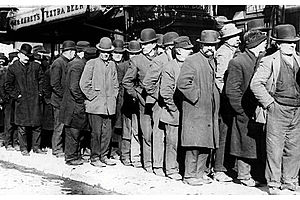
With the Depression at their backs, New Deal Democrats created a system that had much more than monetary policy in mind.