
Precious metals are apparently waking up. And here is where you can find the best deals.


Site:
Precious metals news
Jul 10, 2023 - 05:42:19 PDT
US banks are expected to report the largest increase in loan losses since the pandemic as rising interest rates put pressure on borrowers. The nation's six largest banks, including JPMorgan Chase, Bank of America, and Citigroup, are estimated to have written off $5 billion tied to defaulted loans in the second quarter. They are also predicted to set aside an additional $7.6 billion to cover potential bad loans. Credit card loans and commercial real estate loans are major sources of concern. While investment banking revenues may be impacted, analysts expect increased interest rates to outweigh negatives for most big banks.
US job growth is slowing and signs of trouble are emerging in rising costs and pressure on profit margins for blue-chip companies. Despite this, investors are not fully pricing in the risks. Over $500 billion of bonds near junk status are at risk of downgrades, potentially leading to difficulties in raising cash and an increase in defaults. Executives are becoming more conservative with cash usage, anticipating a downturn. Bankruptcy filings suggest the default cycle may have begun.
Jul 10, 2023 - 05:32:14 PDT
Former Treasury Secretary Lawrence Summers cautioned policymakers not to become complacent about inflation, emphasizing that the decrease in inflation rates should not be mistaken for long-term stability. He anticipates a further decline in bond prices as investors adjust to the need for more monetary tightening. Summers made these remarks following the release of a robust US jobs report, which showed strong payroll growth and increased wages. While certain economic indicators suggest potential softening, the bond market has reacted with sell-offs in anticipation of future interest rate hikes by the Federal Reserve. Summers expects ongoing adjustments in interest rates based on incoming data. The upcoming consumer price index is predicted to show a decline in annual inflation rates. Summers emphasized the need for the Fed to raise rates enough to bring inflation back to target levels, even if it leads to an economic downturn.
Jul 10, 2023 - 05:28:32 PDT
A surge in US real yields, which reflects bond investors' expected return after accounting for inflation, has raised concerns among investors. The yield on 10-year inflation-protected securities (Tips) reached its highest level since 2009, signaling the belief that the Federal Reserve will need to maintain higher interest rates for a longer period to control inflation. Real yields serve as a measure of borrowing costs and impact the attractiveness of riskier assets. The increase in real yields has made low-risk government debt more appealing, potentially impacting other asset classes. This surge in yields surpasses the levels seen last October during a period of bond sell-off and greater uncertainty regarding US inflation.
Federal Reserve Chairman Jerome Powell reassured lawmakers about avoiding a repeat of the 2019 repo market disruption. However, economists caution that quantitative tightening (QT) remains complex and unpredictable. The full impact of the Fed's current QT program is yet to be felt. Powell acknowledged past problems and emphasized the Fed's experience. The Fed is currently reducing bond holdings at a faster pace but from a larger base. So far, things have been smooth, with ample reserves. Analysts estimate $2.5 trillion is needed for banking system stability, but with low confidence.
 Global Markets-Traders Hold for US Data As China Disinflation Risk Drags
Jul 10, 2023 - 05:13:13 PDT
U.S. stocks are set to open lower as investors await an inflation report and express concerns over China's economic slowdown. S&P and Nasdaq futures indices dropped 0.2% and 0.3% respectively, with trading volumes at their lowest this month. Chinese consumer prices remained almost unchanged, while producer prices declined further. The data suggests the potential for more monetary easing but highlights the challenge faced by Beijing in stimulating the economy. Weaker global growth due to higher interest rates is also impacting equity valuations, making it difficult for stocks to sustain a rally.

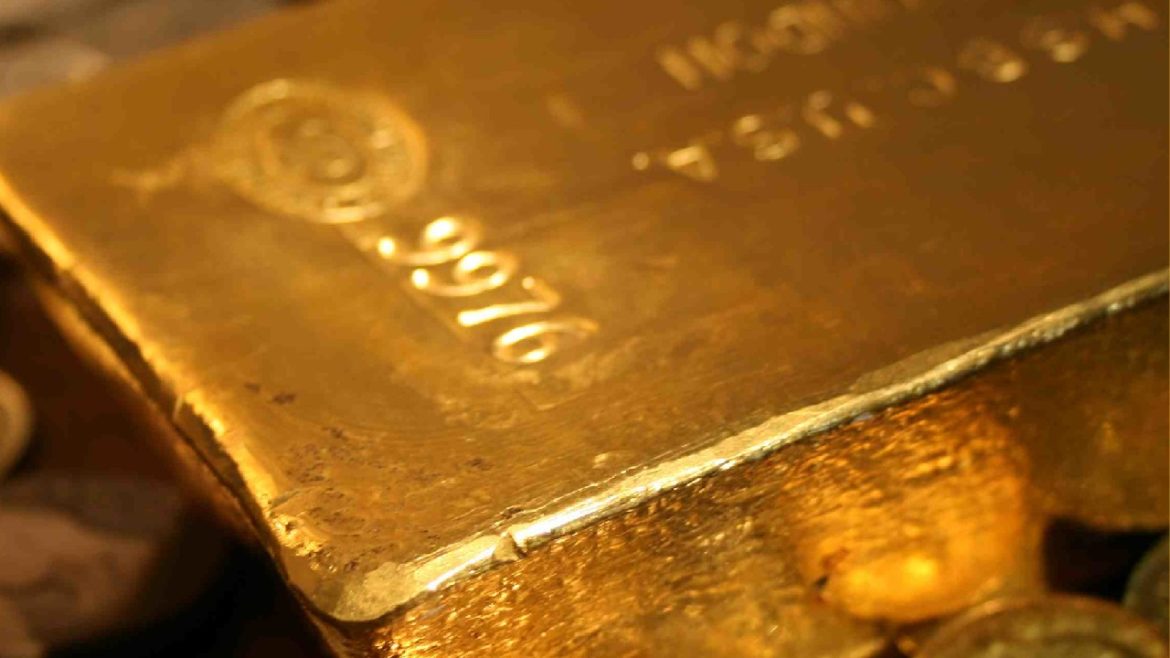
Despite a lackluster June, the price of gold rose 5.4% through the first six months of 2023 and was the second-best performing asset class behind only developed market stocks.

Most people believe members of the Federal Reserve are highly trained experts who are imminently qualified to run monetary policy. Guided by this perception, the mainstream treats Fed pronouncements as gospel. But if you compare Fed projections to actual outcomes, it looks like they're just guessing. In fact, you would probably get more accurate results throwing darts at a dartboard.
 MARKETS & ENERGY UPDATE JULY 9th: Coming Global Recession & Higher Oil Prices? Get Ready For Stagflation
July 9, 2023

While the U.S. and world might be heading into a recession, don't count on low oil prices. Why? Global oil demand will likely be much stronger during 2H 2023 and into 2024 than the market realizes. Thus, higher oil prices translate into a higher Consumer Price Index...
ANZ Bank economists report that the transition to renewable energy is driving an unexpected demand for Silver, a metal not traditionally associated with renewables. The solar industry, in particular, relies on Silver for its high electrical conductivity and durability. As China's solar capacity rapidly expands and industrial demand for Silver from solar increases, the market may face supply challenges. Silver production is closely tied to other metals, and scrap supply is lagging. While above-ground inventories are still sufficient, they have significantly decreased in recent years.
 More States Consider Sales Tax Exemptions for Precious Metals As Mississippi Law Takes Effect
Jul 7, 2023 - 13:10:48 PDT
Several U.S. states still impose sales taxes on the purchase of precious metals like gold and silver, but there is a growing movement to exempt them. Mississippi recently passed a bill exempting gold, silver, platinum, and palladium coins and bars from sales tax, joining other states like Virginia, Tennessee, Ohio, and Arkansas. New Jersey and Wisconsin are considering similar exemptions. The arguments against taxing precious metals include their constitutional status as money, the lack of sales taxes on stocks and bonds, and the fact that they are held for resale or exchange. Despite some opposition and partisan issues, progress is being made in the fight for sound money at the state level.

The Keynesian bedrock of modern economics, relying on financial repression and government spending funded by debt, is an artifact of favorable conditions that are now reversing. Factors such as abundant and affordable energy, favorable demographics, untapped natural capital, and globalization have reached their limits. The cost of debt is rising faster than the tepid growth it generates, and speculative credit-asset bubbles are becoming unsustainable. The Keynesian fantasy is coming to an end, and the risks and costs of rising debt cannot be ignored. The collapse of this unsustainable model is looming, and individuals should prepare accordingly by reducing their exposure to risk through self-reliance.
Jul 7, 2023 - 12:47:20 PDT
Under the economic policies of Bidenomics, characterized by massive federal spending and soaring inflation, the top-down approach resembles a Soviet-style command economy. As the Federal Reserve grapples with the challenges posed by Bidenflation, the 30-year mortgage rate has surged to 7.31%, a stark contrast to the 2.88% rate observed at the beginning of President Biden's term. This represents a significant 154% increase in the 30-year mortgage rate under the influence of Bidenomics.
Under Bidenomics, auto loan rates have surged to 7.65%, marking a staggering 166% increase. Average monthly payments have reached a new high of $733, compared to $730 in the first quarter and $678 in the second quarter of 2022. Shockingly, 2 out of every 3 consumers with monthly payments over $1,000 had an average APR between 8.5% and 9.6%. These developments reflect the strain on America's middle class and low-wage workers, highlighting the detrimental impact of current economic policies.
 More Americans Can't Afford Their Car Payments Than During The Peak Of Financial Crisis
Jul 7, 2023 - 12:33:57 PDT
Focusing on the alarming state of the auto sector and its implications for the US economy. The data suggests that the auto industry is approaching a critical point, indicating an imminent auto loan crisis and signaling a forthcoming recession. Americans are increasingly relying on debt to afford skyrocketing car prices. Recent developments, such as a significant increase in new car loans and unprecedented spikes in auto loan rates, further contribute to the precarious state of the industry. The situation is likened to the fictional character Wile Coyote reaching a point of no return, emphasizing the severity of the issue.
This alarming story highlights the disturbing reality of how Americans have neglected to read and understand their own Constitution, including the Bill of Rights. It exposes the government's rampant disregard for citizens' rights, with a growing list of abuses that violate the Constitution. The government continues to restrict free speech, target whistleblowers, infringe on the right to self-defense, conduct invasive searches, incarcerate citizens unjustly, seize private property, and undermine due process. The story portrays a bleak picture of a government that has usurped power, leaving citizens vulnerable to militarized police, surveillance, and mass detention centers. It serves as a stark reminder of the erosion of liberty and the urgent need for Americans to reclaim their rights and protect themselves against government overreach.
Job market craters as layoffs increase, particularly in the tech sector attributing cuts to inflation. PPP loans intended for small businesses favored large corporations. Share buybacks benefit major players while the economy appears illusory. Infrastructure funds face delays and lack of disbursements. Data accuracy and manipulation raise concerns.
The Federal Reserve's actions have primarily focused on saving big New York banks, leading to banking crises and an insolvent system. Its current policy of raising interest rates exacerbates the situation. The Fed's creation caused inflation, depression, and recession, with the value of the US dollar significantly declining. Blaming insufficient demand for the Great Depression led to the rise of one-dimensional macroeconomics. The Fed's fight against inflation hampers employment and output, while the current inflation is supply-side. The high-interest rate policy frustrates homebuyers, businesses, and investors without serving any good purpose.

The possibility of a global recession grows as interest rates continue to rise, with warnings stemming from events like the gilt crisis, the collapse of Credit Suisse Group AG, and various US bank failures. Several rate-sensitive sectors, such as commercial property and utilities, show signs of instability. However, the most significant damage is occurring in areas like small- and medium-sized enterprises and the housing rental market. The aim of central banks to manipulate the labor market through rate adjustments is misguided, as labor markets are difficult to micromanage, and reaching the tipping point may result in a swift downturn that is challenging to prevent.
 German Industrial Production Falls, Signaling Prolonged Economic Downturn
Jul 7, 2023 - 08:25:44 PDT
German industrial production unexpectedly dropped by 0.2% in May, raising concerns about a prolonged economic downturn. The decline was mainly attributed to a significant decrease in pharmaceuticals, overshadowing any gains from increased vehicle production. Chief economist Carsten Brzeski warns that the poor outlook, lack of orders, and ongoing challenges such as the conflict in Ukraine and the transition to green energy are contributing to Germany's stagnant industrial sector.