
Precious metals are apparently waking up. And here is where you can find the best deals.


Site:
Precious metals news
Pierre-Olivier Gourinchas, Chief Economist of the International Monetary Fund (IMF), ominously warned about the grim potential of the US economy spiralling into a recession.
In a sobering conversation at the IMF's headquarters in Washington, Gourinchas stressed that although a recession isn't explicitly predicted, it looms as an alarming possibility if the US fails to carefully navigate its current economic conditions and fails to manage its rampant inflation.
The IMF, despite recently inflating its global growth prediction to 3% for 2023, primarily attributed this growth to developing economies, casting doubts on the ability of mature economies to contribute significantly. The US, along with Germany and Japan, are being outpaced by the rapid growth of emerging economies such as China and India.
In another concerning revelation, the IMF's report spotlighted the burgeoning risks in the seemingly robust Chinese economy, focusing on its fragile real estate sector. Early signs of China's rapid post-pandemic e...


Will Artificial Intelligence enlighten, guide, care and inform us? Or will it confuse and divide us?
Jul 25, 2023 - 08:30:00 PDT
A BlackRock study has found that US retirement savers are increasingly worried about their ability to save for retirement due to high inflation and volatile markets. The proportion who feel they are "off track" in their savings plan has doubled to 24% since 2021, while the percentage feeling "on track" has dropped to 56%, the lowest since the survey's inception eight years ago.
Almost 30% of retirement savers now plan to work longer due to economic conditions, with younger workers especially concerned. 31% of them believe they are off track, creating fears they may lose faith in 401(k) and other retirement savings plans.
BlackRock's findings coincide with an Edelman survey, which found that only 40% of the global public expects their family will be better off in five years, with the US figure even lower at 36%. Despite this, the survey found that 78% of respondents trust their employers, compared to 50% who trust their government and the media.
The market volatility has increased interest in retirement pr...
Jul 25, 2023 - 07:45:06 PDT
The U.S. budget deficit is worsening this year due to the Inflation Reduction Act and CHIPS and Science Act of 2022, adding over $1 trillion to the deficit over the coming years. This is in line with falling real gross domestic income (GDI) in three out of the last four quarters. Larger interest payments and diminished tax revenues increase the deficit without boosting economic activity.
Research suggests that the government expenditure multiplier is positive for the first four to six quarters after the initial deficit financing, then turns negative after three years. This means debt-financed federal expenditures could ultimately reduce private GDP.
Two studies found that government fiscal policy actions that increase government size or debt relative to GDP significantly weaken economic growth. The impact of government size relative to GDP is becoming increasingly negative.
In early 2023, the government's size was 34.3%, and real per capita GDP/GDI average growth was 1.3%, indicating an increase in govern...

The Dow Jones Industrial Average (DJIA), S&P 500, and Nasdaq Composite Index have experienced a decline over the past 18-20 months, with a steeper dip when adjusted for inflation. The DJIA, for instance, is down 6.42% inflation-adjusted from its all-time high in January 2022. Despite certain stocks like Apple and Nvidia performing well, investors are often blind to the overall market downturn due to the influence of these giant companies.
Market indexes, such as the S&P 500 and Nasdaq, being cap-weighted can exaggerate the performance of mega-cap stocks. Hence, even when most stocks in an index may not perform well, a few key players can mask this underperformance. The extreme concentration on a few companies adds vulnerability to market reverses.
Automated trading dominates over 80% of the market, pushing traditional active investing to the sidelines. This automation, based on flawed assumptions like the inevitability of matching market performance and the future resembling the past, can lead to disastro...

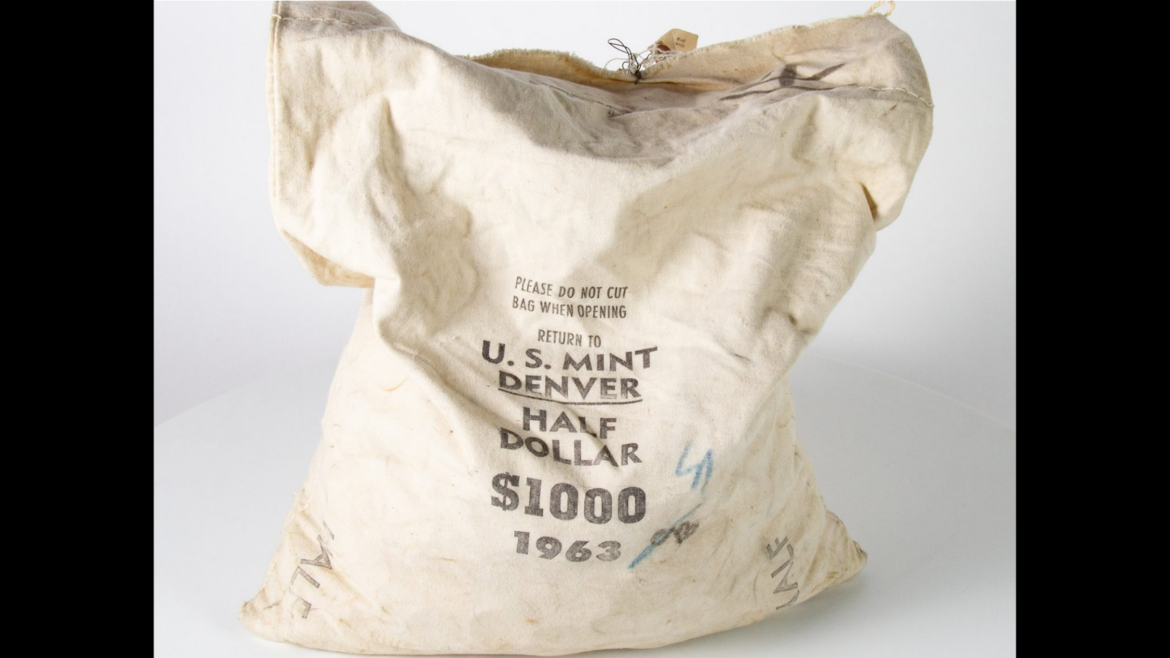
A bag of "junk silver" given to a woman by her father more than 50 years ago is now worth at least five figures.The Oklahoma woman received a bag of 2,000 silver half-dollar coins as a gift back in 1970. While the face value of the coins is just $1,000, the silver alone is worth over $17,800.
Jul 25, 2023 - 06:21:49 PDT
US capitalism's shifting geography has led to various regions being abandoned and depressed, starting with New England, then moving to New York and the mid-Atlantic, then the Midwest, the Far West, South, and Southwest. As capitalists sought higher profits, they moved facilities and investments out of the US, especially to China. The result: wage stagnation, growing income inequality, and social division in the US.
This exodus, justified under "neoliberalism" and "globalization," chiefly benefited the rich corporate shareholders and executives, intensifying income and wealth gaps. The argument was that this global movement was good for all citizens. Meanwhile, China, unlike other countries, ensured foreign investments served its own development plan, leading to a fast-paced economic growth.
With China and its allies (Brazil, Russia, India, South Africa) posing the first sustained economic challenge to the post-WWII US empire, the US has responded with resentment, provocation, and denial. Yet, the capitali...
Jul 25, 2023 - 06:15:55 PDT
For the first time, the yuan has topped the dollar in China's cross-border transactions, accounting for 49% of the total in the last quarter, according to a Nikkei analysis. This rise is largely attributed to China's more open capital market and increased yuan-based trade with Russia.
Despite the dollar's global share remaining the largest at 42.02%, according to SWIFT, the yuan's international usage has grown from 1.81% to 2.77% in the past five years, reflecting China's increasing economic influence.
In 2022, cross-border settlements in yuan totalled $5.85 trillion, and its international payments last quarter grew 11% year-on-year to $1.51 trillion, surpassing dollar payments. This shift is linked to China's capital market liberalization and an increased use of the yuan in trade, particularly with Russia due to Western sanctions.
Beijing continues to encourage international use of the yuan, making bilateral agreements to facilitate its use. This is fostering a potential currency decoupling, as China and...

US Secretary of Treasury, Janet Yellen, continues to rubber-stamp America's growing debt, yet these checks miraculously clear. Despite the nation's insolvency, this process persists, with Washington spending the borrowed money.
Yellen appears to live in an economic fantasy, recently claiming at a G20 meeting, "Our labor market is strong, I don't expect a recession. The inflation data is encouraging." This is despite the creation of low-quality jobs that won't stimulate economic growth, increasing bank losses, and inflation data that is skewed by the draining of the Strategic Petroleum Reserve.
The economic reality is bleaker. The US government ran a budget deficit of nearly $1.4 trillion in the first 9 months of 2023, a 170% increase from last year. Interest on Treasury debt securities for the same period increased 25% to over $652 billion.
Since 2000, federal debt has risen over 480% while GDP has only grown 165%. The government's reckless debt accumulation has left the US economy in a precarious state, ...

The number of corporate debt defaults in 2023 has already exceeded the total number of defaults last year.According to data from Moody Investment Services, 55 American-based companies defaulted on loans through the first half of 2023. That was a 53% increase over the total number of defaults in 2022.
Jul 25, 2023 - 05:45:29 PDT
The US is grappling with a monumental public debt issue, with the debt amount soaring by a staggering $57.2 billion in a mere span of four days. Recently, the total debt crossed the $32 trillion mark on June 16th, and by July 20th, it had already jumped an additional $590 billion, reflecting the gravity of the problem.
David Rubenstein, a prominent billionaire investor, shared his insights on Bloomberg TV, offering a bleak assessment of the situation. He expressed that the US might resort to inflation as a method to manage this escalating debt, which can severely magnify income inequality in the country. Such an approach will disproportionately impact those at the lower income levels, as they often struggle more with the adverse effects of inflation compared to wealthier individuals.
In addition to this, Rubenstein flagged the rising tensions between different socio-economic and age groups. He forecasts a clash between the older population, who are living longer but have inadequate retirement benefits, an...
Rumors are circulating that the BRICS countries (Brazil, Russia, India, China, and South Africa) are planning to introduce a new trading currency backed by gold. This announcement could have significant implications for the global financial system, but details remain sketchy.
Some speculate that this new currency might only be used for settling international accounts. It raises questions about where the gold backing this currency will be held and whether the currency will be distributed based on the amount of gold a country holds in its treasury. There are also concerns about whether this currency will be available to companies and individuals or exclusively to governments.
A currency backed by gold could bring many advantages. However, skeptics suggest that the governments' motivations might not be purely about economic stability. They may also be seeking more control over their national currencies and possibly limiting individuals' ability to move their assets across borders.
Using gold itself as a unit...

In the ideal 'sound money system', a range of currencies, both state-issued and privately issued, would compete in a transparent global marketplace. But most importantly, a key role would be played by currencies backed by tangible assets, like gold.
Currencies are fundamentally a reflection of the issuing nation's economy and institutions. The currencies backed by solid and diverse economies are stronger, but the constant manipulation by governments and central banks can lead to debasement that disproportionately favors the wealthy.
Gold-backed currencies present a potential solution to this problem. Unlike fiat money, which is subject to inflation and financial repression, gold retains its intrinsic value and isn't as easily manipulated by central authorities. For a gold-backed currency to work, however, it must be convertible to gold, otherwise, it falls prey to the same manipulations as fiat currencies.
A currency crisis often sees the wealthy moving assets overseas, only to return and buy assets cheap...

Caitlin Long's endorsement of Idaho's move to charter "uninsured, non-lending, 100% reserve banks" elicits grave concerns about the future of banking. Fractional reserve banking, where banks maintain a fraction of the total deposits as cash, poses a considerable threat in the digital age. If more than the maintained fraction is withdrawn abruptly, it could lead to bank failure, a phenomenon that's getting more frequent and swift with internet speed transactions.
The trend of moving money to larger banks for a perceived safety is hardly a solution, as they hold only marginally more cash. Long proposes the return of narrow banking, a 19th-century norm, where banks hold 100% of their cash on deposit at the Federal Reserve. However, the Federal Reserve has shown resistance to this idea, as demonstrated by its rejection of TNB USA's application for a Fed master account in 2017.
The emerging banking landscape paints a worrying picture. With bank runs speeding up due to the shift from paper to digital transactio...
The collapse of Silicon Valley Bank has unveiled serious vulnerabilities in the financial sector, shedding light on inadequate regulatory measures and financial missteps. The prevalent disregard of rising interest rates and reckless betting by financiers has significantly contributed to the collapse. Loose monetary policies and flawed accounting rules are among the key factors, with additional concerns being the overlooked roles of the Federal Home Loan Bank system (FHLB) and the use of collateral.
The FHLB, an obscure entity in American finance, has facilitated loans for struggling institutions, masking their actual financial conditions. An alarming spike in FHLB's loan book from $344bn to over $1tn between September 2021 and March 2023, largely undetected due to lack of timely reporting, has been revealed. The banks that imploded, including SVB, Signature and First Republic, were found to be heavy FHLB borrowers.
Further, the misuse of collateral to secure loans has been identified as another potential ...
 A Ticking a Time Bomb Remains for the U.S. Banking System Uninsured Depositors
Jul 24, 2023 - 08:11:51 PDT
The banking system in the United States has been left shaking following the collapse of three sizable banks in March and April, throwing into sharp relief significant inadequacies in bank regulation. The focus seems to have shifted to political finger-pointing rather than addressing the critical role that uninsured depositors played in these failures. The frightening reality that uninsured deposits continue to threaten the stability of the U.S. banking system has been grossly under-discussed.
Deposit insurance in the U.S. is provided by the Federal Deposit Insurance Corporation (FDIC) for banks and by the National Credit Union Administration for credit unions. While the limit of insurance coverage is $250,000 per account, it's alarming to note that about 40% of all deposits are currently uninsured, a significant leap from 20% three decades ago.
This large percentage of uninsured deposits is a ticking time bomb, posing a serious threat to the stability of the banking sector. This problem is especially prev...
The US inflation is showing signs of cooling, failing to reach the Fed's 2% target, which potentially spells uncertainty for the country's economic health. Kevin Gordon, the Senior Investment Strategist at Charles Schwab, has questioned whether the Federal Reserve will maintain its existing interest rate cycle or opt for a different strategy. Despite inflation slowing down, the Fed appears to be far from achieving its goals, thereby casting a shadow over the economic outlook.
While market participants anticipate further rate hikes, Gordon underscores that the Fed's actions are not on a predetermined course. Its decisions will be guided by a complex interplay between inflation trends, labor market dynamics, and overall economic conditions. However, there seems to be a disconnect between the market's understanding of the Fed's strategies and the institution's actual intentions.
In the beginning of the year, the market was expecting rate cuts before the end of the year, contradicting the Fed's signaling. Now...

Euro zone business activity contracted sharply in July, driven by falling demand in the service sector and rapid decline in factory output, according to a survey. The downturn was broad in scope, affecting Germany and France, and increased concerns of a recession in the region. This downturn is seen as a result of the European Central Bank's continued interest rate increases, which appear to be hurting consumers and the service sector. The Composite PMI for the euro zone fell to an eight-month low of 48.9, indicating contraction. The manufacturing sector was particularly weak. Consequently, the euro slipped, and the bloc's government bond yields fell. The downturn is causing significant concerns for the future of the euro zone economy.
The latest S&P Global US Flash Composite PMI report paints a grim picture of the country's economic health. The PMI for July slipped 1.2 points to 52, indicating the slowest rate of growth since February due to a milder increase in service sector output.
Furthermore, the issue of high costs persists, particularly in the service sector. Manufacturers too are grappling with a renewed increase in input prices, while services companies report a slower, but steady rise in operational expenses.
Chris Williamson, Chief Business Economist at S&P Global Market Intelligence, commented on the gloomy data, highlighting a distressing blend of slowing economic growth, decelerating job creation, plummeting business confidence, and stubborn inflation.
He stated that the current rate of output growth suggests an approximate 1.5% annualized GDP growth rate at the beginning of Q3, which is a decline from the 2% growth indicated in Q2. Moreover, he pointed out that the only saving grace for the economy was the service sector...
The latest New York Fed Credit Access Survey report reveals a concerning trend - stricter lending practices and reduced consumer demand for loans.
Key highlights from the June report include:
1. The credit application rate dropped to 40.3%, its lowest since October 2020.
2. Credit application rejection rates surged to 21.8%, the highest since June 2018.
3. Auto loan rejections skyrocketed to a record 14.2%.
4. Despite fewer applications, rejection rates for all loan types increased dramatically.
Moreover, Americans' credit scores are taking a nosedive as people halt their debt repayments. The housing market is faltering, with home sales dipping 15 of the last 17 months. The retail sector is also grappling with weak inflation-adjusted sales for four out of the past five months. Furthermore, the Fed's reported industrial production fell by 0.5% with a downward revision for May.
Despite some economic pundits shifting their prognosis from recession to soft landing, these troubling signs suggest a challenging ...