
Precious metals are apparently waking up. And here is where you can find the best deals.


Site:
Precious metals news

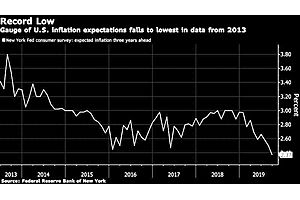
A gauge of inflation expectations from the Federal Reserve Bank of New York fell in September to the lowest level in data going back to 2013, the latest sign of weakness that could raise concerns among central bankers already fretting over muted price pressures.


Facebook and China are both looking to develop global digital currencies that could rival each other, especially in emerging markets.
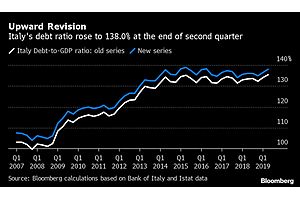
Italy’s debt rose almost to the highest level on record, adding urgency to the government’s clash over the 2020 budget.


The dollar gained for a second consecutive day on Tuesday as fading optimism over the latest China-U.S. trade truce prompted traders to buy the greenback after a selloff last week.

The Times: Germany has warned that Brexit will need to be delayed until next year even if European Union and British negotiators agree a new deal over the next 12 hours. Optimism has grown on the European...

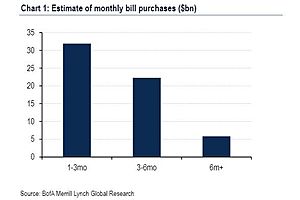
The Fed has stated it cannot purchase securities with 4 weeks or less to maturity, which make up 30% of T-bills outstanding.
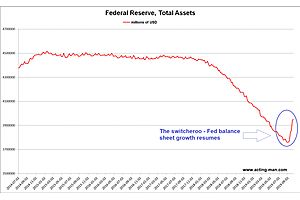
True Money Supply Growth Rebounds in September In August 2019 year-on-year growth of the broad true US money supply (TMS-2) fell to a fresh 12-year low of 1.87%. The 12-month moving average of th…
 The ALMOST Everything Bubble Will Implode - Mike Maloney on Hidden Forces Podcast
Oct 15, 2019 - 08:18:40 PDT

Mike Maloney recently appeared as a guest on the 'Hidden Forces' podcast with Demetri Kofinas. Demetri is a good friend of Mike, and has actually appeared as our own guest in Episodes 2 and 8 of Hidden Secrets Of Money. During this one hour interview Mike recalls his early battles with dyslexia and how it became a gift in disguise. Along with his thoughts on the current state of the markets, Mike details his first steps as an entrepreneur... leading all the way up to the foundation of GoldSilver.com
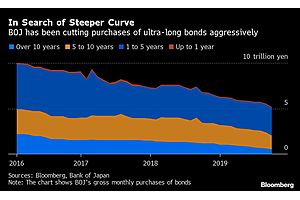
The Bank of Japan is on course for an historic turning point that would see its bond holdings shrink next year for the first time in a decade. The shift is all the more notable given that the European Central Bank and Federal Reserve are set to once...


Don’t bet on zero to negative bond yields to feed the stock-market’s gains, says Gross.

Only 36% of fund managers surveyed expect a resolution...


Investors got a reminder that the bank isn’t past its problems even as it seeks a fresh start under a new leader.
Agency RMBS are considered far safer and higher quality than the subprime pools that sowed the seeds of the so-called subprime mortgage crisis in 2007.
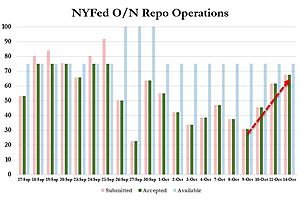
Having stabilized in the $30-40 billion range, liquidity needs have surged once again as it seems the big banks just cannot wait for The Fed's NotQE in November.


Central banks globally added a net 57.3 tons of gold in August, continuing a gold-buying spree that's been going on for months. Countries like Russia and China are seeking to minimize exposure to the US dollar and undermine the ability of the US to weaponize the greenback as a foreign policy tool. But there are even more fundamental reasons central banks hold gold, as outlined by De Nederlandsche Bank (DNB), the central bank of the Netherlands.
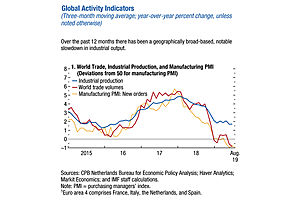
The IMF has grown even more pessimistic about the global economy, according to the latest World Economic Outlook, published on Tuesday.

The Federal Reserve is set to begin what a MarketWatch article called a "massive" bond-buying program.Jerome Powell announced the program last Tuesday and the central bank released more details about the plan on Friday. The Federal Reserve will buy $60 billion in short-term Treasury bills each month. According to a statement, the purchases will continue, "at least into the second quarter of next year." That would amount to around $400 billion worth of Treasurys added to the Fed's balance sheet.
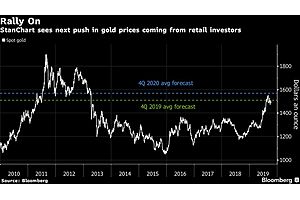
The next push in gold prices will come from retail investors as risks remain skewed to the upside, according to Standard Chartered Bank. Having already rallied to the highest in more than six years, bullion will still benefit from safe haven flows...

There are a lot of valid reasons why the inversion of the yield curve — that is, the yield of short-term bonds being higher than that of longer-term...


According to all central banks, one of the main problems they are called to solve is that countries cannot reach their inflation target of (close to but below) 2 percent.