
Precious metals are apparently waking up. And here is where you can find the best deals.


Site:
Precious metals news


How cash-burn machines power the real economy, and what happens to that economy when investors refuse to have more of their cash burned.

The Overton Window describes the spectrum of concepts, policies and approaches that can be publicly discussed without being ridiculed or marginalized as "too radical," "unworkable," "crazy," etc.

Fed's commitment to pump $60B a month into financial markets may not be enough...


More than half of Americans agree that "thinking about my personal finances can make me feel anxious." Financial stress can take a toll on our heath, not to mention productivity.
 Fund Manager: The Inevitable Scale-Up Of Money Printing Will Act As Rocket Fuel For Gold & Silver
October 21, 2019

Dave Kranzler says when the money printing really scales-up in size, it's not going to stimulate economic activity. Here's why...

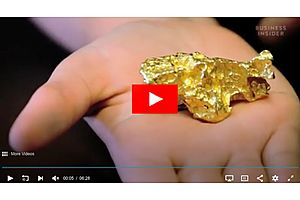
Gold is the shining embodiment of wealth, and can cost around $1,500 per ounce. But other but other metals that are rarer than gold are much cheaper.

Here's how that's flipped the fine jewelry industry on its head.

Monday’s amount was slightly bigger than the $56.65 billion overnight repos awarded on Friday.

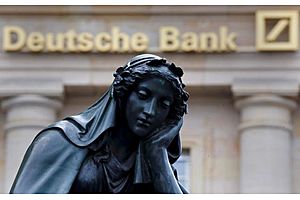
The bank will likely cut a low double-digit percentage of jobs at the rates business after CEO Sewing concluded that it’s possible to cut enough of the associated technology costs to outweigh the loss in revenue.


Silver rallies Monday, taking advantage of a rise in appetite for riskier assets while gold sits near unchanged.


We're being robbed!And most of us don't even realize it.When the stock market tanked late last year, the Federal Reserve came to the rescue. First, we had the "Powell Pause" and then we got two interest rate cuts. More recently, the Fed launched a new quantitative easing program - although the central bank isn't calling it QE.

The US national debt increased by a staggaring $814 billion between Aug. 1 and Oct. 6, according to Treasury Department data.That represents a 4% increase in the debt — in just a little over two months.
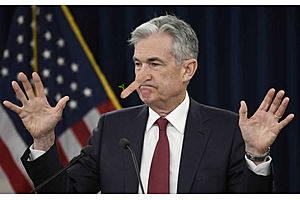
The US Federal Reserve is saying the economy is "in a good place" but acting as if it's about to fall into recession. Read this to understand why.
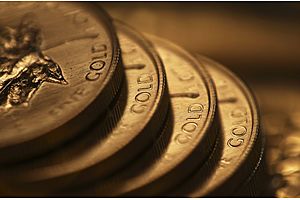
Gold prices were steady on Monday, holding in a narrow range as traders awaited more clarity on Brexit and U.S.-China trade ties.
As we count down to this month’s meetings of the European Central Bank and the Federal Reserve, both of which are expected to maintain their monetary easing stance, the U.S. yield curve has been quietly undoing the inversion that had raised alarms in the corridors of the world’s two most systemically important central banks.
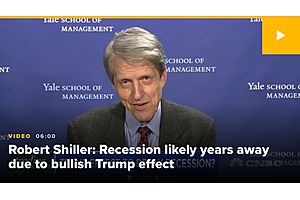
ccording to the Yale University professor, President Donald Trump is creating an environment that’s conducive to strong consumer spending, and it’s a major force that should hold off a recession.
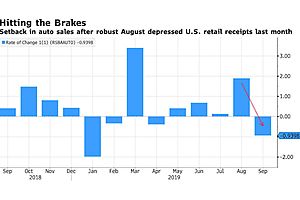
“The danger is boxing themselves into a corner where there is always the expectation of ‘one more cut.’ Beyond three, it sounds like you are going all the way to zero.’’

Santiago and other Chilean cities have been engulfed by several days of riots, along with peaceful protests, after the increase in public transport costs. The violence prompted Pinera to reverse the move and declare a state of emergency.
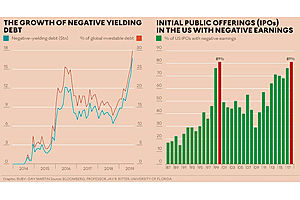
The first indicator is the percentage of new companies listing in the US with negative earnings. The latest level matches the peak last seen at the height of the dot-com bubble in 2000.

There are a multitude of issues that can take the markets down, even as the Fed FOMC meeting approaches.