
Precious metals are apparently waking up. And here is where you can find the best deals.


Site:
Precious metals news
The US national debt at $22 trillion has reached 100 percent of our GDP for the first time in history.

The U.S. Treasury Department expressed continued interest in issuing a 50-year bond, for the first time, as part of efforts to expand its investor base as the budget deficit widens to $1 trillion.The department said it’s also considering issuance of a 20-year bond and an inaugural floating-rate

Central banks have shifted to a new regime of easy monetary policy, thus reducing expected bond returns. As negative yielding debt increases alongside stock-to-yield valuations to all-time highs, gold may become an attractive and more effective diversifier than bonds


The Fed concludes a two-day policy meeting Wednesday and is widely, though not universally, expected to deliver a quarter-point interest rate cut, its third of the year.

The U.S. central bank is set to share the statement of a two-day monetary policy meeting at 1800 GMT. Investors expect the Fed to lower rates by a quarter of a percentage point for a third time this year.
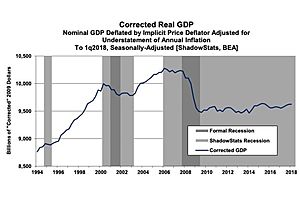
What if you woke up this morning to hear news reports that the U.S GDP is in decline for the first time in decades? The GDP is a number world economies use as a bellwether. Where the U.S. economy goes, so goes the world.
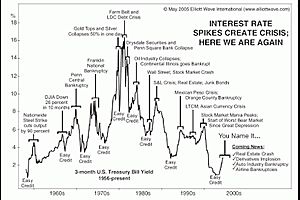
With our national debt blowing past 23 trillion dollars nothing is as sobering as looking at future budgets. We should be worried. Central banks across the world claim the lack of inflation is the key force driving their QE policy and permitting it to continue, however, the moment inflation begins to take root much of their flexibility will be lost.


And the hits just keep on coming for Europe's largest bank...

The market’s “Fear of Fear” is increasing and appears to be in a new regime. CBOE’s VVIX Index provides the industry with a useful measure of volatility of volatility or “fear of fear.” The value represents the implied volatility of near-term VIX options.
 Tracking the Forces Threatening the World’s Hottest Economies: Bloomberg
Oct 30, 2019 - 05:52:52 PDT
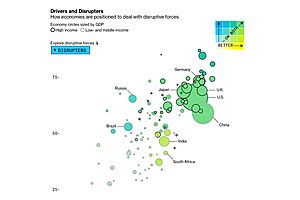
Disruptive forces are sweeping the global economy. Populist regimes are throwing out the policy rulebook. Protectionism is deadening the trade flows that drove China’s rise. Automation and the digital economy are boosting productivity for some, eroding old sources of advantage for others. The threat of climate change looms.


As I write this, the Federal Reserve is in the midst of its October FOMC meeting. The central bank is widely expected to cut interest rates another 25 basis points. If the Fed follows through, it will be the third cut in three meetings, totaling 75 basis points since July.Although the Fed continues to call this a "mid-cycle adjustment," Peter Schiff called the rate cut in July the first one on the road to zero. There's nothing so far to cast any doubt on that view.But the Fed is not alone. It joins the majority of the world's central banks on a race to lower rates and inject more easy money into the world's economy. As of this month, a total of 54 central banks in both developed and emerging markets have cut their policy/base interest rates.

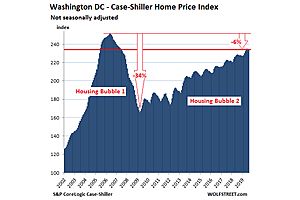
Seattle down again. Los Angeles, Las Vegas lose steam. Phoenix, others runnin…

U.S. gross domestic product — the broadest measure of the U.S. economy — was forecast to rise at a 1.6% annualized rate in the third quarter.
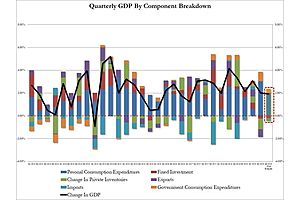
Overall, this was another goldilocks report, which while hardly confirming the "greatest economy in American history", gave the Fed green light to proceed with more rate cuts today at 2pm.
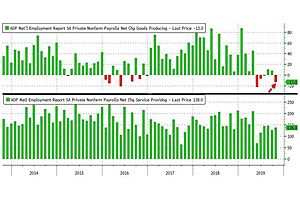
...for the last five months, the official BLS data has been worse than ADP's employment signal...


The New York Fed added both permanent and temporary liquidity to financial markets ahead of this week’s rate-setting central bank meeting and before the end of the month, which can bring volatility to short-term markets as banks sort out their respective financing needs.
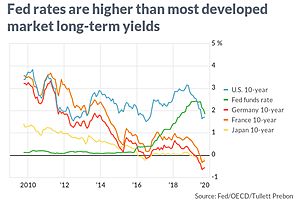
Joseph LaVorgna, chief economist for the Americas at Natixis, tells MarketWatch that monetary policy is still too tight.

This may be the market’s final run at record highs for 2019, and one top investor believes there’s nothing Fed Powell can do about it.


Held back by a moderation in consumer spending and declining business investment, which could spur the Federal Reserve to cut interest rates again to keep the expansion on course.


Key eurozone confidence indicators miss, suggesting downturn may worsen...