
Precious metals are apparently waking up. And here is where you can find the best deals.


Site:
Precious metals news

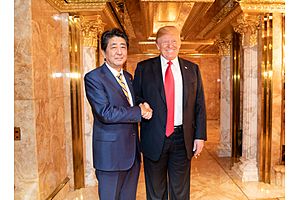
A recent article in the Financial Times, “Abenomics provides a lesson for the rich world,” mentioned that the experiment started by Prime Minister Shinzo Abe in the early 2010s should serve as an important warning for rich countries.


‘The agencies recognize that use of alternative data may improve the speed and accuracy of credit decisions,’ they said in a joint statement.
 Fed Hasn't Expanded Its Balance Sheet At This Speed Since The 2008 Crisis
Dec 6, 2019 - 10:54:30 PST
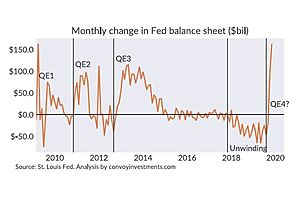
... QE4 is coming. The Fed would rather have a cushion of ample reserves against unexpected repo market blow ups than react retroactively with $trillions/month of open market operation purchases.
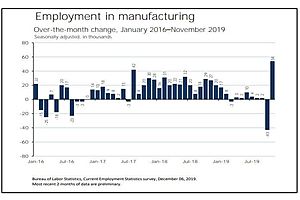
Jobs rose far more than expected in a rebound from GM strike end and seasonal adjustment factors.
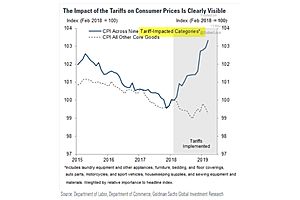
Using unrealistically low inflation assumptions leads to misguided policy decisions and perpetuation of the myth that inflation is under control...
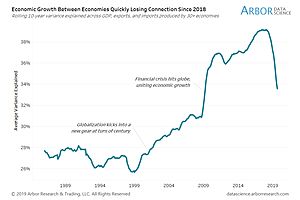
There appears to be a correlation between globalization and the raw level of GDP, Breitholtz explained. Historically, as globalization progresses, GDP drops. This may be a coincidental occurrence...


The meat price index registered its largest month-on-moth increase since May 2009, rising 4.6 percent from October to 190.5 points, with beef and sheep meat rising most strongly...

The Fed may be inadvertently setting the stage for more market turmoil in 2020 because it can’t persuade investors to ignore its multitrillion-dollar balance sheet.The Fed’s withdrawal from “non-QE” is the biggest risk facing investors next year...
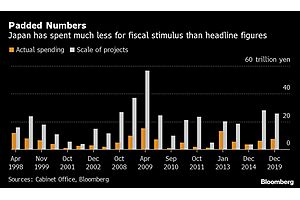
A stimulus package worth more than $200 billion would have led to a bond rout in any market. Not in Japan, where the yield curve held at its flattest level in three months...
Inflating Ebitda distorts the loan-to-value ratio that guides the $2.9 trillion market for junk bonds and loans in the U.S. and Europe,...


Moving is awful.I'm speaking from recent experience. We are in the process of moving from central Kentucky to northern Florida. I say "in the process" because you don't just move. It consumes your life for months on end.
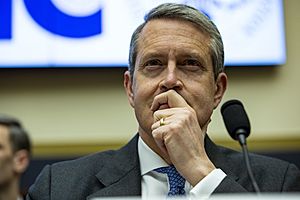
House Financial Services Committee hearing delved into why the Federal Reserve is showering Wall Street’s trading houses with super cheap loans on the pretext that it’s simply part of the Fed’s routine monetary operations.
"End The Fed" is no longer enough. Societies need to develop emergency measures to counter the damage done, or face unrest and revolution.

We've seen new records in the stock market in recent weeks. The headlines tell us it's all because of a potential trade deal, but Friday Gold Wrap host Mike Maharrey doesn't buy it. He says it's really all about Fed money printing. That may juice the stock market, but there's a downside - inflation. In this episode of the podcast, Mike talks about it along with the week's gold news.

If the United States went negative with Japan negative and with Europe negative, I think it would be fatal to the global banking system.

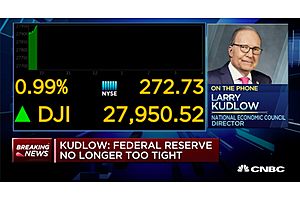
"The president has said many times if the deal is no good ... we will not go for it. We will walk away," Kudlow said.
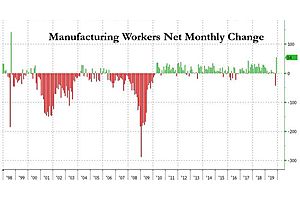
54K manufacturing workers were added in November, the most in over two decades, or since 1998, as a result of about 41K GM striking workers returning to their jobs.
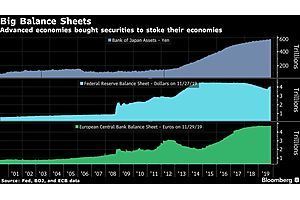
Major central banks are set to keep pumping money into financial markets and economies next year, although at a slower pace than recently.
The bar for cutting U.S. interest rates may get a little lower next year when a new crop of central bankers rotate into voting spots on the Federal Reserve’s policy-setting panel ...

Mixed economic data meant that interest rates on home loans remained unchanged this week