
Precious metals are apparently waking up. And here is where you can find the best deals.


Site:
Precious metals news

A gathering wave of fuel price inflation, largely driven by base effects, is also likely to strengthen in the coming months, helping to keep broad headline inflation levels elevated.
Major central banks have joined together to explore whether they should issue digital currencies as the use of cash declines and more people turn to electronic forms of paying. The study group is made up of the European Central Bank, the Bank of Japan, the Bank of Canada, the Bank of England, the Swedish...


"Actual usage of Gold in trade and in bank reserves management should push it to a price near $2500 in USD quickly."
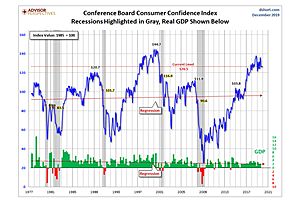
None of us can know where markets would be trading without the Fed’s constant massive liquidity injections, but now that the bubble recognition has gone mainstream (Bloomberg, FT) and acknowl…

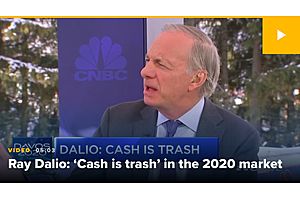
“You have to have balance ... & I think you have to have certain amount of gold in your portfolio,” Dalio said, reiterating his call last year that gold will be a top investment in the years to come.

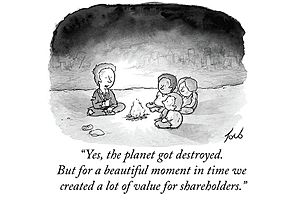
I would add that the Fed's endless creation of "money" to hand out to connected bankers (not all bankers) is just one facet of the evil.


Even as the Fed floods the market with $400 billion in four months, with stocks at record highs, and reality pooh-pooed as irrelevant. What’s different this time?

The Fed, ECB, Bank of England, and Bank of Japan have now embraced climate change as part of their mission.
 Guggenheim's Minerd Warns Global Central Banks Are Fueling A Ponzi Market
Jan 21, 2020 - 07:33:49 PST
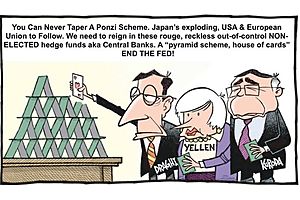
Ultimately, investors will awaken to the rising tide of defaults and downgrades...

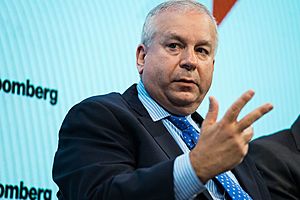
Shelter in gold. “If things are so great, why did the Fed have to cut rates last year?” he said in an interview at Bloomberg’s Toronto office. “If things are so great, why did the Fed have to embark on QE4, that we’re not supposed to call QE4?”


On Jan. 19, Peter Schiff did an interview with Daniela Cambone on Kitco News to kick off the Vancouver Resource Investment Conference. Peter said gold is going to go through the roof, and he explained exactly why. He also offered a little historical context.The interview began with a look at recent headlines in the news. With the war drums quieted and a Phase 1 trade deal signed, can markets breathe a sigh of relief?

We’re witness to historic developments across global financial markets extending far beyond an equities melt-up.

The death toll from a mysterious flu-like virus in China climbed to six on Tuesday as new cases surged beyond 300 and authorities fretted about the added risk from millions of Chinese traveling for the Lunar New Year holiday.
 World's Richest 2,000 People Hold More Than Poorest 4.6 Billion Combined
Jan 21, 2020 - 05:30:20 PST
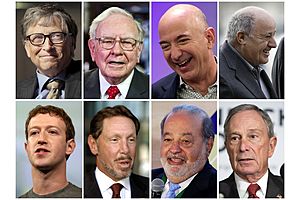
The world’s richest 2,153 people controlled more money than the poorest 4.6 billion combined in 2019, while unpaid or underpaid work by women and girls adds three times more to the global economy each year than the technology industry, Oxfam said on Monday.

Beijing sees no other way of protecting its vital economic interests while remaining on a permanent collision course with the U.S. on so many war-and-peace issues.
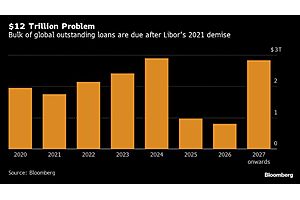
The whole financial world is working to move away from LIBOR and other interbank lending benchmarks, which for decades have been used to set borrowing costs on bonds and loans, as well as products ranging from derivatives to credit cards.

Increased dependence on short-term market funding comes as growth among the main shadow-banking funding sources has slowed.
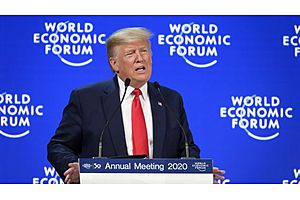
President Trump touted at the World Economic Forum in Davos, Switzerland, the use of negative interest rates to bolster economic growth.
Billionaire investor Paul Tudor Jones: “We are just again in this craziest monetary and fiscal mix in history. It’s so explosive. It defies imagination,”...

It's like Dawn of the Dead on Wall Street. Zombies are everywhere.Even as stocks continue to push to new highs, the number of money-losing companies listed on US stock markets has ballooned to levels not seen since the dot-com bubble of the late 1990s.According to a recent Wall Street Journal article, nearly 40% of US-listed companies are losing money.