
Precious metals are apparently waking up. And here is where you can find the best deals.


Site:
Precious metals news

Between the Fed injecting a massive amount of liquidity into financial markets, and corporations buying back their own shares, there have been effectively no other real buyers in the market.

I had a lot of time away from screens this weekend which is probably a good thing. Always good to get to step away and get a different perspective away from the constant bombardment of news, opinio…


"We must not only flatten the curve of the health crisis but we must begin to flatten the curve of economic despair," the billionaire former Starbucks CEO said Monday.


Developed bank equities have plunged to a record low versus the wider market. U.S. lenders have sunk below 2008 levels compared with their large-cap peers. Institutions in the euro zone have traded at a 70% discount to book value -- worse than the dark days of the euro debt debacle.


The corporate borrowing binge "creates risk to the economy. And I’m afraid we’ll see that in spades in the coming months, because it may trigger a wave of corporate defaults."


Although the central bank has already exhausted some of its firepower by cutting interest rates to near zero, Fed Chair Jerome Powell insists he and his colleagues still have potent weapons at their disposal.

Mainstream politicians have long insisted that Medicare for All, a universal basic income, student debt relief and a slew of other much-needed public programs are off the table because the federal government cannot afford them. But that was before Wall Street and the stock market were driven onto life-support by a virus.


White House advisers have been discussing the possibility of a coronavirus-related U.S. Treasury bond, President Donald Trump's economic adviser Larry Kudlow said on Monday.

A broad coalition of mortgage and finance industry leaders sent a plea to federal regulators, asking for desperately needed cash to keep the mortgage system running. This, as requests from borrowers for the federal mortgage forbearance program are flooding in at an alarming rate.

"The lockdown in response to the coronavirus outbreak has delivered a severe shock to the global economy," a strategist said.

Japanese Prime Minister Shinzo Abe pledged on Monday to roll out an unprecedented economic stimulus package, equal to 20% of economic output, as his government vowed to take "all steps" to battle deepening fallout from the coronavirus.

The former Fed chair said the economy is in the throes of an "absolutely shocking" downturn that is not reflected yet in the current data.

“Before this is over, gold is going to go up a lot,” commodity investor Jim Rogers said by phone from Singapore. “Whenever people lose confidence in money and in governments, they always buy gold and silver.”

The amount of gold stored in vaults in New York registered by CME Group's Comex exchange has risen by nearly 2 million ounces, CME data showed, proving ample to settle monthly contract obligations and easing concerns of shortages that sent prices skyrocketing.

Three of the world's biggest gold refineries said they will partially reopen after a two week closure that disrupted global supply of the metal.


Gold futures were headed higher Monday morning, supported partly by expectations that the days and weeks ahead may prove grim for investors with an appetite...


In the past two weeks, analysts have cut their global oil demand forecasts by a staggering 225%. Never in history has the world experienced such a massive reduction in global oil consumption.

US appears to be on the verge of a "bad recession" that could be exacerbated by "financial; stress similar to the global financial crisis of 2008."

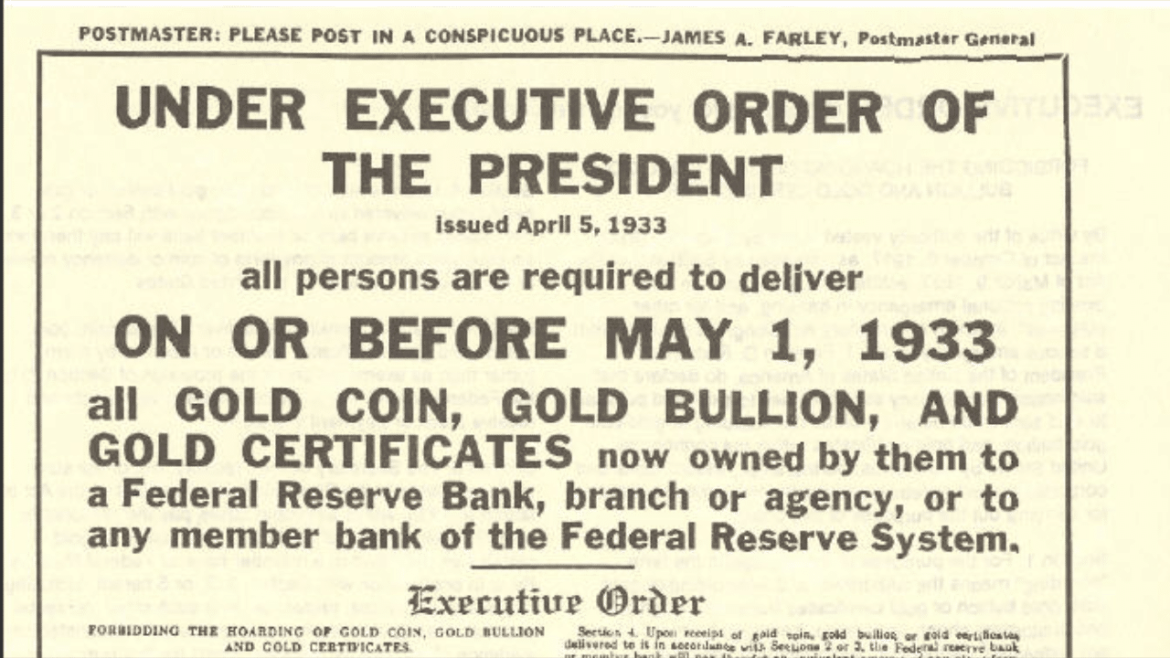
Yesterday marked the anniversary of the great government gold heist of 1933 ordered by President Franklin D. Roosevelt.On April 5, 1933, the president signed Executive Order 6102. It was touted as a measure to stop gold hoarding, but it was in reality, a massive gold confiscation scheme. The order required private citizens, partnerships, associations and corporations to turn in all but small amounts of gold to the Federal Reserve in exchange for $20.67 per ounce.
A lot of people still seem to think at some point, Donald Trump will flip a switch and the government will start humming again. As Peter Schiff explained in his podcast Friday that's not going to happen. The best we can hope for is recovering from a depression to the recession we were going to have anyway.