
Precious metals are apparently waking up. And here is where you can find the best deals.


Site:
Precious metals news


After the CPI data came out last week, gold rallied. On his podcast, Peter Schiff talked about the rally and the trajectory of gold. He said we can expect even bigger moves up when the markets figure out the inflation problem isn't solved.

Today, Newcrest came out with its preliminary report for Q3 2023, which wasn't pretty. With the higher energy prices during the third quarter, I expect the gold miners' costs to increase... but how much? Also, the EIA is forecasting a decline in U.S. Shale Oil production...
The global economic and political landscape is shifting, impacting gold flows from West to East, as "Gold goes where the money is." Eastern central banks are significant gold buyers, with 2022 witnessing a record purchase of 1,136 tons. The trend persisted in 2023, with central banks acquiring 378 tons of gold from January to June, surpassing the previous 2019 record. The most substantial purchases were made by China, Singapore, Poland, India, and the Czech Republic, highlighting the eastern tilt in gold demand.
Oct 16, 2023 - 12:47:06 PDT
In Q3, the LBMA Gold Price AM and Shanghai Gold Benchmark PM saw a decline of 3.7% and 2.8% respectively. Despite this, 170t of gold was shipped out of the Shanghai Gold Exchange, an increase from the previous month, in preparation for peak gold consumption season. The gold price premium between Shanghai and London reached a new record in September, averaging US$75/oz, possibly due to reduced net gold supplies. However, it decreased in October. Chinese gold ETFs experienced a rise in assets for four consecutive months, reaching RMB27bn by September's end. Additionally, the People’s Bank of China bought 26t of gold in September, making the total gold reserves 2,192t.
Oct 16, 2023 - 12:38:31 PDT
In a speech in Council Bluffs, the 2024 Republican presidential candidate criticized the issues with "fiat currency" and the Federal Reserve's continuous use of Quantitative Easing, especially post-2008. DeSantis emphasized that such policies favored the wealthy and harmed the middle class. While not endorsing a return to the Gold Standard, he supported auditing the Federal Reserve and prioritizing price stability. He also highlighted the negative impact of "boom-and-bust" policies on average Americans.
Oct 16, 2023 - 12:18:39 PDT
Many financial experts were convinced that interest rates would remain eternally low, dismissing concerns about surging government debt. Despite historical fluctuations, they saw recent low rates as the new norm. Now, with rising rates revealing the dangers of their complacency, the true costs of unchecked debt accumulation are emerging, threatening economic stability.
The FDIC revealed First Republic Bank's failure, which was then snapped up by JPMorgan Chase, arguably the riskiest U.S. bank. The acquisition deal was heavily skewed in JPMorgan's favor, with the FDIC shouldering significant future losses. Despite this acquisition, JPMorgan faced substantial deposit outflows, resorting to desperate tactics like offering unusually high-interest rates for large deposits. These moves exposed them to greater uninsured deposit risks. Following recent bank collapses, the FDIC's proposed measures to mitigate such risks could hit JPMorgan with a $3 billion expense.
Oct 16, 2023 - 09:19:14 PDT
Michael Barr of the Federal Reserve addressed the proposal for larger U.S. banks to maintain higher capital levels, highlighting the potential economic loss of up to $25 trillion in another crisis. Despite pushback from big banks, he emphasized the importance of capital for stability. He noted that instead of building capital, many banks have been boosting share prices through stock buybacks. Barr countered arguments that higher capital requirements would limit lending, pointing out past financial crises caused by undercapitalized banks.
The mortgage crisis is unique, with the primary problem being the mortgages themselves. While the Fed's BTFP program offers some protections, the true danger lies in commercial real estate. Many banks have heavily invested in big-city commercial loans. With the downturn in the commercial market, a cascading effect of loan losses and decreasing property values is emerging. The main threat to banks is commercial real estate, overshadowing the struggles of the residential market.
 Amidst Bond Turmoil and War, Fed Powell Grapples with a Crucial Decision Point
Oct 16, 2023 - 07:32:48 PDT
Powell faces a tightrope walk in addressing rising inflation and interest rates. Speaking soon, his comments will be closely watched for hints on the Fed's next moves. Recent swift increases in bond yields indicate the central bank's policy may be at a crucial crossroads, with analysts noting a shift from just inflation to also preventing a potential recession.
Oct 16, 2023 - 07:16:21 PDT
Despite Paul Krugman's assurance that inflation's grip is loosening, recent reports suggest otherwise, indicating that the flames of inflation are stubbornly persistent. Desperate to keep pace with escalating prices, consumers are increasingly leaning on credit cards, leading to a staggering 38% growth in credit usage since April 2021. Alarmingly, this surge occurs in the backdrop of steep interest rate hikes. An even more ominous sign is the rising credit card delinquency rates.

Skyrocketing mortgage rates, the highest in nearly a quarter-century, are wreaking havoc on the housing market, pushing home sales to distressingly low levels reminiscent of the subprime disaster era. Anticipated sales for 2023 suggest that previously owned homes will be moving at a glacial pace, reminiscent of the grim 2011 figures. Back then, the U.S. was grappling with the aftershocks of one of its most catastrophic housing crises. Now, despite a ballooning U.S. population, the market shows alarming signs of stagnation, a dire outlook echoed by a multitude of alarmed economists.
The staggering $307 trillion global debt, largely driven by so-called 'developed' economies, is a ticking time bomb. The US, Italy, and Britain are precariously teetering on the edge, with their fiscal irresponsibility making them the chief culprits. Noteworthy economists and investors sound the alarm, but the inaction persists. Immediate defaults might not be on the horizon, but without rigorous fiscal reforms, higher taxes, and genuine growth, disaster looms. The current geopolitical quagmire, combined with dwindling central bank support, sets the stage for an imminent and severe market crash.
Leading experts, including JPMorgan's CEO Jamie Dimon, are sounding alarms over escalating US debts and global tensions from wars in Ukraine and Israel. Dimon called it potentially the "most dangerous time in decades." Added to these woes are the Federal Reserve's measures which might choke market liquidity. The unexpected surge in US Treasury yields is just one indicator of the market's delayed realization of these looming financial threats.
Mounting debts in developed economies, exacerbated by climate change costs and political turmoil, are pushing the world closer to a potential financial collapse. A significant portion of the global debt increase, now at a staggering $307 trillion, is attributed to developed nations, especially the U.S., Italy, and Britain. The current scenario indicates that these nations might not escape economic fallout. With dwindling central bank support and escalating borrowing costs, there's an alarming risk of a market catastrophe. Urgent calls for reforms are largely being ignored, setting the stage for potential crises within the next decade.
Rising bond yields indicate the end of cheap borrowing, intensifying global economic concerns. At the recent IMF meetings, attendees warned of potential shocks to an already fragile world economy due to increased Middle Eastern conflicts. High debt levels coupled with persistent high-interest rates present potential pitfalls, as highlighted by recent US bank collapses and ongoing real estate concerns. These issues have taken center stage in discussions among global finance leaders.

Joe Biden says the economy is great. Paul Krugman says the inflation war is over and we won. But Americans aren't buying the narrative. They're growing increasingly worried about the economy and inflation.The University of Michigan Index of Consumer Sentiment tanked in October with inflation worries at the highest level since last May.
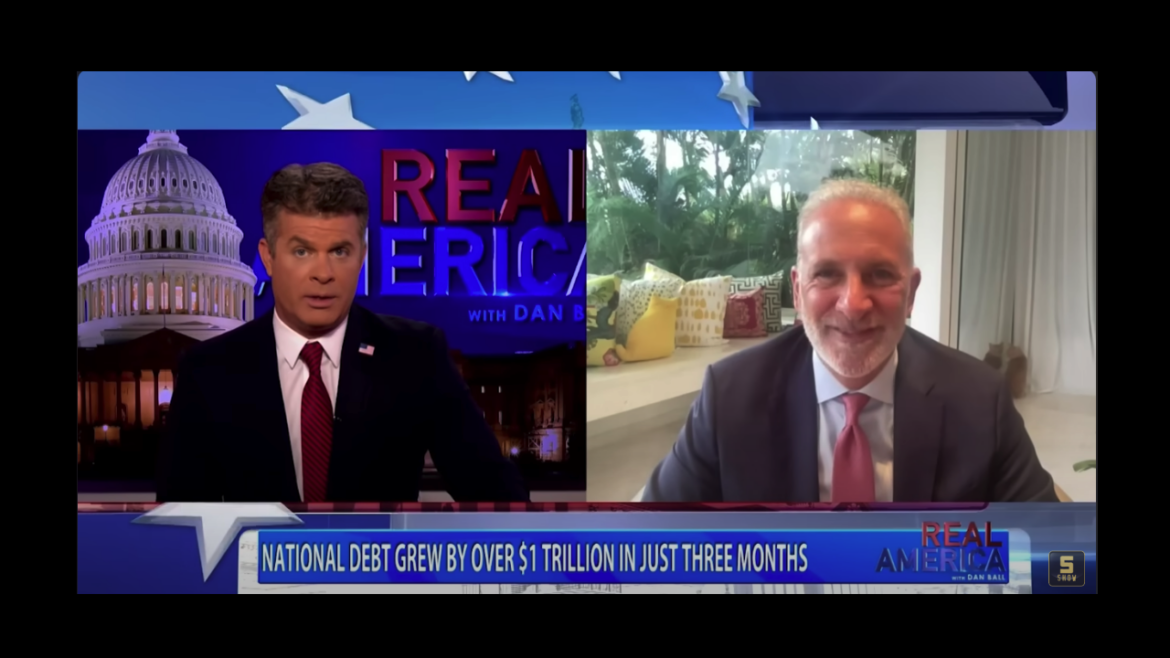
The CPI has cooled in recent months, but Americans say they're still struggling with rising prices and they're worried about inflation. Why is there this dichotomy between people's perceptions and the official data?Peter Schiff recently appeared on Real America with Dan Ball to talk about the economy. He said the problem is the government isn't being honest about inflation.
 METALS & MARKET UPDATE OCT 14th: Middle East Conflict May Cause Serious Disruptions To Highly Leveraged Global Markets
October 14, 2023
If the Middle East conflict escalates, this could be very BAD NEWS for the highly leveraged financial and economic markets. It's no wonder the gold price surged by $64 on Friday. Unfortunately, any major disruption can cause chain-reaction defaults in finance and move to the safety of hard assets...

Gold, escalating by 13% annually, 54% in the past five years, and a staggering 407% over two decades, firmly stands as a resilient wealth preserver even amidst minor financial fluctuations. China, with its unrestrained gold acquisition, positions itself as a crucial actor in the global financial arena, subtly undermining Western economic stability. The massive import and robust production of gold by key players like China and Russia underscore the precious metal's veiled yet paramount role in future economic confrontations, revealing a clandestine race for gold-driven fiscal security on the global stage.