
Precious metals are apparently waking up. And here is where you can find the best deals.


Site:
Precious metals news
US bond yields are surging at a pace not seen since the early 1980s, a period that led to two recessions. The 10-year Treasury yield recently exceeded 5% for the first time since 2007. Despite the aggressive interest-rate hikes under Fed Chair Jerome Powell, the economy hasn't tanked, but the bond market is taking a hit. With increasing federal deficits and major central banks reducing bond purchases, there's growing uncertainty.

Federal Reserve Chair Jerome Powell has expressed concerns over the U.S.'s escalating fiscal deficits and warned of its unsustainability. Despite his previous push for fiscal stimulus during the pandemic's peak, Powell now remains largely silent on the ballooning federal deficit. This shift contrasts starkly from his 2020 stance, when he advocated for further financial stimulus to support the economy. The current deficit, reaching $2 trillion, poses significant concerns, influencing rising bond yields and market instability.


How in the world did the Toronto airport lose $15.3 million in gold bars along with $1.9 million in cash?That remains unclear, but a lawsuit filed by Brink's shed a little bit of light on the situation.

HSBC's CEO, Noel Quinn, warns of an impending global debt crisis, emphasizing that nations are nearing a critical "tipping point" in borrowing. This is compounded by rising Middle East tensions and potential global recession risks. Both the IMF and World Bank have highlighted alarmingly high global debt levels. Furthermore, Europe faces sluggish growth and potential inflationary issues, with recent data showing economic declines in the region, and predictions indicating a continued eurozone downturn into 2024.
 ‘Bond King’ Bill Gross: Get Ready for a Economic Slowdown - ‘Recession in the 4th Quarter’
Oct 25, 2023 - 06:28:54 PDT
Prominent investors Bill Ackman and Bill Gross warn of an overheated Treasury bond market, with 10-year yields surpassing 5%. While both express concerns, Gross specifically predicts a recession by the fourth quarter, citing rising auto delinquencies and regional bank issues. Meanwhile, Fed Chairman Jerome Powell suggests the yield spike might mitigate future rate hikes.

Economists repeatedly misjudged inflation throughout 2021 and 2022, and their confidence in the U.S. economy's resilience seems misplaced as the Fed aggressively hikes rates. Despite enduring inflation for 30 months, traditional economic models failed to anticipate the spending power from pandemic savings. There's growing skepticism about returning to the low-inflation, low-rate environment of 2009-2020, given recent unpredictabilities. The looming question is whether the economy can withstand further pressures or if persistent inflation will derail growth.
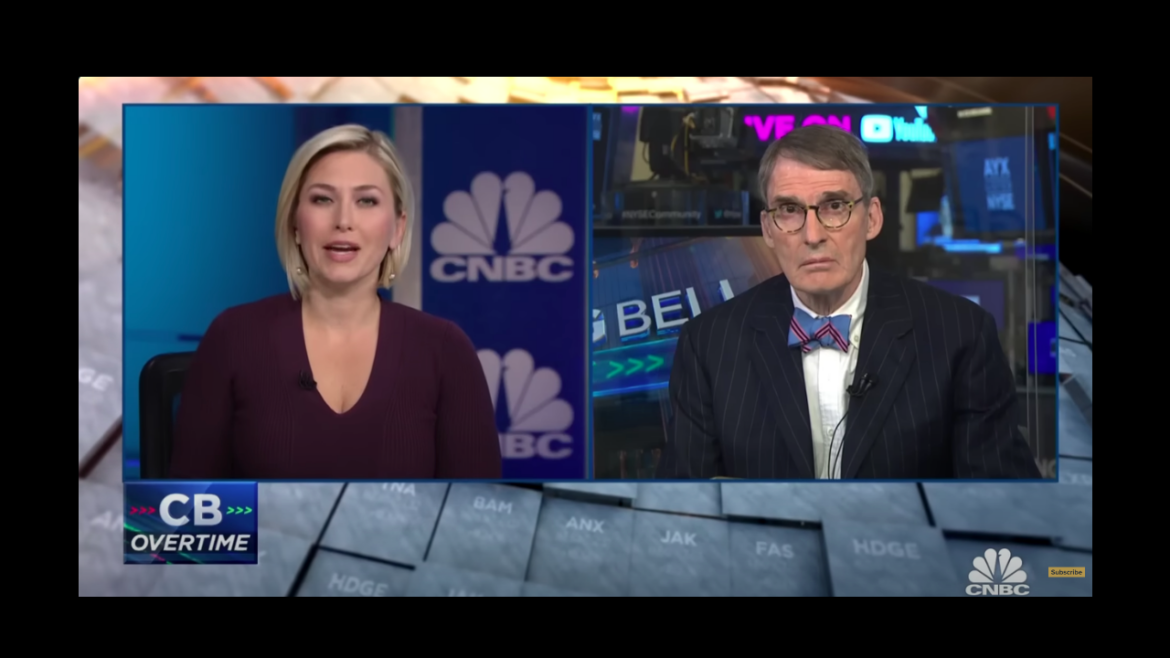
Will the Federal Reserve raise interest rates again? Or is this hiking cycle over? Will it really hold rates higher longer, or will it cut in the near future? Everybody in the financial world is trying to predict the central bank's next move.Fed members insist they are data-dependent and will go where the numbers lead them. But in an interview on CNBC, financial analyst Jim Grant said data alone isn't enough. You need to put the data into context.
Oct 25, 2023 - 06:09:00 PDT
Due to increased US federal spending and ongoing wars, bank lending is suffering. Commercial and industrial loan standards have tightened to recession-like levels. Bank credit growth has been negative for 12 consecutive weeks. The budget gap has doubled in the past year because of Biden's spending. CDS is now at its highest since the Covid shock.
 Interest Rates Continue to Climb - Adjustable-Rate Mortgage Demand Hits Highest Level in a Year
Oct 25, 2023 - 06:04:41 PDT
Mortgage demand is at its slowest since 1995 due to rising interest rates. Application volume fell 1% last week, with the interest rate for 30-year fixed-rate mortgages reaching 7.90%. Refinance applications have also dropped, now constituting less than a third of total mortgage activity. The market for existing homes is nearly stagnant, exacerbated by limited supply and higher mortgage rates.
 USA & GLOBAL AUTO SALES SHOW TROUBLING SIGNS: Amazing Correlation Between Auto Sales & Oil Production
October 25, 2023

While U.S. and Global Auto Sales still haven't recovered since issues stemming from the 2020 Pandemic Shutdown, another culprit is at work. No, it's not due to shortages of semiconductors, even though that has accounted for a small part of the weak sales rebound. So, what is it? As always......
China is selling U.S. assets, potentially due to geopolitical tensions or to support its local currency. This has contributed to the surge in Treasury yields. With the U.S.-China relationship strained, China might divert its investments away from U.S. dominated financial systems. Given limited options, China may boost its gold purchases. If so, it's a positive sign for the gold market, potentially driving prices to new highs.

Spain seized gold artifacts worth $101 million, originally stolen from Ukraine. These pieces, previously exhibited in a Kyiv museum, were smuggled out in 2016 and recently surfaced in Madrid. Three Spaniards and two Ukrainians were arrested for their attempt to sell these treasures with forged documentation linking them to the Ukrainian Orthodox Church. This significant recovery highlights the global importance and value of gold artifacts.

Financial investor sentiment is increasingly positive towards Gold, as shown by recent CFTC data. By 17 October, net long positions on Gold rose to 15,100 contracts, marking a shift from the previous week's net short positions. This shift represents an equivalent of 130 tons of Gold bought in the futures market. With the rising Gold price, further increases in long positions and reductions in short positions are anticipated.
Investors are facing uncertainties due to increased geopolitical risks, as noted by UBS economists. Gold has surged, closing at $1,981 an ounce recently, while Brent Oil's price also increased, indicating concerns about potential Middle East conflict disruptions. The oil market is tight, with rising demand and limited supplies by OPEC+. Gold gains advantage as the Fed's actions lower costs of holding such assets.
Oct 24, 2023 - 08:59:30 PDT
Three major US banks—Bank of America, BNY Mellon, and Morgan Stanley—lost over $44 billion in deposits in just one quarter. This concerning trend isn't limited to them; JPMorgan Chase, Wells Fargo, and Citigroup collectively saw an outflow of $84.5 billion in the same period. In a desperate attempt to retain customers, these banks are now spending billions. JPMorgan's interest expenses surged by 170% from the previous year, Wells Fargo's by 275%, and Citigroup's jumped by about $185 billion. The confidence in these financial giants appears to be waning rapidly.

Corporate America's spending on share buybacks, which has fueled the US stock market for years, is waning due to rising interest rates and economic uncertainty. After a record $923 billion in stock purchases last year, the trend is reversing, with buybacks seeing a decline. Bank of America strategists warn that as the era of nearly-free money ends with higher interest rates, buybacks are endangered. The S&P 500 Buyback Index's performance has notably lagged this year, marking its worst performance since 1998, excluding 2020.
Jamie Dimon of JPMorgan lambasted central banks for their glaring past forecasting errors, casting doubt on their ability to navigate the looming economic uncertainties. He drew a grim parallel between today's economic situation and the wasteful 1970s, while dismissing the potential impact of rate hikes. Concurrently, Bridgewater's CEO, Ray Dalio, predicted a dire economic outlook for 2024, highlighting risks like soaring public debt and potential conflicts.
Oct 24, 2023 - 07:03:36 PDT
The Federal Reserve's recent Financial Stability Report paints a concerning picture, despite attempts to cast the outlook in a positive light. A standout alarming detail: $20.3 trillion of "runnable" money, especially considering smaller liabilities recently caused banking panic. The report cites vulnerabilities, such as banks under stress, prime MMFs prone to runs, and life insurers with risky assets, reminiscent of the 2008 AIG bailout. This emphasizes the Fed's questionable approach: limitless electronic money creation to mask its supervisory failures, which undermines the U.S. financial system's stability.


In a recent statement, Elon Musk declared, "interest rates have to come down."
The U.S. federal deficit doubled to $2.02 trillion, stoking fiscal worries and deepening partisan tensions in Washington. The surge, impacted by significant drops in tax receipts and inflationary pressures, threatens to ignite political disputes, especially with looming changes to tax policies by 2025.