
Precious metals are apparently waking up. And here is where you can find the best deals.


Site:
Precious metals news


The Labor Differential improved to 6.6 (jobs are easier to get) - its highest since March - but plans to buy cars and major appliances slumped (homes rose modestly) as expectations for income gains in the next 12 months dropped.
 Surprising Data Suggests Coronavirus Housing Boom Is Finally Cooling Off
Oct 27, 2020 - 07:09:34 PDT

After four straight increases, home sales are down unexpectedly.


This interactive visualization tracks two decades of home price changes in hundreds of cities in the United States.
 Home Prices in August See Biggest Gains in More Than Two Years, S&P Case Shiller Says
Oct 27, 2020 - 06:53:50 PDT

Strong demand and a limited supply of homes have caused home price gains to accelerate dramatically.
Oct 27, 2020 - 06:53:50 PDT

Phoenix AZ leads the Case-Shiller 20 in year-over-year home price growth at 9.85% followed by Antifaville (Seattle) at 8.49% YoY. On a 3-month basis (annualized), San Diego leads at 15.30% with Antifaville South (Portland) at 14.52%. In last place on a YoY basis is, no surprise, Chicago at 1.22% followed by (no surprise) New York City at 2.82%.


In today's video, you'll see some stunning data that compares the relative performance of stocks, real estate and gold. "With everything that is going on in the world right now, I can't imagine the anxiety I would feel if I was just in stocks and Real Estate right now." - Mike Maloney.

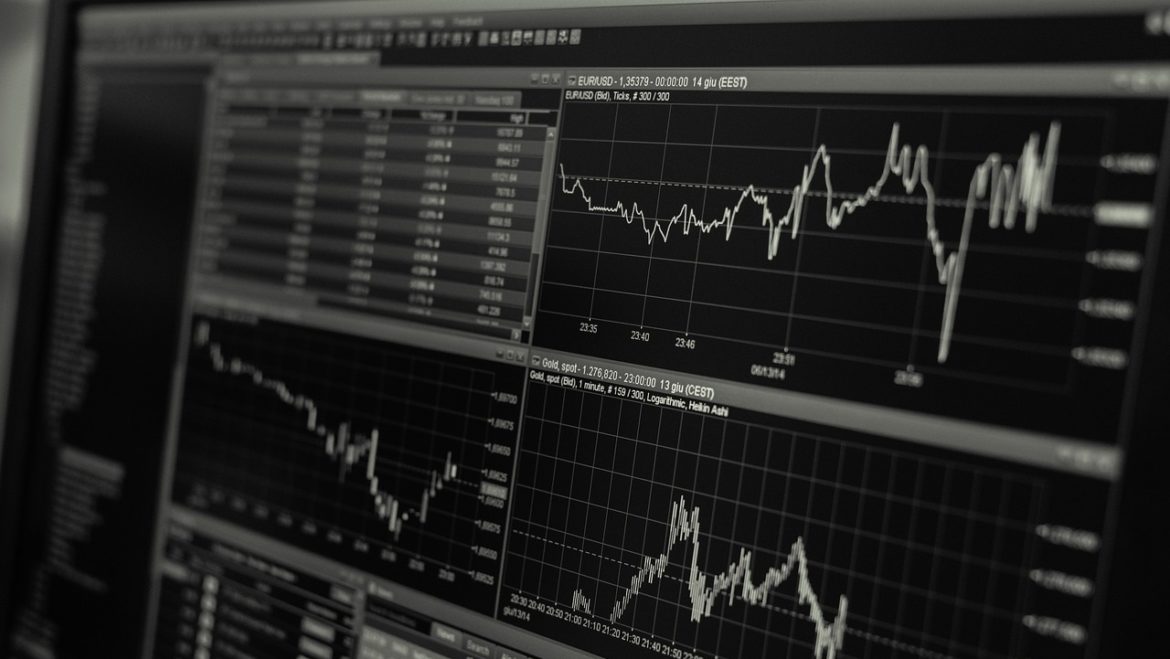
We've been saying for months that the stock market has completely disconnected from economic reality. The markets have hit record highs despite the economic chaos caused by the government response to COVID-19. As Peter Schiff put it in a podcast back in May, the markets are on a Fed-induced sugar high.In a recent article, David Stockman put the stock market bubble into perspective and asked a poignant question: how could the S&P 500 be trading at its highest multiple in 70 years when the growth rate of corporate earnings has been sinking for more than two decades?


Elites are extremely hostile to the idea that gold should have any role whatsoever in the monetary system. To them, gold is truly a barbarous relic, as John Maynard Keynes was supposed to have said. You might as well propose bringing back the horse and buggy.

The S&P 500 is forming a "double top" going into the U.S. election, which is a worrying sign for investors, according to veteran investor Mark Mobius.

Stocks sold off Monday as markets fretted over the lack of progress on stimulus and a rise in COVID-19 cases. In his podcast, Peter talked about the sell-off and the political dynamics driving the markets right now. He also drove down to a question nobody seems to want to grapple with: why are the markets and the economy so dependent on and desperate for stimulus?

Gold prices rose on Tuesday as a weaker dollar and a fresh wave of coronavirus infections threatened to further slow down a global economic recovery from the COVID-19 pandemic, bolstering bullion's safe-haven appeal.

"In a fiat currency world the limits of central bank balance sheet expansion remain unclear, but, as the world economy recovers from the largest economic shock in generations, those limits will become clear. For the large, DM, central banks, these EM limits will be noted with care. Japan has...
Former NY Fed Chief: Central Bank’s Ability to Stimulate Economy ‘Rapidly Diminishing’Oct 27, 2020 - 05:20:14 PDT

Former New York Fed President Bill Dudley says the Fed's ability to prop up the economic recovery is getting weaker.

In a new interview with Yahoo Finance that aired as part of its All Markets Summit, Citigroup (C) CEO Michael Corbat said negative interest rates would not be “the best place to go.”
 Struggling Rental Market Could Usher in Next American Housing Crisis: WSJ
Oct 27, 2020 - 05:15:26 PDT

A housing crisis centered on the vast apartment and home-rental markets is emerging in the U.S., threatening to send millions of renters into eviction and leave landlords short billions of dollars.
 Global Foreign Direct Investment Halved in First Six Months of 2020, U.N. Says
Oct 27, 2020 - 05:13:56 PDT

Global foreign direct investment (FDI) plunged by 49% in the first half of 2020 from the same period a year ago and is on course to fall as much as 40% for the year, driven by fears of a deep recession, the United Nations said on Tuesday.
Oct 27, 2020 - 05:06:26 PDT

The U.S. State Department announced Oct. 26 that it had approved the massive anti-ship cruise missile sale to Taiwan.
 A NEW GOLD BULL MARKET! - CHAOS LEADS TO GOLD SKYROCKETING - IS THIS JUST THE BEGINNING?
October 27, 2020

Can we finally say that we are in a bull market for precious metals?
Caterpillar Reports a 54% Drop in Sales in the Third Quarter Amid Lower Equipment DemandOct 27, 2020 - 04:58:23 PDT

In the second quarter, Caterpillar’s profit dropped 70% year over year to $1.03 as the coronavirus-triggered recession slashed demand for equipment.

The coronavirus has infected more than 43.3 million people globally as of Monday, killing at least 1.15 million people so far.