
Precious metals are apparently waking up. And here is where you can find the best deals.


Site:
Precious metals news


This is not your grandmother’s “yield curve control.” There is only one thing that could force this ECB absurdity to end: a big bout of inflation.
Jan 21, 2021 - 10:17:00 PST

If confirmed, Janet Yellen’s immediate task will be selling Congress on the Biden administration’s $1.9 trillion stimulus package. But the former Fed chair will also have her hands full on a number of other issues.

Delays in issuing additional Covid relief led millions to lose unemployment benefits after Christmas, according to Labor Department data issued Thursday.


Continued uncertainty over the future of Fannie Mae and Freddie Mac has inflicted pain on hedge funds, which have been wagering for years that the mortgage-finance giants would be put on a path to returning to private hands.


Allow me to translate the risible claims of Jay Powell and Janet Yellen that their stimulus policies haven't boosted wealth inequality to the moon: "Let them eat cake."

When Joe Biden took office 12 years ago, he joined the administration to deal with a major economic heart attack in the form of a financial crisis. Today, the new president is leading a country facing multiple self-reinforcement crises rather than a single one.

About 20% of respondents in Bank of America’s latest global fund manager survey out Wednesday said they were taking higher than normal risk. Not only does that continue the upward march in risk appetite started...
 Since 2008 the Eurozone Has Had a Mounting Problem of Lowflation Now Sliding into Deflation
Jan 21, 2021 - 08:17:40 PST

Jan 21, 2021 - 08:08:12 PST

The economist suggested that “Central banks should look at cryptocurrencies as a response to what they are doing,” pointing out that their actions are “absolutely incredible in terms of money supply growth and in terms of the impact on financial assets.”
 What Economists and Workers Say About Biden’s Bid for a $15 Minimum Wage and End to Tip Credits: MW
Jan 21, 2021 - 08:03:40 PST

Workers could benefit from higher wages, but many could lose their jobs as a result of a higher minimum wage and tipped credit elimination.
Jan 21, 2021 - 07:59:19 PST

We are living in a financial war of the worlds, this according to best-selling author and former Goldman Sachs Managing Director Nomi Prins. In this interview with our Daniela Cambone, Prins explains that the Federal Reserve has been overstepping its boundaries since 2008.


The Fed is far more worried about the risk of long-term scars -- which could develop from a slow recovery -- than about the risk of overheating the economy...

Will the U.S. economy experience inflation or deflation in the years ahead? That is the same key question economists were grappling with after the Lehman bankruptcy in 2009, when the U.S.
 The Stock Market Frenzy Feels like 1999 Dot-Com Bubble, Global Investor Barry Sternlicht Warns
Jan 21, 2021 - 07:10:45 PST

Billionaire global investor Barry Sternlicht said Thursday he’s concerned about the long-term viability of current conditions in the stock market, warning that some aspects feel reminiscent of the dot-com bubble back in the 1990s.


At some point, when the U.S. economy looks strong enough, the Federal Reserve will have to scale back its efforts to stimulate growth by buying large quantities of government securities.

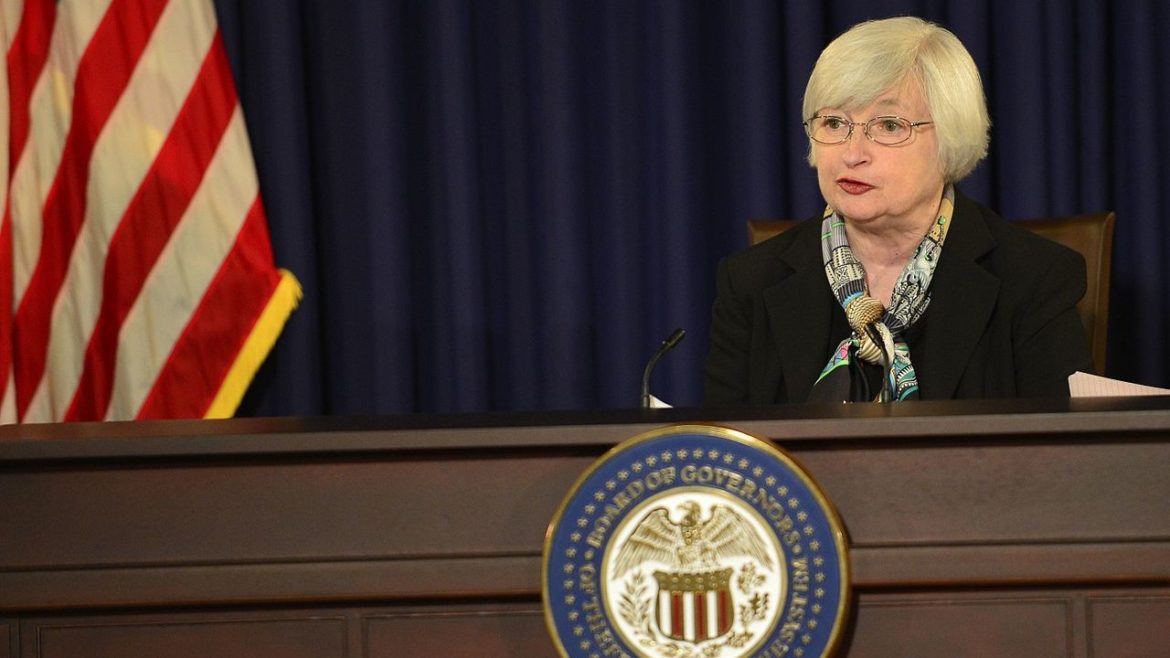
During testimony before the Senate Finance Committee, Treasury Secretary-nominee Janet Yellen talked out of both sides of her mouth. She acknowledged that too much debt is problematic, but in the same sentence, insisted we need to "act big" to rescue the economy.

ECB President Christine Lagarde will explain the Governing Council's monetary policy decisions and answer questions from journalists at the Governing Council press conference to be held on 21 January 2021 at 14:30 CET in Frankfurt am Main.
 Yellen’s Call to ‘Act Big’ Reflects Long Re-Think on Big Government Debt
Jan 21, 2021 - 05:40:38 PST

At U.S. Treasury Secretary-designate Janet Yellen's confirmation hearing Tuesday she nodded to the need for the federal debt to be put on a "sustainable" path, at least eventually.

Speaking at a press briefing after the central bank left all of its main policy settings unchanged, Kuroda spent much of his time counting nothing out of the review into the mechanics of the bank’s stimulus program. The one point he insists will not change is the BOJ’s basic approach to stimulus.“

President Joe Biden’s proposed $1.9 trillion pandemic relief plan got a skeptical response from two Senate Republicans whose backing he would likely need for quick congressional passage...