
Precious metals are apparently waking up. And here is where you can find the best deals.


Site:
Precious metals news

A surge in commodity prices has Wall Street banks gearing up for the arrival of what may be a new - an extended period during which demand drives prices well above their long-run trend. A major impetus is the massive stimulus spending by governments as they juice up their economies following pandemic lockdowns. The evidence includes surging copper and agricultural prices and oil back at pre-COVID-19 levels.


Could the cryptocurrency's huge electricity consumption also sink it?
Mar 1, 2021 - 09:24:50 PST

As I discussed yesterday, the Biden Administration is seeing an unprecedented surge in government spending under the auspices of fighting Covid. The Federal Reserve has responded to Covid by increa…

The US economy is growing at a scalding pace (8.8%) according to The Atlanta Fed’s GDPNow real-time tracker. That is over twice as high as real GDP growth in prior decades. True, the uunemplo…

"What was a handful of executive agencies at the beginning of the republic has now become an expansive list of alphabet soup abbreviations, some with their own SWAT teams and court systems. The administrative state not only saps our treasure and stifles our creativity but it drains our spirit...


Brazil's central bank twice waded into the spot currency market on Friday, selling a total of $1.545 billion as the real slid further against the dollar to cement its status as one of the world's worst performing currencies this year.

The year is just getting started and the US fiscal deficit already reached another record, now at its worst level in 70 years. The Fed is facing its worst predicament yet. The current fiscal spending path will lead to record Treasury issuance this year.

The pandemic savings glut has flooded German banks, encouraging them to charge negative rates on deposits and to offer customers ways to transfer money to other parts of Europe.


Despite the Fed suggesting they are in no rush to hike rates, the bond market decided to do that for them this past week rocking stocks.

Wall Street pros and Washington policymakers know that some or all of these bubbles could explode in spectacular ways. But nobody really knows what to do about it.

The economy will crash after the "Sugar Rush" from more stimulus fades. Such is the problem with artificial supports while fail to boost organic activity.
 What "Normal" Are We Returning To? The Depression Nobody Dares Acknowledge
Mar 1, 2021 - 08:08:39 PST

Perhaps we need an honest national dialog about declining expectations, rising inequality, social depression and the failure of the status quo.


The European Central Bank slowed the pace of pandemic bond-buying last week even as officials warned that a global rise in yields could derail the economic recovery. The institution settled 12 billion euros ($14.5 billion) of net purchases under its emergency program, compared to 17.2 billion euros the week before.

The swift rise of borrowing costs on global bond markets over the last month could completely alter the outlook for financial markets, according to the central bank for the world's central banks, the Bank for International Settlements.
 Stimulus Checks, Unemployment Benefits Lift 1.6 Million Americans Out of Poverty
Mar 1, 2021 - 07:48:46 PST

Many Americans were lifted from poverty by a $900 billion Covid relief bill, according to new research. The gains may erode without more pandemic aid.

Senate Democrats will abandon backup plans to help raise workers’ pay through tax penalties against corporations in their $1.9 trillion stimulus bill.
 Manufacturing Surveys Signal Stagflationary Threat Amid Record Supply Chain Delays
Mar 1, 2021 - 07:42:35 PST

Prices charged for a wide variety of goods coming out of factories are consequently rising, which will likely feed through to higher consumer inflation.” Smells like stagflation to us...
 Millions of Tenants Fall Further Behind on Rent as They Await Federal Covid-19 Assistance
Mar 1, 2021 - 07:39:00 PST

Many states are still determining how to distribute money they have received from the Treasury Department to help an estimated 13 million renters. Meanwhile, Congress is poised to appropriate another $20 billion in rental assistance.


China made a big splash when it rolled out its digital yuan and it got a boost when China’s biggest online retailer announced it has developed the first virtual platform to accept the Chinese digital currency. But China isn't alone in exploring the possibility of digital money. Sweden has developed a digital currency of its own and the European Central Bank is pushing for a digital euro.We're told digital currency should replace unwieldy physical cash. It will be more convenient and help governments stop criminals. But there is a more sinister motive behind this government pivot toward digital currency.
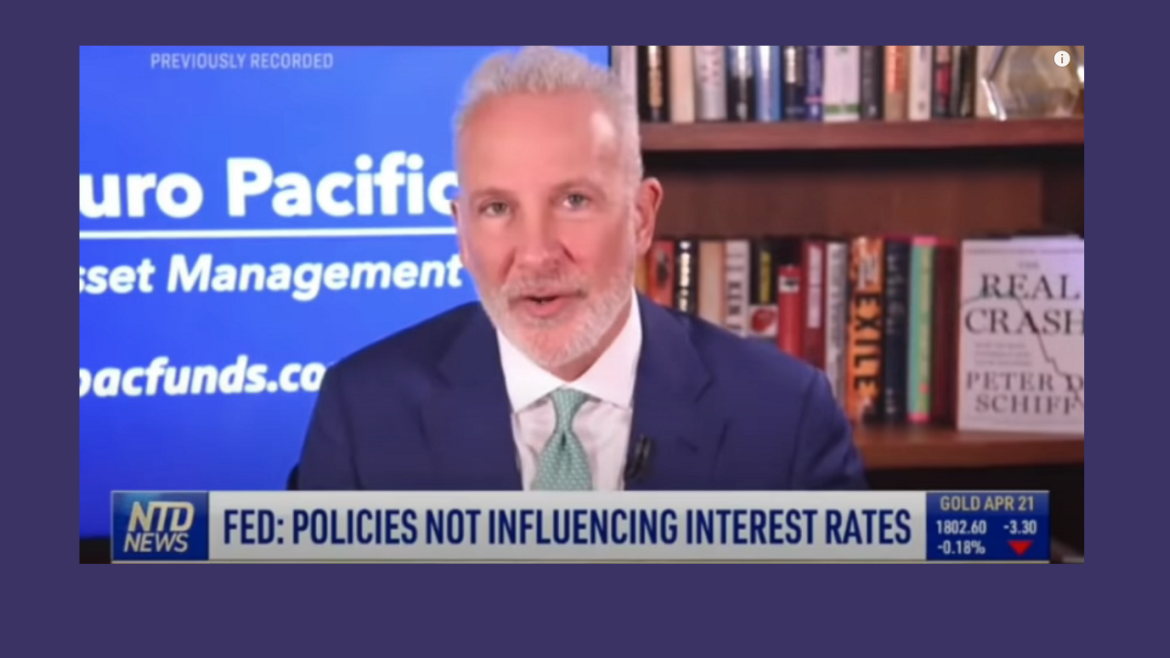
Last week, Peter Schiff appeared on NDT News to talk about the Federal Reserve's increasing dovishness. He said despite all of the assurances from Jerome Powell that the central bank's monetary policy isn't stoking inflation, the economy and the dollar are both at risk for collapse. The Fed is the only thing standing in the way and it can't stand there forever.During this interview, Peter also touched on his recent Twitter debate with Elon Musk about bitcoin.