
Precious metals are apparently waking up. And here is where you can find the best deals.


Site:
Precious metals news

“We are now speeding down the road of wasteful spending and debt, and unless we can escape we will be smashed in inflation.”—Herbert Hoover
 Monetary Policy Blunder: Not Managing Economic & Financial Outcomes Equally
Apr 13, 2021 - 08:28:05 PDT

The Fed's easy-money policy has put a lot of wind at the backs of the asset markets. It's striking to see the Fed's willingness to maintain the scale of monetary accommodation, especially given their poor record with asset bubbles.
 'When Is the Housing Market Going to Crash?' Is a Red Hot Search On Google – Here's Why
Apr 13, 2021 - 08:16:42 PDT

Google reported last week that the search "When is the housing market going to crash?" had spiked 2,450% in the past month.


China told the United States on Tuesday to stop playing with fire over Taiwan and lodged a complaint after Washington issued guidelines that will enable U.S. officials to meet more freely with officials from the island that China claims as its own.
Apr 13, 2021 - 07:54:42 PDT

Russia warned the United States on Tuesday against sending warships to the Black Sea, urging American forces to stay away from the annexed Crimean peninsula "for their own good" as the situation along Ukraine's border caused increasing concern in the West.
 About 38 Million Americans Say They Are Worse Off Now Than before the Outbreak Began In the U.S.
Apr 13, 2021 - 07:32:58 PDT

The problem is more pronounced at lower-income levels: 29% of Americans living below the federal poverty line say their personal finances worsened in the past year. Roughly that many also find themselves in a deepening financial hole, saying they struggled to pay bills in the past three months.

Europe’s top financial watchdog has asked some of the bloc’s largest banks for additional information on their exposure to hedge funds after the recent collapse of Archegos Capital Management.The checks by the European Central Bank on lenders such as Deutsche Bank AG and BNP Paribas SA are standard practice after such a disruptive event for ...
When It Comes To Inflation, What One Does And Doesn’t See Is All PoliticalApr 13, 2021 - 07:05:42 PDT

Conversely, does anyone seriously think that stocks could ever fall significantly before our monetary authorities slashed interest rates (where they still can), or boosted QE further, or did “whatever it takes” to get them to go back up again? So clearly not much fear of inflation there – just deflation.


Gold futures turned higher Tuesday after data showed U.S. consumer prices in March rose for the fourth month in a row and the pace of inflation hit the highest level in 2½ years. Bullion is often viewed as a hedge against inflation.

The US government ran a budget deficit of $659.59 billion in March, pushing the budget shortfall to a record $1.7 trillion through the first half of fiscal 2021.The March budget deficit ranks as the third biggest monthly shortfall in US history, driving Uncle Sam the biggest half-year deficit ever.


Bond traders searching for an opportunity to challenge central banks are starting to look Down Under, where a likely showdown over yield-curve control is set to test the power of policy makers to contain the next wave of reflation bets

Dollar-denominated funding markets are already facing myriad challenges that are distorting supply and demand, and these effects are only going to intensify as a return of the U.S. government’s statutory borrowing limit gets closer.
US Consumer Prices Jump At Fastest Pace Since 2009 As Energy Costs SurgeApr 13, 2021 - 05:45:40 PDT

Of course, as Powell continues to jawbone, this is nothing to worry about... as it's just a "transitory" drain on your pocketbook America.

Growing panic over the financial health of one of China’s largest bad-debt managers spilled into the broader market, as traders circulated a Caixin report that openly considered the worst-case scenario for the company.China Hearing Asset Management Co.’s $300 million 3.375% bond due May 2022 tumbled 13.1 cents on the dollar to 76.1 cents,...
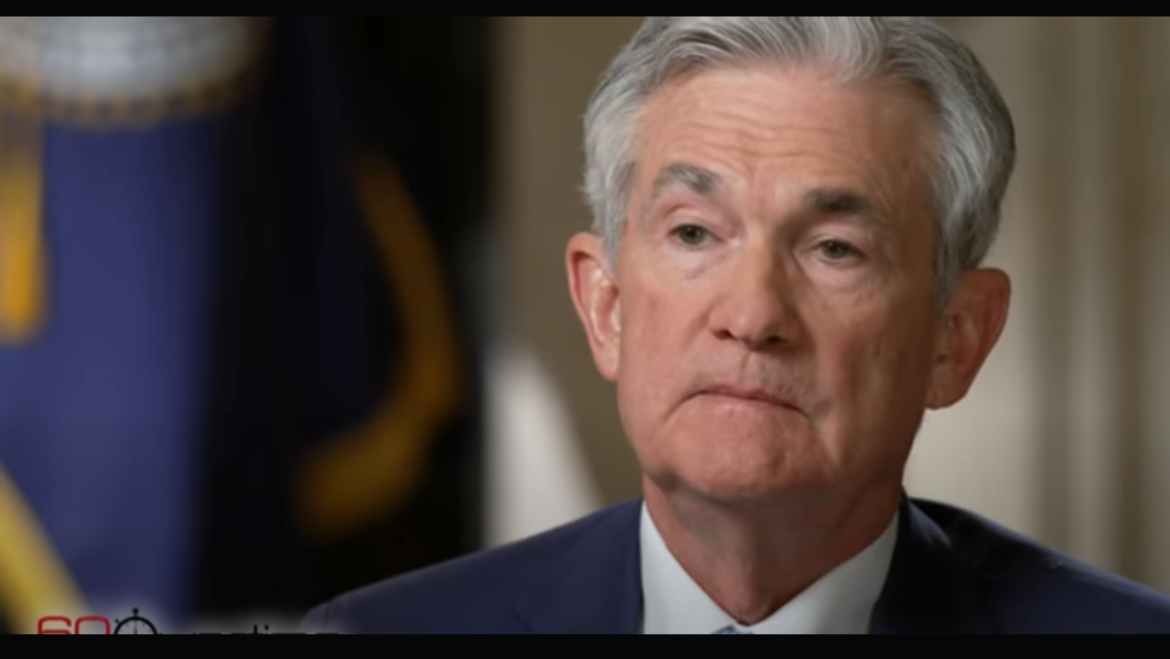
Jerome Powell was on 60 Minutes Sunday to reassure us that everything is great and the economy is in fine shape thanks to the Fed. He went on to guarantee the Fed's indefinite economic support while downplaying inflation. Powell made a lot of promises, but as Peter Schiff breaks it down in his podcast, it becomes clear they are promises the Fed can't keep.

Inflation has become a main worry for the market, but the Fed has worked hard to tamp down those concerns.
Apr 13, 2021 - 05:24:07 PDT

For more than ten years, ECB monetary policy has been ultra-expansionary, whether there was crisis, a recovery, economic growth or stabilization. The worst excuse of all that was used to justify endless quantitative easing has been the often-repeated mantra that “there is no inflation.”
 Inflation Likely Accelerated in March as Economic Recovery Gained Steam: WSJ
Apr 13, 2021 - 05:21:30 PDT

Economists expect the consumer-price index jumped 2.5% in the year ended March, and rose a seasonally adjusted 0.5% from February.
Japan Decides To Dump One Million Tons Of Radioactive Fukushima Water Into The Pacific; IAEA ApprovesApr 13, 2021 - 05:16:43 PDT

We live in a bizarre world: one where the the Keystone XL pipeline must be shut in case of a hypothetical (and extremely unlikely) leak, but where Japan is allowed to dump over one million tons of radioactive water into the Pacific Ocean. Actually, it's either bizarre or simply exposing just how profoundly hypocritical, self-serving and corrupt the ESG/Green/Greta Thunberg theater truly is.

The 10-year Treasury yield topped 1.69% early on Tuesday morning, ahead of the release of a key inflation report.