
Precious metals are apparently waking up. And here is where you can find the best deals.


Site:
Precious metals news
May 3, 2021 - 10:17:54 PDT

With Republicans largely lining up against most of the roughly $4 trillion in proposed spending and related tax increases, Democrats face a series of political and logistical questions.

Federal Reserve Chairman Jerome Powell has played down the current runup in inflation, arguing it is associated with the reopening of the economy. And as the low inflation readings of one year ago drop out, the twelve-month calculation (i.e., the so-called base effect) of reported inflation is likely to move up in the coming months.

Acclaimed diplomat Henry Kissinger said Friday that US-China tensions threaten to engulf the entire world and could lead to an Armageddon-like clash between the two military and technology giants.
 From Apple to Domino’s Pizza, U.S. Companies Scramble to Meet Surge in Demand : WSJ
May 3, 2021 - 09:03:47 PDT

Supply-chain snarls and labor shortages are crimping some businesses looking to ride a rebound in the U.S. economy.


The Biden administration is quietly laying the groundwork for a long-term increase in food aid for tens of millions of Americans, without going through the ordeal of a fight with congressional Republicans.

Accelerating prices — and fears the U.S. Federal Reserve will tighten policy to tame them — top the list of money-managers’ concerns, according to Bank of America Corp.’s monthly investor survey. Almost half of those polled by UBS AG predict inflation will quicken over the coming three years.
 U.S. Treasury’s Yellen Tamps Down Inflation Fears over Biden Spending Plan
May 3, 2021 - 08:35:14 PDT

U.S. Treasury Secretary Janet Yellen on Sunday tamped down concerns that President Joe Biden's plans for infrastructure, jobs and families will cause inflation, saying the spending will be phased in over a decade.
 US Debt-to-GDP Ration Is Worse Than Greece’s Before the 2008 Crash (And It’s About to Get Worse)
May 3, 2021 - 08:29:50 PDT

There's no question debt is a serious matter. (Just ask the ancient Romans and modern Grecians.) But the US debt explosion may be a symptom of a bigger problem.

Deficits exceeding $1 trillion. A national debt larger than the national economy and growing inexorably. A Federal Reserve running the printing press night and day to produce the dollars to push the nation back to full employment.

Government is a powerful tool. But it’s far easier to put it in motion than to control it. When government is involved, nothing ever works out as intended. It turns into a dictatorship. Government just uses its power to compel everyone to do things their way.
 Researchers Expect the US to Face Underpopulation, Blaming a Falling Birth Rate and Economic Crises
May 3, 2021 - 08:08:54 PDT

Every 1 percentage point increase in the unemployment rate reduces births by 1 percent, according to data collected following the Great Recession.

Much of the froth in US markets is being driven by unusual liquidity flows that may reverse soon


The Fed said that inflation is transitory, but such is always the case as rising price pressures without stronger wage growth lead to economic slowdowns.


For an idea of exactly how strong the fundamentals are for commodities such as metals, agriculture and oil today, consider this: These markets are now showing the steepest backwardation in more than 14 years.That is, the premium for commodities that can be delivered now versus later into the future is the highest it has been since at least 2007...


David Bahnsen is one of the most original thinkers I know, which is why he is all over TV and podcasts, and is rated one of the best money managers in America. David does a podcast for National Review called Capital Record. We did a two-part series. The following is an edited partial transcript of the first part. Next week I will share some of Part 2.
 Supply Chain Disruptions Spark Record Surge In Prices Amid Mixed Manufacturing Survey Data
May 3, 2021 - 07:07:53 PDT

After March's explosive surge higher in 'soft' survey data on the manufacturing (and services) sector, analysts expected a very modest increase in April (despite China's disappointing survey data.. and the ongoing slide in 'hard' economic data in the US).

"The Fed is pinning itself in a corner by insisting that this is transitory," Mohamed El-Erian, economic advisor at Allianz and Gramercy and president at Queens College, Cambridge, told CNBC's "Squawk Box" Monday regarding inflation pressures. "All the evidence suggests that you should have an open mind."


here’s an old bit of advice that one shouldn’t count one’s chickens before they’re hatched. Much of the efforts of Wall Street are directed at ignoring that advice. That’s fine in the sense that prices can and often do move in advance of changes in economic activity and earnings.

Gold prices ticked up on Monday, supported by a muted dollar ahead of a series of U.S. data. Spot gold was up 0.5% at $1,777.01 per ounce by 0916 GMT. Volumes are expected to be low due to public holidays in China, Japan, and Britain. U.S. gold futures rose 0.6% to $1,778 per ounce.

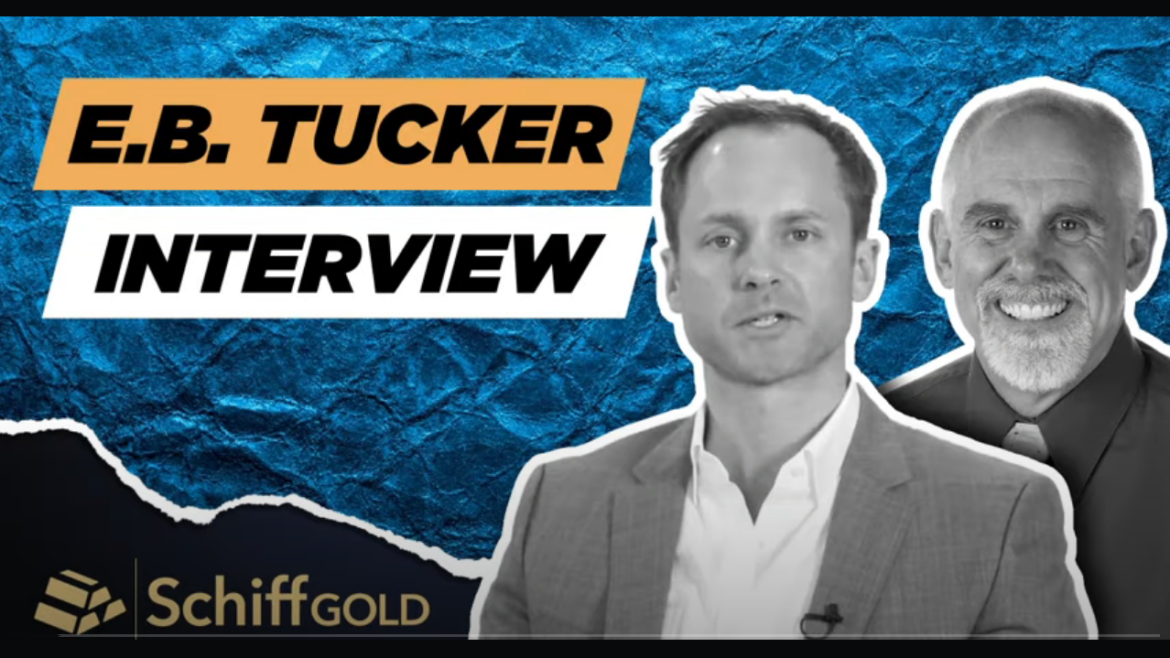
What is the government doing to your money? And how can you protect yourself?These are key questions facing every American today. In this interview, Friday Gold Wrap Podcast host Mike Maharrey tries to dig out some answers with investment veteran and author E.B. Tucker.